Why SJI Standards Matter: Ensuring Precision in Steel Joist Design and Fabrication
Steel joists form the backbone of countless commercial and industrial structures across America. But behind every safely engineered joist system lies a critical framework of standards that ensures structural integrity, load capacity, and construction safety.

Understanding the Steel Joist Institute (SJI)
The Steel Joist Institute establishes the authoritative specifications for open web steel joists and joist girders used throughout North America, providing the framework for safe and efficient structural design.
K-Series Joists
Designed for short to medium spans with economical and efficient load-carrying performance.
LH & DLH Series
Long-span joists engineered for larger structural bays and heavier loading conditions.
Joist Girders
Primary support members designed to carry concentrated loads from multiple joists.
Industry standards provide the foundation for reliable structural design, ensuring safety, efficiency, and consistency throughout the project lifecycle.
Precision in Design: Why Standards Matter
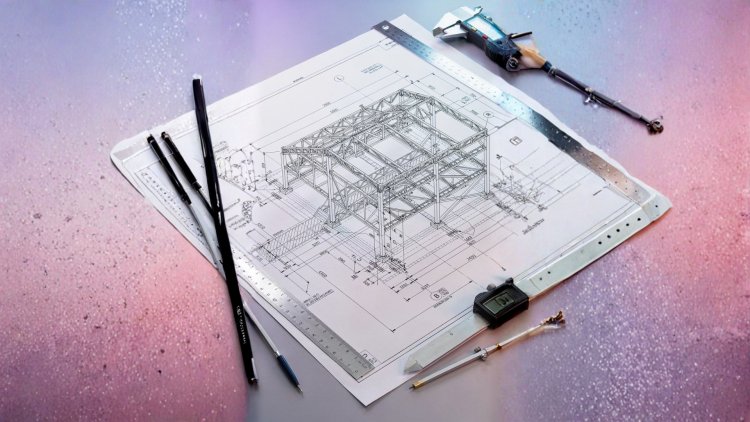
Steel grades, material certifications, and mechanical properties are verified against SJI requirements to ensure every component meets specified performance standards.
Manufacturing tolerances are maintained within specified limits, ensuring fabricated joists fit correctly in the field and perform exactly as designed.
Weld procedures, bearing lengths, connection geometry, and fabrication details follow standardized protocols to guarantee structural reliability.
Fabrication Standards That Ensure Quality Control

Material Verification
Dimensional Accuracy
Connection Details
Industry standards don't just improve consistency—they directly reduce risk, lower project costs, and accelerate delivery across every phase of construction.
Standardization supports efficient procurement, competitive bidding, and predictable fabrication processes. Fabricators can stock common components while estimators deliver more accurate pricing.
Standard joist specifications simplify approvals, fabrication, and installation. Teams avoid delays caused by redesigns, engineering revisions, and field coordination challenges.
How Standards Prevent Costly Mistakes
Reducing Project Costs
Accelerating Schedules
Industry standards don't just improve consistency—they directly reduce risk, lower project costs, and accelerate delivery across every phase of construction.
Standardization supports efficient procurement, competitive bidding, and predictable fabrication processes. Fabricators can stock common components while estimators deliver more accurate pricing.
Standard joist specifications simplify approvals, fabrication, and installation. Teams avoid delays caused by redesigns, engineering revisions, and field coordination challenges.
How Standards Prevent Costly Mistakes

Reducing Project Costs
Accelerating Schedules
CAD and BIM professionals can create precise 3D joist models using standardized SJI families, ensuring consistency across projects and disciplines.
Load capacities, connection requirements, and geometric properties transfer smoothly from design software to fabrication systems and erection plans.
Digital workflows depend on standardized data structures. When joist specifications follow SJI formats, information moves seamlessly between design, detailing, fabrication, and construction teams. This consistency enables clash detection, improves coordination accuracy, and significantly reduces costly field conflicts before they occur.
BIM and Digital Workflows: Standards Enable Modern Technology
Accurate BIM Families
Seamless Data Flow
Digital Coordination Without Barriers
Include SJI specification references in design documents from the conceptual phase onward. Early adoption creates consistency throughout engineering, detailing, fabrication, and construction.
Ensure structural, architectural, and MEP teams understand joist requirements, load paths, and spatial constraints to avoid coordination issues later in the project.
Always request mill test reports, material certifications, and compliance documentation during submittal review. This simple quality-control step helps identify non-compliant materials early, preventing costly delays, rework, and installation issues in the field.
Implementing SJI Standards in Your Next Project
Reference Standards Early
Coordinate Across Disciplines
Catch Problems Before They Reach the Jobsite
In an industry where margins are tight and liability is high, SJI standards represent far more than technical specifications. They create a framework for predictable performance, manageable costs, and reduced project risk.
Engineers gain confidence through validated design methodologies, fabricators benefit from repeatable manufacturing processes, and contractors achieve smoother installations with fewer unexpected challenges in the field.
Engineers specify with certainty, knowing structural performance is proven and validated.
Manufacturers achieve consistent quality through repeatable and standardized processes.
Contractors build faster using predictable connections, fit-up conditions, and workflows.
Whether you're detailing connections in CAD, coordinating systems in BIM, or managing fabrication workflows, SJI standards provide the foundation for precision and excellence. By establishing a trusted framework for performance, quality, and coordination, they allow project teams to focus less on uncertainty and more on delivering exceptional results.
Standards Are Your Competitive Advantage
Predictability Creates Value
Design Confidence
Fabrication Efficiency
Installation Speed
What's Your Reaction?