Raster to CAD Fundamentals
Understanding Raster to CAD Conversion Fundamentals
CAD
RASTER
01
What is Raster to CAD Conversion?
Turning Static Legacy Drawings into Editable CAD Files
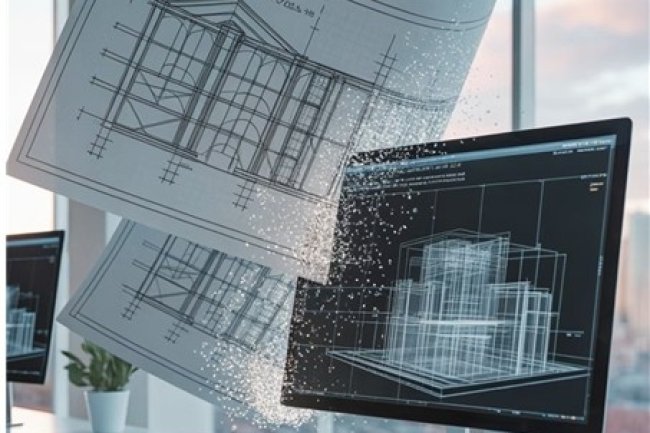
Raster to CAD conversion transforms scanned paper drawings, PDFs, and image files into editable digital CAD formats. This process bridges the gap between legacy documentation and modern design workflows, enabling teams to modify, update, and integrate older drawings into current projects.
02
02
How the Conversion Works
Vector-Based Recreation with Professional Accuracy
The conversion involves sophisticated software and skilled technicians who recreate geometric elements, dimensions, text, and symbols as vector-based objects. Quality conversions maintain dimensional accuracy while creating clean, organized CAD files that match industry standards.
DWG
DXF
1
Scan or Image Input
Paper drawings, PDFs, TIFFs, JPEGs, and PNG files become the starting point.
2
CAD Recreation
Lines, symbols, dimensions, and text are rebuilt as editable CAD objects.
3
Digital Workflow Ready
Clean CAD files support renovation, BIM coordination, facility updates, and future design work.
Raster to CAD Quality Standards
Accuracy Standards That Matter
.01
01
Measurement Accuracy
Dimensional Precision
Look for partners guaranteeing ±0.01" accuracy or better. This level of precision ensures your converted drawings maintain structural integrity and meet construction tolerances. Ask for sample conversions and verify measurements against originals.
LAY
CAD
02
Clean File Structure
Layer Organization
Professional conversion services organize elements into logical layers following industry standards like AIA or your company's CAD standards. This organization streamlines future editing and ensures compatibility with your existing workflows.
QC
03
Verification Before Delivery
Quality Control Process
Reliable partners implement multi-stage quality checks including automated verification, manual review, and client approval processes. This systematic approach catches errors before delivery and ensures consistent output quality.
Raster to CAD Partner Evaluation
Technical Capabilities to Evaluate
01
01
CAD Platform Proficiency
Software Expertise
Ensure your partner is proficient in industry-standard CAD platforms like AutoCAD, MicroStation, and specialized software for your sector. They should also handle various input formats including TIFF, PDF, JPEG, and legacy file types.
02
DETAIL
02
Intricate Technical Conversion
Complex Drawing Handling
Test their ability to process challenging elements like curved geometry, detailed architectural features, complex mechanical assemblies, and multi-sheet drawings. Not all conversion services can handle intricate technical details accurately.
03
03
Large-Volume Project Readiness
Scalability Infrastructure
Assess their capacity to handle large-volume projects without compromising quality or timelines. Look for partners with dedicated teams, project management systems, and scalable workflows that grow with your needs.
Raster to CAD Service Delivery
Service Delivery and Project Management
TIME
Predictable Scheduling
Timeline Reliability
Professional conversion partners provide realistic timelines and consistently meet deadlines. They should offer transparent project tracking, regular status updates, and contingency plans for rush projects. Unrealistic promises often lead to quality compromises or missed deadlines.
PM
Clear Project Communication
Communication Standards
Look for partners who assign dedicated project managers and maintain clear communication channels. They should provide detailed project specifications upfront and respond promptly to questions or revision requests throughout the conversion process.
KPI
48
48
Hours
Average Turnaround
Average turnaround for standard architectural drawings.
99.5
CAD
99.5%
Accuracy
Dimensional Precision
Industry benchmark for dimensional precision.
24/7
24/7
Support
Urgent Project Access
Communication availability for urgent projects.
Raster to CAD Partner Selection
Cost Structure and Value Assessment
COST
01
01
Clear Cost Breakdown
Transparent Pricing Model
Quality partners offer clear, upfront pricing based on drawing complexity, size, and required deliverables. Avoid vendors with vague estimates or hidden fees. Request detailed quotes that break down costs by drawing type and complexity level.
02
02
Total Value Over Lowest Bid
Value Beyond Cost
Consider the total value proposition including accuracy guarantees, revision policies, file organization standards, and long-term support. Companies like Consac understand that the lowest price often comes with quality trade-offs that cost more in the long run.
03
03
Scalable Service Models
Flexible Engagement Options
Look for partners offering various engagement models from one-time projects to ongoing conversion services. This flexibility allows you to scale services based on project needs and budget constraints while maintaining consistent quality standards.
ROI
CAD
✓
Best Value Comes from Quality, Clarity, and Reliability
Choose a Partner Based on Long-Term Project Value
A strong CAD conversion partner should provide transparent pricing, reliable quality, flexible engagement models, and practical support that helps your team avoid rework, delays, and workflow disruptions.
Secure Raster to CAD Conversion
Security and Intellectual Property Protection
SAFE
DATA
LOCK
01
Encrypted Transfers and Access Controls
Data Security Protocols
Verify that conversion partners implement robust security measures including encrypted file transfers, secure storage systems, and access controls. Your technical drawings contain valuable intellectual property that requires protection throughout the conversion process.
NDA
02
Confidentiality and Controlled Access
Confidentiality Agreements
Professional partners readily sign comprehensive NDAs and maintain strict confidentiality protocols. They should have clear policies for data retention, disposal, and employee access to your proprietary information.
ISO
03
Industry and Regulatory Alignment
Compliance Standards
Ensure partners meet relevant industry compliance requirements and maintain certifications for data handling. This is particularly important for government, healthcare, or highly regulated industry projects.
TRUST
IP
✓
Secure Conversion Builds Client Confidence
Protect Your Drawings from Upload to Delivery
A reliable CAD conversion partner should protect sensitive drawings with secure transfer methods, strict confidentiality practices, clear access policies, and compliance-aware project workflows.
Raster to CAD Partner Selection
Making the Right Partnership Decision
DECIDE
TEST
Practical Accuracy Check
Request Sample Conversions
Always ask for sample conversions using your actual drawings. This practical test reveals accuracy levels, attention to detail, and compatibility with your workflows better than any sales presentation.
PROOF
WORK
Proven Project Experience
Check References and Portfolio
Review case studies from similar projects and contact previous clients about their experiences. Focus on partners with proven success in your industry and project types.
PILOT
Low-Risk Relationship Test
Start with a Pilot Project
Begin with a smaller conversion project to evaluate quality, communication, and delivery before committing to larger contracts. This approach minimizes risk while establishing a working relationship.
TEAM
CAD
✓
Due Diligence Creates Long-Term Value
Choose a Partner Who Becomes an Extension of Your Team
The right raster to CAD conversion partner becomes an extension of your team, delivering accurate, timely conversions that support your project goals. Take time to thoroughly evaluate potential partners using these criteria — the investment in due diligence pays dividends in project success and long-term partnership value.