Design Considerations for Short- Span Steel Deck Areas
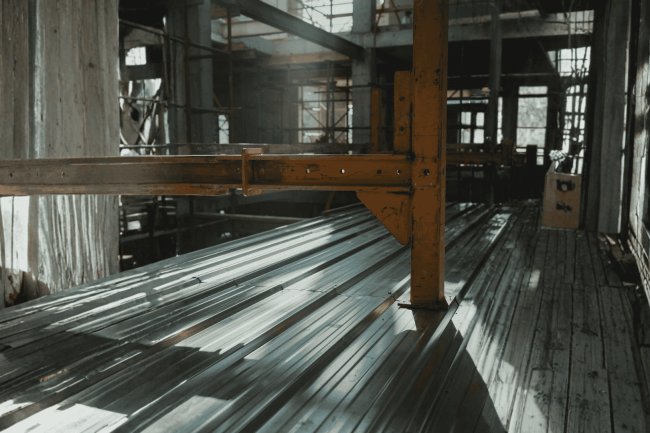
Short-span steel deck configurations—typically spanning 5 to 12 feet between supports—present a distinct set of engineering challenges that differ substantially from longer-span applications. While the fundamentals of steel deck design remain consistent, the condensed bay geometry, tighter support spacing, and concentrated load conditions in short-span areas demand focused detailing attention. This guide addresses the critical design parameters, connection requirements, and structural behaviors that structural engineers and steel deck detailing professionals must account for when working in short-span zones.
Defining the Short-Span Condition
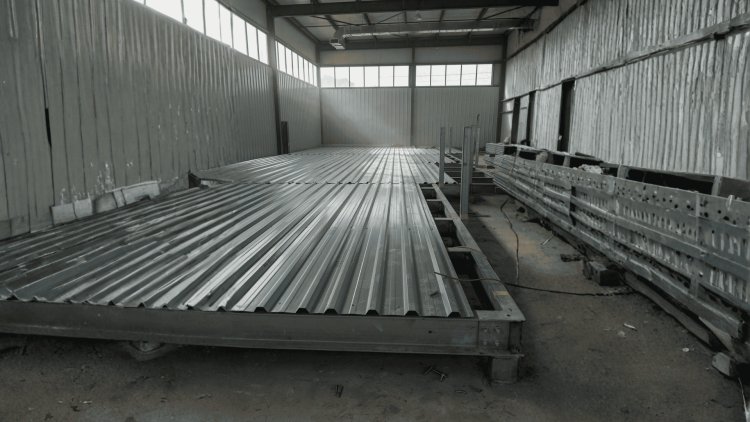
Short-span deck design is not simply a smaller version of long-span design. Different structural behaviors often become the controlling factors.
What Makes Short-Span Areas Different?
SPAN
Common Short-Span Applications
Short Span ≠ Simple Design
While deflection often dominates long-span design, short-span systems are more likely to be controlled by strength, support reactions, anchorage requirements, and diaphragm boundary behavior.
Choosing the correct deck profile and steel gauge is foundational to a successful short-span design. In short-span conditions, the selection logic differs from long-span optimization in important ways.
Even in short-span areas, specifying deck as continuous over two or more spans significantly improves both strength and stiffness. Multi-span continuity reduces positive moment at midspan, controls deflection, and can reduce the required gauge.
Detailers must confirm that side-lap and end conditions are correctly detailed to achieve the continuity assumed in design.
In exposed or semi-exposed short-span applications such as canopies, parking structures, or unconditioned mechanical rooms, G-60 or G-90 galvanized coatings should be specified.
For deck exposed to weather or frequent moisture, G-90 is the safer default. G-60 can be suitable in dry indoor environments protected by a finished envelope.
The practical rule for short-span deck is simple: choose the shallowest profile and lightest gauge that safely satisfy construction loads, service loads, continuity conditions, and corrosion exposure. That balance keeps the system efficient without compromising durability or constructability.
Deck Profile and Gauge Selection
Span Condition: Single vs. Multi-Span
Galvanizing & Coating
In short spans, deck-to-support attachments and side-lap stitching are critical to diaphragm performance, uplift resistance, and composite behavior. These fastening requirements must be explicitly detailed to ensure safety and reliability.
Minimum end bearing: 1½" on steel, 3½" on concrete/masonry. Confirm actual bearing length in shop drawings. End anchorage must resist chord and collector forces at re-entrant corners, openings, transitions, and canopy edges. Insufficient bearing is a leading cause of deck end failures during construction loading.
In short-span composite decks, fewer shear studs fit within the span, limiting composite ratios. Engineers must verify minimum 25% composite ratio is achievable, and detailers must confirm stud placement avoids flute conflicts.
Fastening requirements in short-span deck zones are primary structural elements. Explicit specification, verified installation, and careful coordination with SDI standards ensure diaphragm performance, safety, and long-term reliability.
Primary Structural Elements in Short-Span Steel Deck Design
Deck-to-Support Attachments
Side-Lap Fastening
End Bearing and Anchorage
Composite vs. Non-Composite
Short spans are often located in the most demanding parts of a building, where concentrated, construction, dynamic, and uplift loads can govern design.
Short-span deck areas are frequently exposed to the building's highest localized demands. Successful design requires looking beyond uniform loads and accounting for equipment, construction activities, vibration effects, and wind uplift behavior.
Load Conditions Unique to Short-Span Areas
The Short-Span Load Pyramid
Critical Design Checks
Short Spans Carry Big Responsibilities
Successful short-span steel deck design is as much about disciplined detailing and clear documentation as it is about structural calculation. The most impactful practices focus on span continuity, attachment zoning, concentrated loads, and bearing verification.
Identify all concentrated load sources — equipment pads, pipe supports, conduit banks — during the detailing phase, before shop drawings are released for fabrication.
Supplemental framing, spreader plates, or heavier gauge deck in specific bays is far less costly to specify in design than to retrofit in the field. Maintain close coordination between mechanical, electrical, and structural disciplines in short-span equipment zones.
Short-span steel deck areas concentrate structural demands — load, connection, and diaphragm — into compact geometry. Precision in profile selection, fastening specification, load accounting, and shop drawing coordination is the differentiator between a well-executed short-span design and a costly field problem.
Key Takeaways for Short-Span Deck
Flag Concentrated Load Locations Early
Standard Practice Checks
Bottom Line
What's Your Reaction?