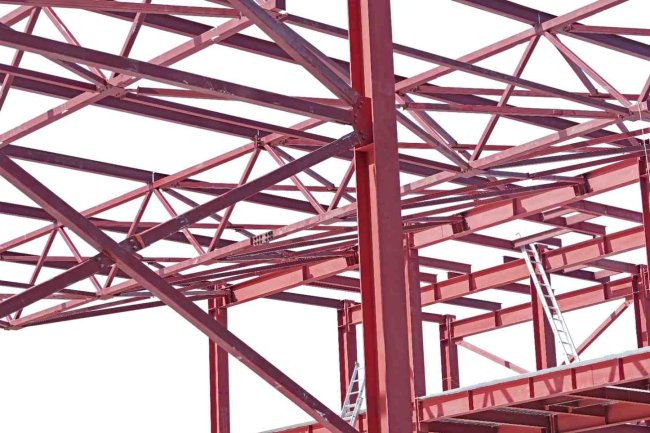
Composite vs Standard Steel Joists: When to Use Each and How to Detail Them
Choosing between composite and standard steel joists is one of the most critical decisions in structural design. Understanding when to use each type—and how to detail them properly—can dramatically impact project performance, cost efficiency, and construction timelines.

Understanding Standard Steel Joists
Standard steel joists are open-web structural members that efficiently carry loads independently. Manufactured according to SJI specifications, they provide a lightweight, cost-effective solution for construction projects.
What Are They?
Standard steel joists consist of parallel chords connected by a triangulated web system, creating an efficient load-bearing framework that doesn’t rely on the concrete slab for support.
Key Characteristics
- Load transferred entirely through steel member
- No mechanical connection to concrete deck
- Faster to install with simpler connections
- Lighter weight reduces foundation demands
- Cost-effective for shorter spans
Benefits for Projects
Standard steel joists simplify construction, reduce material costs, and minimize foundation requirements, making them ideal for residential and commercial projects with shorter spans.
Critical Detailing Requirements
Key detailing standards for standard and composite steel joist systems
Standard Steel Joist Details
- Bearing connections: Minimum 2.5-inch bearing length at supports with proper welding or bolting to girders
- Bridging: Horizontal and diagonal bridging at specified intervals per SJI standards to prevent lateral-torsional buckling
- Deck attachment: Welded through metal deck to top chord, typically 36-inch spacing pattern
- Fire protection: Applied directly to steel members when required by code
Composite Joist Details
- Shear studs: Welded to top chord at calculated spacing, typically 3/4-inch diameter studs with adequate embedment
- Concrete strength: Minimum 3,000 psi required for composite action, specified clearly in drawings
- Deck orientation: Flutes must run perpendicular to joists for proper concrete containment
- Construction sequence: Coordinate concrete pour timing with steel erection schedule
Understanding key design factors ensures safe, efficient, and high-performance floor systems. Composite and standard joist systems each have unique benefits that impact deflection, cost, and vibration performance.
Composite systems reduce live load deflections by 20-30% versus non-composite designs. Critical for vibration-sensitive spaces, account for short-term and long-term deflections including concrete creep.
Standard joists cost 15-25% less initially, but composite systems can save on overall project costs through reduced depth and longer spans. Request detailed comparative analyses for material, labor, and height impacts.
Composite floors provide higher natural frequencies and better damping, reducing floor movement. Ideal for laboratories, healthcare, or open-plan office spaces where vibration sensitivity is critical.
Design Considerations That Matter
Deflection Control
Cost Analysis
Vibration Performance
Evaluate Project Requirements
Analyze span requirements, loading conditions, budget constraints, building height impacts, and MEP coordination needs.
Run Comparative Designs
Develop composite and non-composite options with full cost estimates including material, labor, fireproofing, and schedule impacts.
Detail Thoroughly
Ensure clear connection details, complete material specifications, and explicit construction notes to prevent costly field issues.
Coordinate Early
Engage structural engineers, fabricators, and contractors early to ensure constructability and optimize the system for your project.
Both composite and standard steel joists have their place in modern construction. The key is understanding when each system provides the best value — not just in material cost, but in overall project performance, constructability, and long-term functionality. By mastering the detailing requirements for both systems, you'll be equipped to make informed decisions that serve your project's unique needs.
What's Your Reaction?