Steel Joist Design for Seismic Zones: Detailing for Resilience
When earthquakes strike, the difference between structural survival and catastrophic failure often comes down to the details. Steel joists in seismic zones require more than standard engineering—they demand a strategic approach to detailing that accounts for lateral forces, connection flexibility, and progressive collapse prevention.
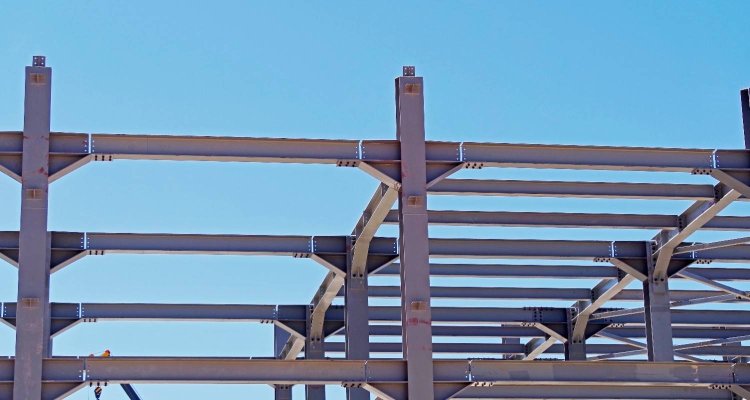
Understanding Seismic Demands on Steel Joist Systems
Steel joists face unique challenges in earthquake-prone regions. Unlike moment frames or braced frames, joist systems weren't traditionally designed as primary lateral force-resisting elements. However, they play a critical role in distributing seismic loads and maintaining structural integrity during ground motion.
The key challenge lies in balancing the inherent flexibility of joists with the rigidity needed to transfer lateral forces. Seismic events generate horizontal accelerations that can exceed vertical loads by a significant margin, placing unexpected stress on connections and chord members.
Critical Design Principles for Seismic Resilience
Connection Ductility
Design connections that can deform without brittle failure. Use bolted connections with adequate edge distances and proper spacing to allow energy dissipation through controlled yielding.
Positive Anchorage
Ensure joists are positively anchored to supporting members through mechanical connections, not just bearing. Uplift and lateral displacement must be explicitly addressed in seismic detailing.
Load Path Continuity
Establish clear and continuous load paths from roof or floor diaphragms through joists to vertical lateral systems. Every connection becomes part of the seismic force chain.
Detailing Requirements That Make the Difference
The devil is truly in the details when designing for seismic zones. Standard joist details often prove inadequate under earthquake loading. Engineers must specify enhanced connection requirements, including increased weld sizes, additional fasteners, and reinforced bearing seats.
Bridging becomes especially critical in seismic applications. Horizontal and diagonal bridging not only stabilizes individual joists but also helps distribute lateral forces across the joist system. Continuous bridging lines should be anchored to lateral force-resisting elements at regular intervals.
For projects requiring advanced structural modeling, companies like Consac provide specialized engineering and detailing services that ensure compliance with seismic codes while optimizing material efficiency. Their expertise in CAD, BIM, and structural coordination helps bridge the gap between design intent and constructible reality.
Code Compliance & Performance Standards
True compliance goes beyond meeting minimum code requirements. It requires understanding the performance objectives that govern seismic behavior, load transfer, and structural resilience.
Key Reference Standards
Performance-Based Thinking
Seismic design categories dictate the level of detailing and redundancy required. Higher categories demand enhanced connection strength, ductility, and load path reliability.
Engineers must also account for system interaction. Diaphragm behavior, collector elements, and chord forces directly influence joist detailing and connection requirements—especially in high seismic zones.
Common Pitfalls and How to Avoid Them
Understanding these recurring issues helps engineers prevent failures, improve seismic performance, and ensure long-term structural reliability.
Inadequate Connection Capacity
Many failures occur at connections rather than in member strength. Always verify that connections can develop the required forces, including uplift, shear, and tension. Do not rely on friction or gravity alone—specify positive mechanical connections capable of transferring design loads under seismic conditions.
Insufficient Bridging
Bridging is not optional in seismic zones—it is essential. Ensure bridging is continuous, properly anchored, and designed to resist lateral forces. Specify robust bridging connections that will not pull out or fail during seismic events or construction loading.
Ignoring Diaphragm Flexibility
Flexible diaphragms can amplify seismic forces on perimeter joists. Account for diaphragm deformation in structural analysis and detail connections to accommodate resulting demands without overstressing chord members or inducing unintended force paths.
Practical Implementation Strategies
Step-by-step strategies to ensure effective joist design and implementation while maintaining seismic performance and constructability.
Early Coordination
Engage structural engineers, joist manufacturers, and steel fabricators early in design. Seismic detailing impacts joist selection, spacing, and depth—decisions best made during schematic design.
Specify Performance Requirements
Don't just reference code minimums. Clearly communicate performance expectations, including ductility demands, connection rotation capacity, and acceptable deformation limits under seismic loading.
Leverage BIM Technology
Use 3D modeling to identify connection conflicts and verify load paths before fabrication. Digital coordination reduces field conflicts and ensures seismic details can be built as designed.
Document and Communicate
Produce clear, detailed drawings that explicitly show seismic requirements. Standard joist callouts aren't sufficient—include connection details, bridging requirements, and special inspection notes.
Building Earthquake Resilience Through Better Detailing
Seismic-resistant steel joist design isn't about following a checklist—it's about understanding how structures respond to earthquake forces and detailing connections that can accommodate those demands. The extra attention paid to connection design, bridging details, and load path continuity translates directly into buildings that protect lives and property when the ground shakes.
As seismic codes continue to evolve and our understanding of structural performance deepens, the importance of rigorous detailing only grows. Whether you're designing a warehouse in California or a healthcare facility in the Pacific Northwest, getting the joist details right is fundamental to creating resilient structures that stand the test of time—and tremors.
What's Your Reaction?