Fire-Resistant Coatings for Light Gauge Steel
Enhancing life safety, structural resilience, and code compliance in modern construction.
Why Fire Protection Matters in Light Gauge Steel Construction
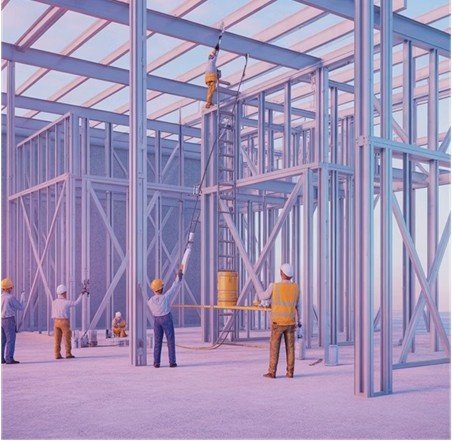
Light gauge steel framing delivers high precision, rapid construction, and exceptional strength-to-weight performance. However, steel’s vulnerability under high temperatures remains a critical safety concern. When exposed to fire, unprotected steel can reach temperatures that significantly reduce its load-bearing capacity within minutes — increasing the risk of structural collapse.
|
Fire-resistant coatings create a protective thermal barrier that slows heat transfer into the steel, helping it maintain stability for longer durations. This additional time is essential for safe occupant evacuation and effective fire response. Beyond life-safety performance, applying proper fire protection ensures compliance with evolving building codes, supports fire-resistance rating requirements for key assemblies, and contributes to improved insurance eligibility and lower long-term risk. |
|
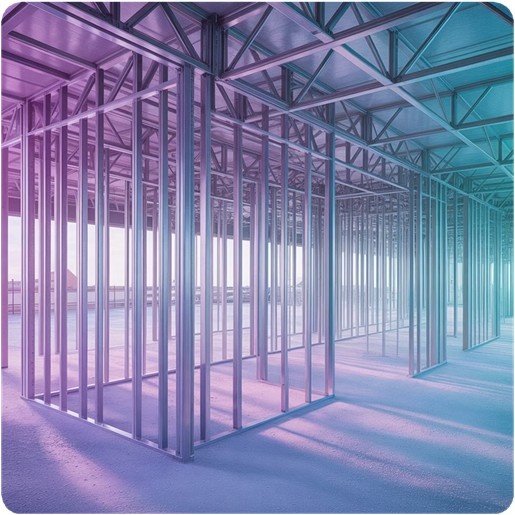
Suitable for residential and light commercial construction. Achieved using thinner intumescent or cementitious coatings.
Common in hospitals, schools, and multi-story buildings. Requires more durable and tested coating systems.
Required for high-occupancy and critical infrastructure. Uses specialized coatings and tightly-controlled application methods.
Understanding Fire Rating Requirements
1-Hour Rating
2-Hour Rating
3-Hour Rating
Types of Fire-Resistant Coatings
Intumescent Coatings
These reactive coatings expand when exposed to heat, forming an insulating char layer that can be 50 times their original thickness. Available in water-based and solvent-based formulations, they offer thin-film protection with minimal aesthetic impact. Ideal for exposed structural elements where appearance matters.
Cementitious Coatings
Portland-cement-based spray systems that provide strong thick-film protection. A cost-effective option for large projects with excellent durability. While thicker and heavier than intumescent coatings, they deliver superior fire resistance for concealed structural members.
Board Systems
Prefabricated fire-resistant panels—like gypsum and mineral fiber—mechanically attached to steel. Quick to install with minimal on-site prep, delivering consistent fire protection across large areas. Widely used in partition walls and ceiling assemblies.
Key Application Considerations
Surface Preparation
Proper substrate preparation is essential to ensure long-term coating performance. Steel framing must be clean, dry, and free from rust, mill scale, oils, or construction debris. Specifications typically require SSPC-SP6 commercial blast cleaning or equivalent mechanical abrasion to achieve the surface profile necessary for reliable adhesion.
Environmental Conditions
Application parameters strongly influence curing and fire-resistance performance. Most coating systems require:
-
Ambient temperature 50–90°F (10–32°C)
-
Relative humidity below 85%
-
Adequate air circulation to support solvent release and film formation
Deviation from these conditions can compromise thickness, durability, and certification of the fire rating.
Coordination and Installation Sequencing
To avoid rework and coating damage:
-
Confirm member profiles and dimensions early — dry film thickness must be tailored to the steel size and fire-rating requirements.
-
Apply coatings after major mechanical work (welding, fastener installation, drilling) to preserve film integrity.
-
Protect finished areas from handling, abrasion, and moisture exposure during construction.
Quality Assurance and Inspection
Plan for third-party inspection and on-site testing, including:
-
Wet and dry film thickness verification
-
Adhesion testing as required
-
Documentation for code compliance and close-out submissions
Integration with BIM and Digital Workflows
Modern fire protection design benefits significantly from digital coordination. Companies like Consac leverage BIM technology to model fire-rated assemblies, calculate coating quantities, and detect conflicts early in the design process.
01 — 3D Model Development
Create detailed steel framing models with accurate member sizing and connections to guide fire protection needs.
02 — Coating Specification
Assign fire ratings and coating types per code and design intent.
03 — Quantity Takeoffs
Generate accurate material estimates including surface areas and coating thickness requirements.
04 — Clash Detection
Catch coating interference with MEP systems before installation.
05 — Documentation
Produce coordinated shop drawings and application details that streamline installation.
Best Practices for Successful Implementation
Engage Early in Design
Involve fire protection specialists during schematic design to optimize structural layouts and minimize coating requirements. Early coordination prevents expensive redesigns.
Specify Performance, Not Products
Write specifications that define required fire ratings and acceptance criteria rather than mandating specific manufacturers. This promotes competitive bidding while ensuring quality.
Document Everything
Maintain detailed records of coating batches, application dates, environmental conditions, and thickness measurements. Essential for inspections and warranties.
Plan for Maintenance
Schedule periodic inspections and touch-ups to ensure long-term fire protection integrity.
What's Your Reaction?