PCI
INTRODUCTION
Why Precast Concrete Detailing Matters Now More Than Ever
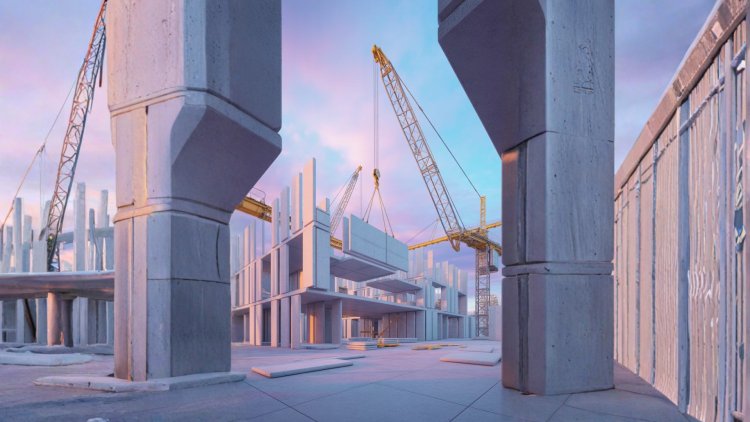
Today's construction industry is under increasing pressure to deliver projects faster, safer, and more economically than ever before. While traditional cast-in-place construction remains a valuable solution, it often struggles to keep pace with compressed schedules, labor shortages, weather disruptions, and rising project costs.
01
Industry Challenges
Large-scale developments frequently face schedule overruns, labor constraints, quality inconsistencies, and unpredictable site conditions that can significantly impact budgets and project delivery timelines.
02
The Precast Advantage
Precast concrete detailing enables components to be engineered, coordinated, and fabricated in controlled manufacturing environments, improving quality, productivity, and construction certainty.
A Smarter Approach to Construction Delivery
Precast detailing goes far beyond creating shop drawings. It establishes the digital foundation that drives fabrication, logistics, erection sequencing, and field coordination. Every connection, reinforcement layout, embed plate, and lifting point is planned before manufacturing begins.
Because components are produced off-site while site preparation progresses simultaneously, project teams gain valuable schedule overlap that significantly reduces overall construction duration and minimizes exposure to weather-related disruptions.
IDEAL FOR LARGE-SCALE PROJECTS
Who Benefits Most?
Project managers, structural engineers, contractors, developers, and owners involved in commercial buildings, parking structures, educational campuses, healthcare facilities, sports venues, data centers, and industrial developments can all benefit from the speed, consistency, and predictability that precast concrete detailing delivers. Understanding these advantages can be the difference between a project that struggles with delays and one that achieves exceptional performance from design through completion.
CHAPTER 1
The Time-Saving Advantage: Accelerating Project Timelines
01
01
Concurrent Production
Site preparation and precast fabrication occur simultaneously, eliminating the sequential delays commonly associated with traditional construction methods.
02
02
Weather Independence
Controlled factory environments allow production to continue regardless of rain, extreme temperatures, or other site-related weather disruptions.
03
Rapid Installation
Precision-engineered components arrive ready for installation, reducing on-site labor requirements by up to 50% compared with cast-in-place construction.
STEP 04
Early Trade Access
Faster structural completion allows MEP contractors and finishing trades to mobilize sooner, compressing the overall construction schedule.
TIME
PROJECT IMPACT
Months Saved. Revenue Accelerated.
The combined impact of concurrent production, weather-independent manufacturing, rapid installation, and earlier trade mobilization can remove months from large-scale construction schedules. Developers benefit from earlier occupancy and faster revenue generation, while contractors gain improved resource utilization and the capacity to take on additional projects with confidence.
COST EFFICIENCY
Cost Efficiency Through Precision Engineering
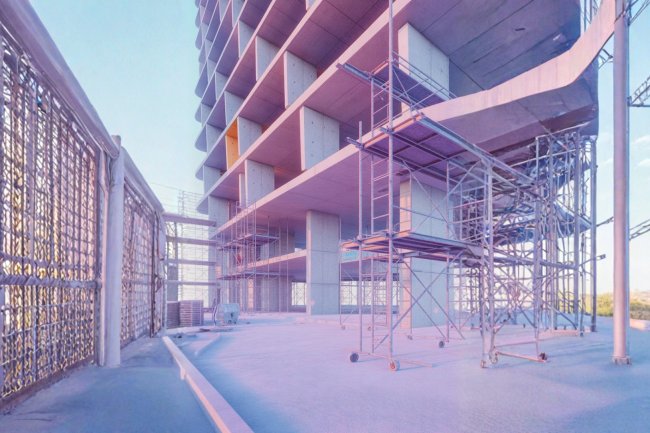
Detailed precast concrete planning creates a powerful financial advantage. By investing in comprehensive shop drawings and coordinated 3D models before fabrication begins, project teams reduce waste, improve productivity, and avoid costly surprises throughout construction.
%
Material Optimization
Accurate calculations and coordinated detailing reduce excess concrete, reinforcement, and fabrication waste. Projects commonly achieve material savings of 15–20% compared to traditional field-driven adjustments.
LAB
⚙
Labor Efficiency
Controlled factory production reduces dependence on large on-site crews. Automated manufacturing processes improve consistency while lowering labor costs and minimizing productivity losses.
✓
RISK REDUCTION
Reduced Rework
Advanced clash detection and coordinated detailing identify conflicts long before fabrication or installation begins. This proactive approach dramatically reduces change orders, field modifications, schedule disruptions, and the hidden costs associated with rework.
How Detailed Planning Reduces Expenses
Precast concrete detailing shifts critical decisions to the planning stage, where changes are inexpensive and highly controllable. The result is a streamlined construction process with lower material waste, fewer labor inefficiencies, reduced rework, and significantly improved budget predictability from start to finish.
QC
QUALITY ADVANTAGE
Quality Control and Consistency at Scale
Factory Precision Meets Project Demands
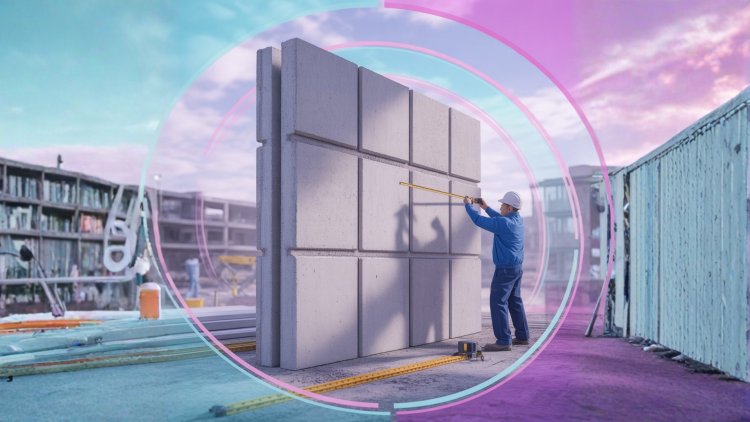
One of the most compelling advantages of precast concrete detailing is the exceptional level of quality control achieved through factory production. Unlike site-cast concrete, which is exposed to variables such as changing weather conditions, varying labor skill levels, and unpredictable jobsite environments, precast components are manufactured under carefully controlled conditions designed for consistency and precision.
Automated batching systems maintain highly consistent concrete mix designs. Climate-controlled curing environments promote optimal strength development and durability. Throughout production, multiple quality inspection checkpoints verify dimensions, reinforcement placement, surface finishes, and structural integrity before components are approved for delivery.
Structural elements are produced with tolerances measured in millimeters rather than inches, delivering a level of accuracy that is difficult to achieve consistently in field-cast construction.
This rigorous manufacturing process results in precast components that arrive on site ready for installation with predictable dimensions, reliable performance, and superior finish quality. Project teams spend less time addressing inconsistencies and more time maintaining installation productivity.
For large-scale developments requiring hundreds or even thousands of similar components—such as parking structure double tees, stadium seating risers, wall panels, columns, and beams—this consistency becomes a significant competitive advantage. Every piece matches engineered specifications precisely, ensuring dependable structural performance, streamlined installation, and aesthetic uniformity across the entire project.
THE CONSAC ADVANTAGE
Expertise in Complex Precast Detailing
Maximizing the benefits of precast concrete requires more than quality materials—it requires exceptional detailing. Consac combines structural expertise, advanced BIM workflows, and practical construction knowledge to help project teams achieve faster delivery, stronger coordination, and predictable project outcomes.
1
Advanced 3D Modeling
Comprehensive BIM integration enables early coordination across structural, architectural, and MEP disciplines, identifying conflicts before they evolve into costly field issues.
02
2
Fabrication-Ready Drawings
Shop drawings are optimized for manufacturing efficiency, helping fabricators reduce production time while ensuring components arrive precisely when required.
03
3
Connection Engineering
STRUCTURAL PERFORMANCE + FIELD EFFICIENCY
Specialized expertise in precast connection design ensures structural integrity, constructability, and erection efficiency. Well-engineered connection systems simplify installation procedures while maintaining the performance requirements demanded by complex projects.
BIM
Delivering the Full Value of Precast Construction
By combining advanced digital modeling, fabrication-focused detailing, and specialized connection engineering, Consac helps project teams unlock the full potential of precast concrete systems—delivering projects that are better coordinated, faster to construct, and more likely to stay on schedule and within budget.
REAL-WORLD IMPACT
Project Types That Benefit Most
01
Parking Structures
Repetitive floor systems and aggressive construction schedules make parking garages ideal for precast solutions, often enabling completion up to 50% faster than cast-in-place alternatives.
02
Sports Venues
Stadiums and arenas rely on precast seating risers, facade panels, and structural systems to meet demanding seasonal opening schedules and large-scale construction requirements.
03
Commercial Buildings
Office towers, hotels, and mixed-use developments utilize architectural precast for both structure and building envelope, combining visual appeal with structural performance.
04
Industrial Facilities
Warehouses, manufacturing plants, and distribution centers benefit from precast's long-span capabilities and rapid enclosure, minimizing operational disruption and accelerating occupancy.
IMPLEMENTATION STRATEGY
Making Precast Work for Your Next Project
01
Start Early
Engage precast detailing specialists during design development rather than waiting until construction documents are complete. Early collaboration allows structural systems to be optimized for fabrication, transportation, and erection efficiency from the outset.
02
Prioritize Coordination
Invest in detailed BIM coordination sessions involving structural, architectural, and MEP teams. Resolving conflicts digitally before fabrication begins prevents expensive field modifications, delays, and change orders during construction.
03
Choose Experienced Partners
Work with detailing professionals who understand both structural engineering requirements and real-world fabrication constraints. This combination of expertise helps create designs that are practical, economical, and straightforward to manufacture and install.
A Smarter Approach to Project Delivery
Precast concrete detailing is more than a construction method—it is a strategic project delivery approach designed for the realities of modern development. By front-loading engineering effort, embracing BIM-driven coordination, and leveraging factory-controlled precision, project teams can achieve faster schedules, lower costs, improved quality, and greater certainty throughout the construction lifecycle. For your next large-scale development, precast detailing may be the key to overcoming today's most demanding construction challenges.