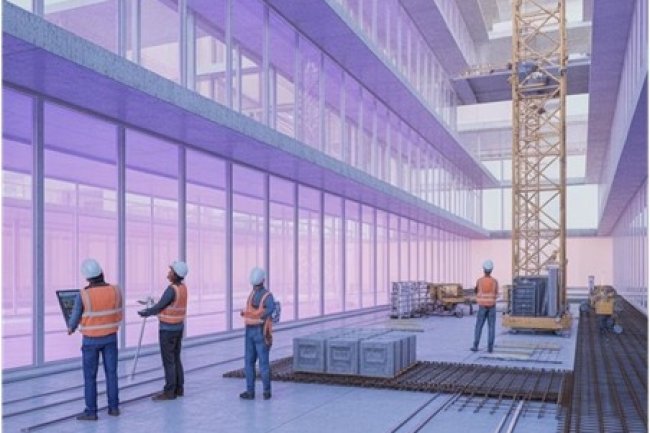
The Role of BIM in Precast Concrete Projects
Integrated workflows are transforming how precast concrete is designed, fabricated, and installed. Building Information Modeling (BIM) enables better coordination, accuracy, and efficiency across all project phases, making it an essential tool rather than an optional one.

Why Precast Concrete Needs Digital Integration
|
Precast concrete projects require tight coordination between design teams, fabricators, and field crews. Traditional 2D workflows often result in costly rework, fabrication delays, and installation conflicts. Building Information Modeling (BIM) addresses these challenges by providing a single source of truth—a 3D model that develops from concept through construction—ensuring all stakeholders work from accurate, consistent information. |
|

The Four Pillars of BIM in Precast Detailing
Design Accuracy
Parametric modeling ensures precise dimensions, connections, and embeds before fabrication begins. Clash detection catches conflicts early.
Team Collaboration
Architects, engineers, and fabricators work from a coordinated model, reducing miscommunication and streamlining approvals.
Fabrication Efficiency
BIM models drive CNC machines and automated production lines, translating design intent directly into manufactured components.
Installation Planning
4D sequencing visualizes erection logistics, identifying crane positioning, staging areas, and potential site constraints before crews arrive.
From Concept to Fabrication: The BIM Workflow
Architectural Intent
Design teams establish geometry, aesthetic requirements, and structural loads in the conceptual BIM model.
Engineering Coordination
Structural engineers refine connections, reinforcement, and load paths while coordinating with MEP systems.
Shop Drawing Development
Detailers create production-ready models with embeds, inserts, lifting points, and fabrication notes.
Manufacturing Execution
BIM data feeds directly into plant equipment, ensuring what's modeled is exactly what's built.
Real Benefits: Where BIM Delivers Value
Faster Approvals
3D visualization accelerates stakeholder review cycles and reduces revision rounds.
Fewer RFIs
Comprehensive coordination eliminates ambiguity that typically generates information requests.
Installation Time Saved
Precise detailing and sequencing reduce field adjustments and erection duration.
Clash Detection Rate
Virtual coordination identifies conflicts before fabrication, preventing costly field fixes.
Consac's Approach to Integrated Precast Solutions
Assessment & Planning
We evaluate project requirements, coordination needs, and fabrication capabilities to establish the optimal BIM execution plan.
Model Development
Our detailing team creates comprehensive 3D models with all geometric, material, and connection information required for fabrication.
Coordination & Clash Detection
We facilitate multidisciplinary coordination sessions, resolving conflicts before they reach the shop floor or job site.
Shop Drawing Production
Models generate production-ready documentation that meets both fabricator requirements and project specifications.
Construction Support
We provide ongoing model updates and field coordination assistance throughout the installation phase.
At Consac, we combine structural engineering expertise with advanced digital workflows to deliver precast solutions that are accurate, coordinated, and construction-ready. Our integrated approach reduces risk and accelerates project timelines.
Overcoming Common BIM Implementation Challenges
The Technology Learning Curve
Transitioning from 2D CAD to BIM requires investment in software, training, and workflow adjustments. Begin with pilot projects to gradually build competency.
Data Management Complexity
Large precast models generate substantial data. Implement clear naming conventions, organized file structures, and strict version control protocols from the start.
Interoperability Between Platforms
Not all software communicates seamlessly. Use IFC standards and neutral file formats to ensure smooth data exchange across project teams.
The Future Is Integrated
Define what you want BIM to accomplish—whether it's clash detection, fabrication automation, or installation sequencing.
Technology is only as effective as the people using it. Prioritize training and process development alongside software adoption.
Work with detailing firms and fabricators who understand both precast construction and BIM workflows. Integration requires collaboration.
BIM isn't just a modeling tool—it's a strategic advantage that transforms how precast concrete projects are designed, fabricated, and built. The question isn't whether to adopt integrated workflows, but how quickly you can implement them to stay competitive.
What's Your Reaction?