Open Web Steel Joists (K-Series) Detailing: Key Considerations for Designers
Open web steel joists are the workhorses of modern construction, offering exceptional strength-to-weight ratios and design flexibility. When detailed correctly, K-Series joists deliver cost-effective solutions for a wide range of commercial and industrial projects.
Critical Load Considerations in K-Series Design
Proper load evaluation ensures safe, efficient, and code-compliant K-Series steel joist performance across all building types.
Dead Load Analysis
Account for the weight of permanent construction including roofing materials, mechanical equipment, suspended ceilings, and the joist’s self-weight. Accurate dead load calculations prevent under-design and ensure structural integrity throughout the building’s lifespan.
Live Load Requirements
Consider occupancy-specific loads, snow loads for roof applications, and any concentrated loads from equipment or partitions. While building codes specify minimum live loads, actual project conditions may require higher values.
Load Distribution Patterns
Evaluate how loads transfer through the joist system to supporting members. Uniform, concentrated, and partial loads each require different detailing approaches to ensure proper load paths and avoid overstressing.
Bearing and Support Connection Details
|
Bearing Length Requirements The bearing surface must be level and capable of supporting reaction forces without excessive deflection. Welded connections to steel beams require specific electrode specifications and weld sizes as outlined in SJI standards. |
|
Bridging and Bracing Requirements
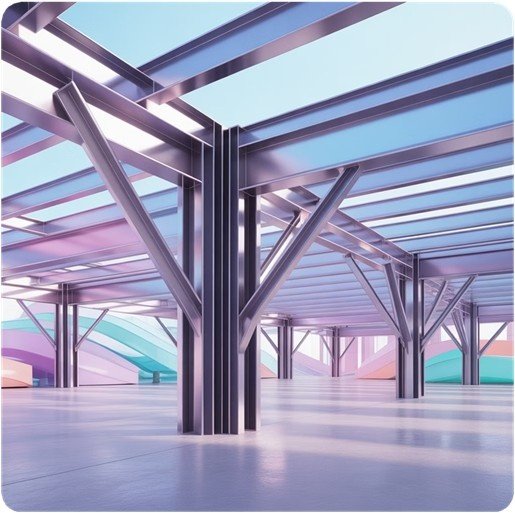
Lateral stability of K-Series joists depends heavily on proper bridging and bracing. These systems prevent rotation, control buckling, and distribute loads efficiently across adjacent joists in accordance with SJI requirements.
Horizontal Bridging
Steel angles or channel sections bolted or welded between joists provide lateral restraint and help distribute concentrated loads effectively across multiple members.
Diagonal Bridging
Cross-bracing using steel rods or angles connects opposing joist chords, preventing lateral movement and reducing torsional instability under applied loads.
Bottom Chord Bracing
Continuous or periodic bracing along bottom chords resists uplift forces and provides critical stability during construction phases when permanent deck systems are not yet in place.
Deflection Control and Serviceability
Maintaining occupant comfort and protecting finishes requires precise deflection control. Both immediate and long-term deflections are considered, and camber is used to offset expected sag.
Standard deflection limits are L/360 for floors under live load and L/240 for roofs, though many projects require stricter limits. Designers consider both immediate deflection and long-term creep. Camber is typically built into K-Series joists to compensate for dead load deflection, ranging from 0 to 2 inches depending on span length. Consac engineers coordinate deflection requirements with architectural and MEP needs to ensure optimal structural performance.
1/360
Floor Live Load
Standard deflection limit
1/240
Roof Live Load
Typical deflection
1/180
Total Load
Common dead + live limit
Coordination with MEP Systems
Open web joists allow mechanical, electrical, and plumbing systems to pass through the structural depth, reducing floor heights and improving efficiency. Proper coordination ensures conflict-free installation.
Ductwork Routing
Coordinate HVAC duct sizes and locations early. Ducts typically pass perpendicular to joists through web openings, but verify dimensions don't exceed web sizes.
Electrical Conduit
Conduits and cable trays benefit from the open web. Plan routing to minimize conflicts and ensure proper support. Avoid cutting or welding to joists without engineer approval.
Piping Systems
Smaller pipes can pass easily through web openings. For larger pipes running parallel, ensure adequate clearance and support or consider joist spacing adjustments.
Fire Protection
Sprinkler piping must be coordinated carefully with joist layout. Consider head spacing requirements and routing to avoid conflicts with bridging and other structural elements.
Best Practices for Successful K-Series Detailing
Early Coordination
Engage structural, architectural, and MEP teams during design development to identify conflicts and optimize joist layouts before detailed design begins.
Shop Drawing Review
Thoroughly review joist shop drawings for conformance with design intent. Verify loads, spans, bearing conditions, and special requirements before fabrication begins.
SJI Compliance
Always specify joists in accordance with current SJI standards. Reference the appropriate standard designation and include all necessary performance criteria in your specifications.
Field Verification
Conduct site inspections during joist installation to ensure proper bearing, bracing, and bridging installation. Address any deviations from approved drawings immediately.
Open web steel joists represent an efficient, economical structural solution when properly detailed and coordinated. Leveraging K-Series joists ensures high-performing buildings that meet budget, schedule, and structural integrity requirements.
What's Your Reaction?