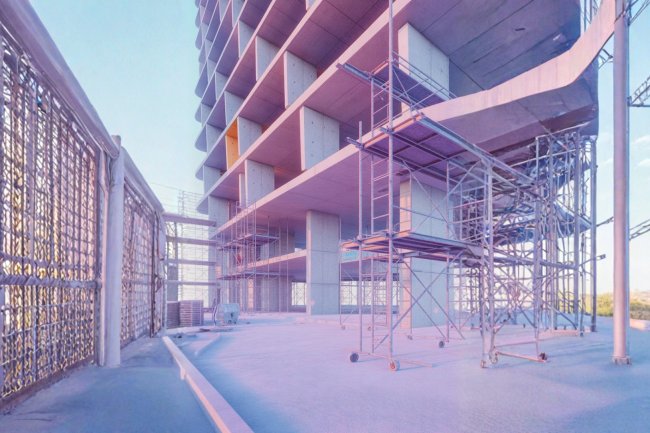
Precast Detailing for Complex Architectural Designs
Balancing aesthetics and structural integrity in contemporary construction projects

The Challenge of Modern Precast Design
|
Today’s architectural landscape demands buildings that are both visually striking and structurally sound. Precast concrete detailing sits at the intersection of these requirements, where engineering precision meets design vision. Complex architectural designs with curved facades, intricate patterns, and non-standard geometries push the limits of traditional precast manufacturing. The challenge is translating bold architectural concepts into fabrication-ready shop drawings that preserve both the designer’s intent and structural performance. |
|
Key Principles for Successful Precast Detailing
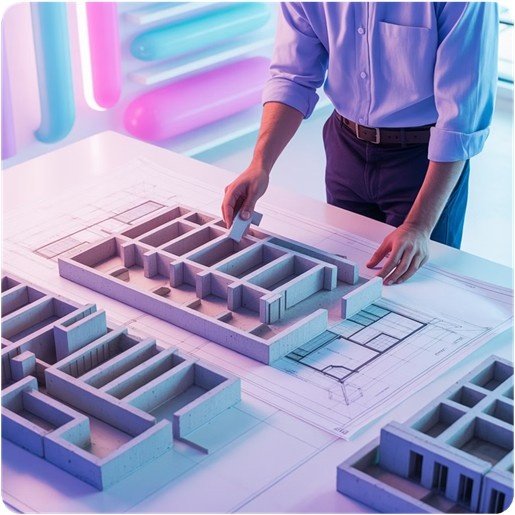
Tolerance control is critical. Panel connections must align perfectly during installation, requiring meticulous coordination between architectural intent and manufacturing capabilities.
Every aesthetic choice must satisfy load-bearing requirements. Reinforcement placement, embed locations, and connection details all impact both appearance and performance.
Beautiful designs mean nothing if they can't be manufactured. Understanding mold complexity, finish options, and production constraints ensures designs translate to reality.
The Detailing Process: From Concept to Construction
Design Review
Analyze architectural drawings, identify complex geometries, and assess structural requirements before detailing begins.
3D Modeling
Create detailed BIM models showing reinforcement, embeds, connections, and finishes with clash detection built in.
Shop Drawings
Generate fabrication-ready drawings with all dimensions, tolerances, and production notes for the precaster.
Erection Planning
Develop sequencing plans and connection details that ensure smooth, efficient on-site installation.
Navigating Complex Architectural Features
Non-planar surfaces require custom formwork and precise reinforcement placement. Detailers must account for mold costs, draft angles, and repeatable geometry to balance aesthetics with economics.
Reveals, ribs, and textured finishes add visual interest but complicate demolding and finishing. Coordination between form liner design and structural requirements is essential.
Oversized elements maximize efficiency but challenge transportation, handling, and erection. Weight distribution, lifting points, and connection design become critical factors.
Technology's Role in Advanced Precast Detailing
Digital Tools Transforming the Process
Modern precast detailing leverages sophisticated software to bridge design and fabrication. BIM platforms enable early coordination, while specialized precast detailing tools automate repetitive tasks and reduce errors. Parametric modeling allows rapid iteration on complex geometries, and clash detection identifies conflicts before production begins.
3D Coordination
Full geometric visualization prevents spatial conflicts and enables accurate quantity takeoffs, ensuring that all elements fit together seamlessly before fabrication.
Automated Detailing & Cloud Collaboration
Intelligent tools generate connection details and reinforcement schedules based on design rules. Cloud-based platforms ensure real-time access for all stakeholders, keeping everyone aligned and working from the most current project information.
Common Pitfalls and How to Avoid Them
Waiting too long to involve the precaster and detailer leads to costly redesigns. Bring manufacturing expertise into the conversation during design development to identify potential issues early.
Specifying tighter tolerances than manufacturing allows creates quality problems and cost overruns. Understand industry standards and communicate clearly about what's achievable.
Connections that look good on paper may prove difficult in the field. Consider erection sequences, access limitations, and weather protection when detailing connection systems.
Panel sizes that exceed shipping limits or require special permits add significant costs. Factor in transportation early to optimize panel breaks and dimensions.
Achieving Excellence in Precast Detailing
Success in complex precast detailing comes from balancing competing priorities — architectural vision, structural performance, manufacturing reality, and project economics. The most effective approach combines technical expertise with collaborative problem-solving.
By integrating advanced technology, understanding fabrication processes, and maintaining open communication across all project stakeholders, teams can deliver precast structures that satisfy both aesthetic ambitions and practical requirements.
The result is buildings that stand as testaments to what's possible when engineering precision meets architectural creativity — structures that perform flawlessly while inspiring those who experience them.
What's Your Reaction?