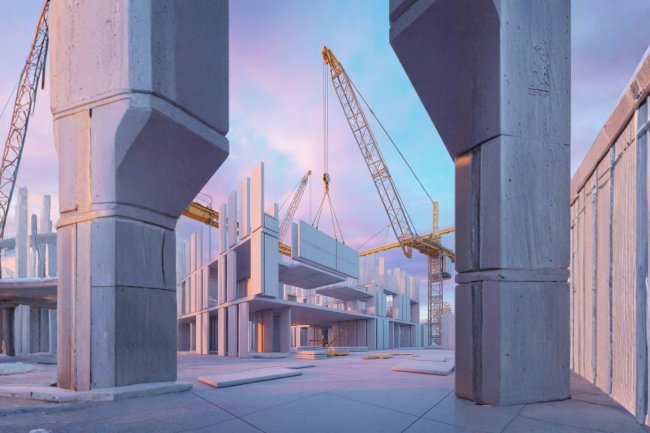
Precast Panel Detailing: A Complete Guide
From CAD models to shop drawings 4 mastering the precision that brings architectural vision to structural reality.

Off-site fabrication takes place while site preparation progresses simultaneously, allowing projects to reduce overall construction schedules by 30–50% compared to traditional cast-in-place methods.
Factory-controlled manufacturing environments deliver consistent quality, tighter tolerances, and reduced material waste through standardized production and inspection procedures.
Reduced on-site assembly minimizes labor hours at elevation and lowers exposure to weather-related hazards, helping improve overall project safety performance.
Detailed planning and fabrication-ready documentation eliminate many field modifications, improve quantity accuracy, and reduce unexpected costs during construction.
Why Precast Detailing Matters in Modern Construction
Accelerated Project Timelines
Superior Quality Control
Enhanced Worksite Safety
Cost Predictability
Review design intent, load requirements, architectural finishes, and structural criteria. Coordinate with engineers to understand connection details and performance expectations before modeling begins.
Develop detailed models in Revit, Tekla, or AutoCAD. Integrate with the BIM workflow to perform clash detection and resolve coordination issues before fabrication.
Produce fabrication-ready drawings including dimensions, reinforcement layouts, embeds, hardware locations, connection details, tolerances, and manufacturing notes.
Submit drawings for review, address engineering comments, revise details as required, and obtain final approval before releasing documents for production.
Fabricators manufacture panels using approved drawings while quality inspections verify dimensions, reinforcement placement, embedments, and finish requirements.
Coordinate transportation, erection sequencing, and site logistics. Provide installation drawings and field support to ensure accurate panel placement and project completion.
The Precast Detailing Workflow: From Design to Fabrication
Architectural & Structural Coordination
3D Modeling & BIM Integration
Shop Drawing Development
Engineering Review & Approval
Production & Quality Assurance
Delivery & Installation Coordination
Critical Components of Precast Shop Drawings
Panel Geometry & Dimensions
Connection & Embed Information
Finishes & Special Requirements
Platforms such as Tekla Structures, Revit, and AVEVA support parametric modeling, clash detection, and multidisciplinary coordination. Intelligent 3D models automatically generate shop drawings while improving visualization and reducing detailing errors.
Real-time collaboration tools allow project teams to review models, track revisions, manage approvals, and resolve issues faster. Centralized information improves version control and keeps projects moving efficiently.
Consac combines decades of engineering expertise with advanced BIM technology to deliver highly coordinated precast detailing solutions. By leveraging intelligent modeling, automated workflows, and collaborative digital platforms, our team helps clients streamline fabrication, improve accuracy, reduce project risk, and eliminate costly field conflicts before construction begins.
Technology Driving Precast Detailing Excellence
BIM & 3D Modeling Software
Cloud Collaboration Platforms
The Consac Advantage
Common Challenges & How to Overcome Them
Detailed and coordinated shop drawings eliminate ambiguity before fabrication begins, reducing errors, rework, and costly project disruptions.
Accurate detailing aligns architects, engineers, fabricators, and field teams around a single source of truth, improving communication throughout construction.
Whether you're delivering a multi-story parking structure, a stadium façade, an industrial facility, or a mixed-use development, investing in comprehensive precast detailing generates measurable value. The precision embedded within quality shop drawings results in smoother fabrication workflows, faster installation sequences, enhanced quality control, and significantly fewer field conflicts. The outcome is greater schedule certainty, improved budget performance, and a more predictable construction process from start to finish.
Partner with experienced precast detailing professionals who understand both the technical demands and practical realities of modern construction. The right detailing strategy creates the foundation for quality fabrication, efficient installation, and long-term project success.
Reduce Risk
Improve Coordination
Why It Matters Across Every Project Type
Precision Starts With The Details

What's Your Reaction?