Architect's Guide to Steel Joist Design and Coordination
Steel joists are the unsung heroes of commercial and industrial construction, providing efficient structural support while keeping costs manageable. For architects, engineers, and project managers, understanding how to design and coordinate these critical elements can mean the difference between a smooth project delivery and costly redesigns. This guide explores best practices for integrating steel joists into your building designs with confidence and precision.
Understanding Steel Joist Types and Applications
Open Web Steel Joists
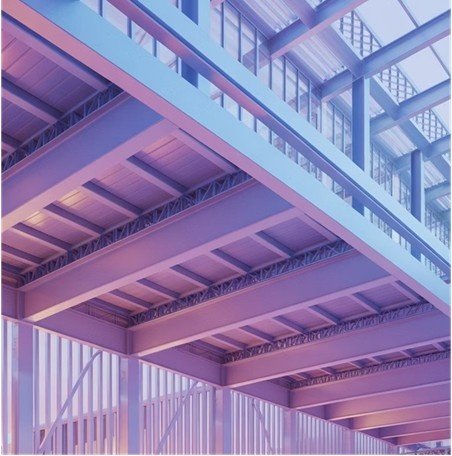
K-Series, LH-Series, and DLH-Series joists offer exceptional versatility across span ranges from 8 to 240 feet. These prefabricated trusses provide excellent strength-to-weight ratios while allowing mechanical systems to pass through web openings, reducing floor-to-floor heights and overall building costs.
K-Series joists typically handle shorter spans up to 60 feet and are ideal for roof and floor systems in light commercial buildings. LH and DLH series accommodate longer spans and heavier loads, making them suitable for warehouses, manufacturing facilities, and institutional buildings.
Joist Girders
Joist girders are heavy-duty framing members designed to support concentrated loads from other joists or beams. They often eliminate the need for structural steel beams, providing cost-effective solutions for large open spaces.
Understanding load paths is crucial—joist girders typically span between columns while supporting perpendicular joists at panel points. Proper coordination ensures connections align with web members rather than chord sections, preventing structural complications during fabrication and erection.
Design Considerations for Optimal Performance
Load Analysis
Calculate dead loads, live loads, and environmental factors including snow, wind, and seismic forces. Steel Joist Institute specifications provide standardized load tables, but custom joists may be required for unique conditions.
Span-to-Depth Ratios
Maintain appropriate ratios to control deflection and vibration. Typical ratios range from 20:1 to 24:1 for roof joists and 18:1 to 20:1 for floor joists. Deeper joists improve performance but increase building height.
Bridging Requirements
Horizontal and diagonal bridging stabilizes joists during construction and throughout their service life. Spacing varies by joist depth and span, typically every 12 to 20 feet per specifications.
Connection Details
Specify seat connections, web cleat connections, or header connections based on support conditions. Clear communication with steel fabricators ensures proper detailing and avoids costly field conflicts.
Coordination Between Design Disciplines
Successful steel joist projects require seamless coordination between architects, structural engineers, MEP consultants, and steel fabricators. Early integration of joist layouts into building information models (BIM) prevents conflicts with ductwork, piping, electrical conduits, and architectural features.
Architectural Coordination
Verify that ceiling heights, skylight locations, and roof drainage slopes align with joist depths and camber. Early coordination of roof penetrations and equipment supports is critical to avoid costly structural modifications later in the project lifecycle.
MEP Integration
Route mechanical ductwork and piping through joist webs whenever possible to maintain efficient floor-to-floor heights. Establish clear utility zones and maintain minimum clearances for installation and maintenance. Large ducts may require joists with extended depths or custom web configurations.
Structural Coordination
Ensure joist reactions are compatible with supporting beam or wall capacities. Coordinate expansion joints, seismic separation, and lateral bracing systems carefully. Companies like Consac specialize in delivering detailed coordination services that integrate structural steel elements within comprehensive BIM models—reducing conflicts before fabrication begins.
Common Design Challenges and Solutions
Deflection Control
Excessive deflection causes cracked finishes, ponding water, and serviceability issues. Specify deflection limits clearly—typically L/240 for floor joists with plaster ceilings and L/360 for floors with sensitive finishes.
Solutions: Increase joist depth, reduce spacing, or specify camber to counteract dead load deflection.
Vibration Concerns
Open floor plans with long joist spans can experience uncomfortable vibrations from foot traffic. Evaluate using vibration analysis software for sensitive applications such as offices, laboratories, or residential spaces.
Mitigation Strategies: Shorten spans, add intermediate supports, or incorporate supplementary damping systems.
Fire Resistance
Steel joists require fire-rated assemblies for code compliance. Options include spray-applied fireproofing, intumescent coatings, or fire-rated ceiling systems that protect structural members from below.
Best Practice: Early coordination with fire protection engineers ensures ratings meet building code requirements without compromising architectural intent.
Leveraging Technology for Joist Coordination
Modern Building Information Modeling (BIM) tools transform how teams coordinate steel joist systems. Three-dimensional models enable real-time clash detection between structural, mechanical, and architectural elements— identifying conflicts before they reach the job site.
3D Modeling and Visualization
Create intelligent joist families in BIM software with parametric properties for depth, spacing, and bridging. Visual coordination reveals spatial conflicts early in the design development phase.
Clash Detection Analysis
Run automated clash detection routines between structural, architectural, and MEP models. Prioritize hard clashes that require immediate resolution versus soft clashes that need monitoring.
Fabrication-Ready Models
Export coordinated models to steel detailers who generate shop drawings and fabrication data. Direct model-to-fabrication workflows reduce errors and significantly accelerate project delivery.
What's Your Reaction?