Light Gauge Steel for Temporary and Emergency Shelters
When disaster strikes, time becomes the most critical factor in providing safe, reliable shelter for displaced populations. Light gauge steel framing has emerged as a game-changing solution for rapid deployment shelters, offering strength, speed, and sustainability that traditional materials simply cannot match.
Why Disaster Relief Demands Better Building Solutions
Traditional emergency shelter solutions face significant limitations. Timber frames deteriorate rapidly in harsh conditions, concrete requires extended curing time, and prefabricated modules often lack adaptability. Disaster relief organizations need structures that can be erected within days, withstand extreme weather, and remain functional for months or even years.
Light gauge steel addresses these challenges head-on. Its high strength-to-weight ratio enables rapid assembly without heavy machinery, while its dimensional stability ensures structural integrity across diverse climates. For project managers overseeing emergency response, this translates to predictable timelines and reliable performance when communities need it most.
Key Advantages of Light Gauge Steel Framing
Rapid Deployment
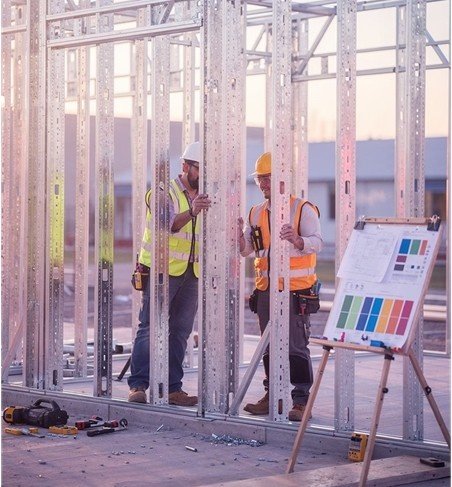
Pre-engineered components ship flat and assemble quickly with minimal tools. Typical shelter frames can be erected in 4–6 hours by small teams, dramatically reducing time from disaster to occupancy.
Cost Efficiency
Lower transportation costs due to lightweight materials, reduced labor requirements, and minimal waste generation create significant budget advantages for relief organizations and government agencies.
Structural Resilience
Steel maintains its properties in extreme temperatures and resists rot, pests, and mold. Shelters remain structurally sound through hurricanes, earthquakes, and harsh environmental conditions.
Design Flexibility
Modular systems adapt to various footprints and can be expanded or reconfigured as needs evolve. Single units transform into multi-room facilities or medical stations with minimal modification.
Engineering Specifications That Matter
Material Properties
Light gauge steel framing typically uses cold-formed steel members ranging from 18 to 14 gauge thickness. These profiles provide yield strengths of 33 to 50 ksi, offering excellent load-bearing capacity while maintaining workability during assembly.
Galvanized coatings (G60 or G90) protect against corrosion in humid or coastal environments. For extreme conditions, additional protective coatings or stainless steel options ensure longevity beyond typical temporary shelter requirements.
BIM design and technical detailing ensure structural accuracy, coordination across disciplines, and constructible solutions before fabrication begins.
Component manufacturing follows approved shop drawings, with strict quality control checks to ensure dimensional precision and compliance with specifications.
Flat-pack preparation and secure packing optimize transport efficiency, while coordinated logistics planning ensures on-time delivery to the project site.
Local teams build and inspect the structure efficiently, ensuring compliance, structural integrity, and readiness for occupancy.
From Concept to Deployment: The Workflow
Engineering
Fabrication
Packaging & Logistics
Assembly
Coastal regions benefit from steel's wind resistance and corrosion protection. Units withstand 150+ mph winds while providing safe housing for months during rebuilding efforts.
Flexible connections and ductile steel behavior absorb seismic forces effectively. Light weight reduces foundation requirements, enabling construction on compromised terrain where heavy materials would fail.
Scalable designs accommodate thousands of occupants. Medical clinics, schools, and administrative buildings use identical framing systems, simplifying logistics and maintenance across expansive camp layouts.
Real-World Applications and Case Studies
Hurricane Relief Shelters
Earthquake Response Housing
Refugee Camp Facilities
Critical Considerations for Successful Implementation
Foundation Systems
Light gauge steel accommodates various foundation types, from simple concrete piers to adjustable screw piles. Select systems based on soil conditions and deployment timeline rather than defaulting to conventional footings.
Thermal Performance
Steel's thermal conductivity requires proper insulation strategies. Continuous insulation over framing reduces thermal bridging and maintains comfortable interior temperatures with minimal energy input.
Connection Details
Pre-drilled holes and standardized fasteners eliminate field drilling and minimize assembly errors. Ensure connection drawings are clear and accessible to personnel with varying skill levels.
Local Compliance
Emergency structures must still meet essential building codes. Work with engineers familiar with IBC provisions for temporary structures to ensure occupant safety while maintaining deployment speed.
Building Resilient Solutions for Tomorrow's Challenges
Light gauge steel framing represents a paradigm shift in how we approach emergency shelter construction. Its combination of speed, strength, and adaptability makes it the material of choice for disaster relief organizations, government agencies, and humanitarian groups worldwide.
As climate events increase in frequency and intensity, the construction industry must embrace solutions that respond quickly while maintaining quality and safety. For design engineers, facility planners, and project managers, understanding light gauge steel systems opens new possibilities for making meaningful impact when communities face their darkest hours.
Whether you're planning disaster response capabilities or evaluating shelter solutions for rapid deployment scenarios, light gauge steel offers a proven, practical path forward. The technology exists today to build better, faster, and smarter when every moment counts.
What's Your Reaction?