The Future of Mechanical Engineering Simulation Tools
Computer-aided engineering (CAE) tools are transforming how mechanical engineers design, test, and optimize products. As simulation technology advances, professionals across architecture, construction, manufacturing, and infrastructure are gaining unprecedented capabilities to predict performance, reduce costs, and accelerate innovation before physical prototypes ever exist.
The Evolution of CAE: From Static Models to Dynamic Intelligence
Traditional Simulation
Mechanical engineering simulation began with basic finite element analysis (FEA). Early CAE tools required extensive manual setup, long computational times, and specialized expertise to interpret results. Engineers worked with simplified models and often waited days for simulations to complete.
Modern Capabilities
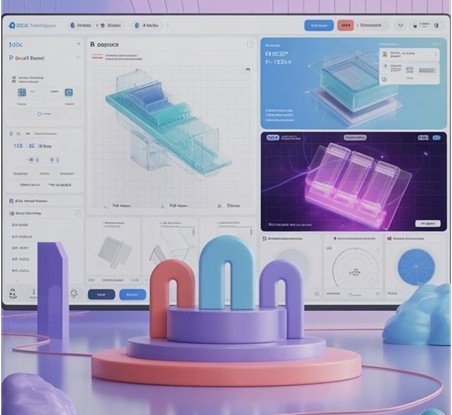
Today’s simulation platforms combine real-time physics, cloud computing, and artificial intelligence to deliver faster and more accurate predictions. Engineers now simulate complex multiphysics scenarios—thermal, structural, fluid dynamics, and electromagnetic interactions—simultaneously, enabling holistic product development and smarter design decisions.
Key Trends Reshaping Simulation Technology
Cloud-Based Processing
Unlimited computational power accessible anywhere, eliminating hardware constraints and enabling massive parallel simulations that once took weeks.
AI-Driven Optimization
Machine learning algorithms evaluate thousands of design variations automatically, identifying optimal solutions far faster than traditional studies.
Real-Time Simulation
Instant feedback during design iterations allows engineers to make informed decisions on the fly, dramatically reducing development cycles.
Digital Twin Integration
Virtual replicas of physical assets enable continuous monitoring, predictive maintenance, and lifecycle performance optimization.
Multi-Physics Simulation: The Integrated Approach
The most significant advancement in CAE tools is the ability to simulate multiple physical phenomena simultaneously. Real-world products experience thermal expansion, mechanical stress, fluid flow, and electromagnetic forces—often all at once.
Thermal Analysis
Heat transfer and temperature distribution across components and assemblies to predict expansion, hotspots, and thermal fatigue.
Structural Mechanics
Stress, strain, and deformation analysis under combined static, dynamic, and thermal loading conditions.
Fluid Dynamics
Air and liquid flow behavior, pressure drops, turbulence effects, and thermal-fluid interaction modeling.
Coupled Results
Integrated insight into how systems truly behave in realistic operating environments—improving reliability and design confidence.
Practical Applications Across Industries
Companies like Consac leverage advanced CAE tools to deliver comprehensive engineering solutions across diverse sectors. Modern simulation now influences every stage of the built environment and manufactured products.
Building Systems
Optimize HVAC performance, analyze airflow patterns, and ensure the structural integrity of mechanical installations before construction begins—reducing energy consumption, rework, and operational risk.
Manufacturing Equipment
Predict machine performance, identify potential failure points, and optimize production line layouts for maximum efficiency, safety, and equipment longevity before physical prototyping.
Infrastructure Projects
Validate structural designs, simulate seismic responses, and model long-term material behavior under environmental stresses to ensure durability, safety, and regulatory compliance.
Implementing Simulation in Your Workflow
Assess Current Capabilities
Evaluate existing tools, team expertise, and project requirements to identify gaps and opportunities for simulation integration.
Select Appropriate Tools
Choose CAE platforms that align with your industry, project complexity, and budget—consider cloud-based options for scalability.
Invest in Training
Build internal competency through structured training programs, ensuring engineers can effectively leverage simulation capabilities.
Start with Pilot Projects
Apply simulation to smaller projects first, documenting benefits and refining processes before scaling across your organization.
Integrate with BIM/CAD
Connect simulation tools with your existing design workflows to create seamless data exchange and collaborative environments.
Continuous Improvement
Regularly review simulation accuracy, update material libraries, and stay current with emerging technologies and best practices.
What's Your Reaction?