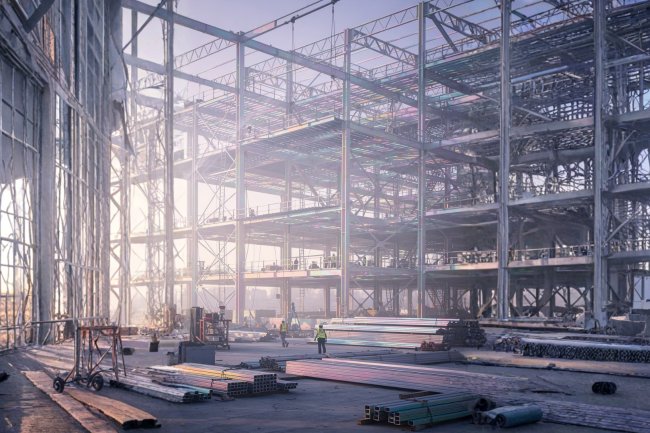
Engineered Wood Systems
What Is Engineered Wood — and Why Does It Matter Now?
Engineered wood is reshaping modern construction with stronger, more efficient, and more sustainable alternatives to traditional lumber systems.
Beyond Traditional Lumber
Engineered wood products are manufactured by bonding fibers, veneers, strands, or planks under heat and pressure. This process produces materials with superior dimensional stability, higher load capacity, and significantly reduced material waste.
As sustainability requirements increase and construction timelines compress, engineered wood is becoming a core material in modern structural systems.
Key Product Categories
CLT — Cross-Laminated Timber
Structural panels for floors, walls, and roofs
LVL — Laminated Veneer Lumber
High-strength beams and headers for load-bearing applications
Glulam — Glued Laminated Timber
Curved and straight beams for architectural flexibility
I-Joists & LSL
Lightweight framing systems with high structural efficiency
Mass Timber Systems
CLT and Mass Timber: The Structural Revolution
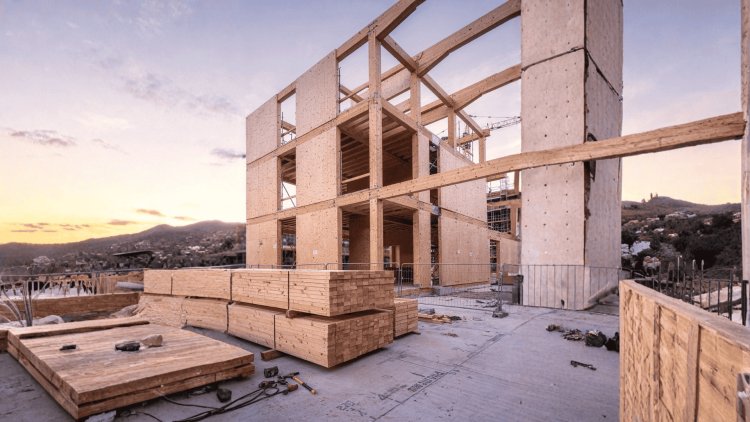
Cross-Laminated Timber is redefining structural engineering by enabling high-performance, low-carbon buildings that rival steel and concrete systems in strength and scalability.
Multi-Story Construction
CLT enables 8–18 story structures with reduced dead load, improved seismic response, and lower foundation requirements compared to conventional concrete systems.
Dimensional Stability
Cross-laminated layers minimize shrinkage, warping, and deformation, making CLT highly predictable for structural detailing and BIM coordination workflows.
Fire Performance
CLT chars in a predictable manner under fire exposure, maintaining structural integrity longer than unprotected steel systems — supporting code compliance strategies.
Carbon Sequestration
Mass timber stores atmospheric carbon throughout its lifecycle, significantly reducing embodied carbon compared to steel and concrete construction systems.
Construction Detailing
Precision Detailing: Where Innovation Meets Execution
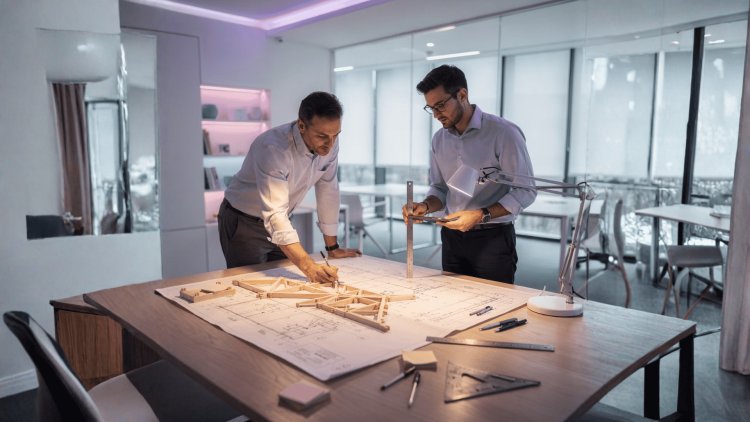
Engineered wood reaches its full potential only through precise detailing, tight tolerances, and BIM-driven coordination across structural, architectural, and MEP systems.
Advanced Connection Design
Modern engineered wood connections use hidden steel plates, threaded rods, and concealed moment systems for clean aesthetics and high structural performance. Detailing must account for anisotropic behavior and moisture-driven movement.
BIM-Integrated Detailing Workflows
BIM enables full 3D coordination of panels, beams, and connections. Fabrication-ready outputs reduce RFIs, minimize field errors, and support large-scale prefabrication with precision-driven workflows.
CNC-Driven Fabrication Accuracy
CNC machinery directly interprets BIM models to cut, drill, and route components with sub-millimeter accuracy. This digital-to-physical workflow ensures errors are eliminated before reaching the site.
Structural Engineering Systems
Hybrid Structural Systems: Wood + Steel + Concrete
Hybrid construction is redefining modern engineering by combining timber, steel, and concrete to achieve optimal structural efficiency, cost balance, and sustainability performance.
The Case for Hybrid Design
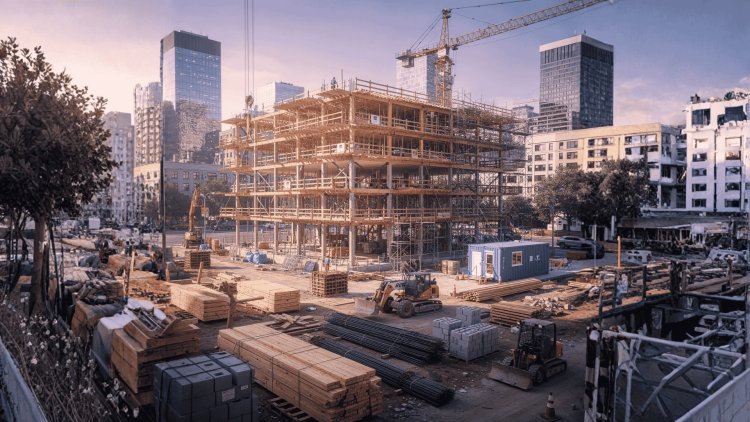
Hybrid systems strategically combine timber, steel, and concrete to optimize performance and sustainability. Engineers assign materials based on their strengths — CLT for slabs, glulam for frames, steel for spans, and concrete for cores.
Timber + Concrete Composites
CLT panels combined with concrete topping slabs create composite systems with higher stiffness, improved vibration control, and superior acoustic performance for modern buildings.
Timber + Steel + Post-Tensioned Systems
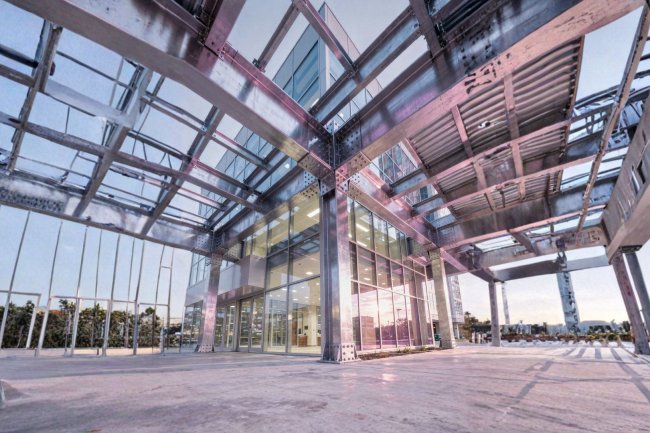
Steel moment frames paired with mass timber gravity systems enable flexible layouts, while post-tensioned timber frames improve seismic resilience through self-centering behavior.
Sustainability & Compliance
Sustainability and Code Compliance: Two Sides of the Same Coin
Engineered wood unifies environmental performance and structural compliance, making it a preferred material for modern high-performance buildings and global certification systems.
Embodied Carbon Advantage
Engineered wood stores more carbon than is emitted during production, delivering a net carbon benefit that outperforms steel and concrete. This is essential for ESG reporting and whole-life carbon accounting.
IBC 2021 Mass Timber Provisions
The 2021 International Building Code introduced new mass timber construction types (IV-A, IV-B, IV-C), enabling taller timber buildings with a clear regulatory pathway up to 18 stories.
Certified Sustainable Sourcing
FSC and SFI certifications ensure responsible forest management. Specifying certified engineered wood supports environmental integrity and satisfies lender and owner sustainability requirements.
Acoustic & Thermal Performance
Engineered wood assemblies can meet or exceed code requirements for sound and thermal performance when properly detailed, especially at joints, penetrations, and panel interfaces.
Consac Engineering Support
How Consac Supports Engineered Wood Projects
From early design coordination to fabrication-ready documentation, Consac delivers integrated architectural, structural, and BIM expertise for complex engineered wood and mass timber projects.
Our Role in Your Project
Across the full lifecycle of engineered wood projects — from early concept coordination to fabrication-ready detailing — Consac integrates architectural, structural, and digital expertise.
We support hybrid systems, CLT coordination, MEP penetration planning, and BIM model development with precision and technical clarity.
Core Capabilities We Bring
Structural & Architectural Detailing
Fabrication-ready shop drawings, panel layouts, and high-precision connection details.
BIM Coordination & Modeling
High-LOD Revit models coordinated across disciplines to reduce clashes and streamline fabrication.
CAD Documentation & As-Built Support
Accurate construction documentation maintained from design development through project closeout.
Engineering Consultation
Expert guidance on material selection, connection strategies, and engineered wood detailing decisions.
Project Guidance
Practical Takeaways for Your Next Project
Successful engineered wood projects depend on early planning, disciplined BIM workflows, and precise detailing. These principles ensure performance, constructability, and compliance across all stages.
Start with Material Selection Early
Engage engineers and manufacturers at schematic stage. CLT, glulam, or LVL decisions define structural depth, connection strategy, and coordination complexity.
Invest in BIM from Day One
BIM is essential for mass timber. A coordinated 3D model reduces RFIs, manages complexity, and enables direct-to-fabrication workflows.
Detail for Movement & Moisture
Engineered wood expands and contracts with moisture. Connections must accommodate movement to prevent cracking, misalignment, and field issues.
Coordinate MEP Penetrations Early
MEP openings in CLT and glulam must be engineered, not improvised. Early BIM coordination preserves structural integrity and panel aesthetics.
Leverage Code Advances
IBC 2021 mass timber provisions enable taller, more complex timber buildings. Staying current unlocks new structural and design opportunities.
Industry Outlook
The Road Ahead: Engineered Wood in a Changing Industry
Engineered wood is rapidly evolving through digital fabrication, structural innovation, and decarbonization pressures — redefining how the built environment will be designed and delivered.
Now
Mass timber buildings up to 18 stories are enabled by IBC 2021, with CLT and glulam widely adopted across commercial and institutional construction sectors.
Near Term
Expansion of hybrid systems, BIM-to-fabrication automation, and increased use of post-tensioned timber in seismic regions for improved structural resilience.
Mid Term
Carbon accounting becomes embedded in design specifications, positioning engineered wood as a core decarbonization strategy alongside electrification and energy efficiency.
Future
Next-generation engineered wood systems will integrate bio-based adhesives, smart composites, and real-time structural monitoring for full lifecycle performance tracking.
Final Perspective
Conclusion: Precision, Performance, and Progress
Engineered wood is now a mainstream structural material that demands the same rigor, coordination, and technical excellence as steel or concrete — reshaping how modern buildings are designed and delivered.
Detailing Excellence
Precision in every connection, panel, and penetration detail ensures engineered wood systems perform reliably across structural and environmental demands.
A Digital-First Delivery
BIM and CAD workflows enable seamless coordination from design to fabrication, ensuring accuracy, reduced RFIs, and efficient project delivery.
Sustainable by Design
Engineered wood supports lower-carbon construction practices, aligning material selection with environmental responsibility and long-term sustainability goals.
The built environment is changing fast. Engineered wood is not the future — it is the present. The question is no longer whether to use it, but how to use it well.