Field Verification of Joist and Deck Using BIM Tools
Modern construction demands precision at every stage—from design through fabrication to final installation. Field verification bridges the gap between what’s modeled and what’s built, ensuring structural accuracy and overall project success.
Why Field Verification Matters in Modern Construction
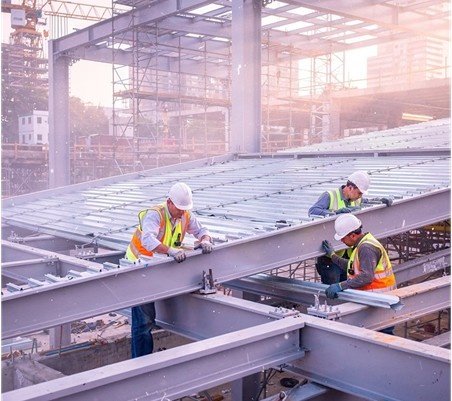
| In today’s fast-paced construction environment, the coordination between design intent and field reality can make or break a project. Joist and deck systems form the structural backbone of countless commercial and industrial buildings, yet discrepancies between BIM models and as-built conditions frequently cause costly delays. Field verification using Building Information Modeling (BIM) tools transforms this challenge into an opportunity. By leveraging digital workflows, project teams can detect conflicts early, validate dimensions on-site, and ensure that fabricated components align perfectly with installation requirements. This process reduces rework, minimizes material waste, and accelerates project timelines. |
|
Understanding Joist and Deck Systems in the Digital Age
Open Web Steel Joists
Lightweight structural members designed to support roof and floor loads efficiently across wide spans. These systems optimize material usage while delivering high strength-to-weight performance for modern buildings.
Metal Deck Systems
Corrugated steel panels that provide structural support, serve as concrete forms, and create finished surfaces. Metal decks play a critical role in diaphragm action and composite floor performance.
BIM Coordination Models
Digital representations that integrate architectural, structural, and MEP systems for clash detection and verification. These models embed fabrication data and generate coordinated shop drawings that reflect real-world construction constraints.
These systems work together as an integrated structural solution. BIM tools enable teams to model these components with precision, embed fabrication data, and generate coordinated shop drawings that reflect real-world construction constraints.
The Field Verification Workflow: From Model to Reality
Pre-Construction BIM Development
Create detailed 3D models of joist layouts, bearing conditions, deck profiles, and connection details using platforms like Revit, Tekla, or SDS/2.
Coordination and Clash Detection
Run automated clash detection to identify conflicts with HVAC, electrical, plumbing, and other trades before fabrication begins.
Shop Drawing Generation
Extract fabrication-ready drawings directly from coordinated models, ensuring dimensional accuracy and compliance with engineering specifications.
On-Site Digital Verification
Use mobile devices and laser scanning to compare as-built conditions against the BIM model, documenting deviations in real-time.
Issue Resolution and Model Updates
Address field discrepancies through coordinated RFIs, update the model to reflect changes, and maintain accurate as-built documentation. This ensures the digital twin remains aligned with constructed reality.
Quantifiable Advantages of BIM-Based Field Verification
Data-driven coordination delivers measurable improvements in field performance, quality, and project efficiency.
30%
Rework Reduction
Early clash detection and accurate modeling significantly decrease costly field modifications and material waste.
25%
Faster Installation
Pre-verified dimensions and coordinated shop drawings enable crews to install joists and decking with confidence and speed.
95%
Accuracy Rate
Digital verification tools achieve precision within millimeters, ensuring structural integrity and code compliance.
Beyond these metrics, BIM-based verification improves collaboration between architects, engineers, fabricators, and general contractors. It creates a single source of truth that all stakeholders can access, reducing miscommunication and improving project outcomes across the board.
Essential BIM Technologies for Joist and Deck Verification
Modeling Platforms
-
Autodesk Revit: Industry-standard BIM software for structural modeling and coordination
-
Tekla Structures: Specialized for steel detailing with advanced connection design
-
SDS/2: Steel fabrication software optimized for shop drawings and CNC output
Field Verification Tools
-
Laser Scanners: Capture precise point cloud data of existing conditions
-
Total Stations: Survey-grade equipment for dimensional control
-
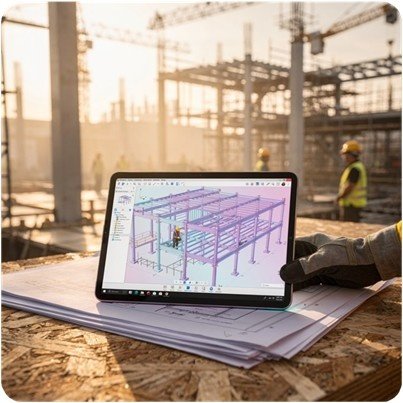
Mobile BIM Viewers: Access models on tablets for real-time comparison
Analysis Software
-
Navisworks: Clash detection and 4D simulation capabilities
-
BIM 360: Cloud-based collaboration and issue tracking
-
CloudCompare: Point cloud comparison against BIM models
Companies like Consac integrate these technologies into comprehensive digital workflows, providing engineering teams with the tools needed to deliver accurate, coordinated structural documentation from concept through construction completion.
Implementing Effective Field Verification Strategies
Establish Clear Modeling Standards
Define LOD requirements, naming conventions, and coordinate systems before project kickoff. Consistency across the project team prevents confusion and ensures models remain usable throughout construction.
Invest in Field Technology Training
Ensure superintendents and foremen understand how to use mobile BIM viewers and verification tools. The best technology fails without proper user adoption and competency.
Conduct Regular Coordination Reviews
Schedule weekly model reviews with all trades to identify and resolve conflicts proactively. Document decisions and distribute updated models promptly to keep everyone aligned.
Maintain Continuous Model Updates
Treat the BIM model as a living document that evolves with the project. Capture field changes, update the model accordingly, and maintain accurate as-built records for facility management.
The Future of Structural Verification is Digital
Field verification of joist and deck systems using BIM tools represents more than just a technological advancement—it’s a fundamental shift in how construction projects achieve precision and coordination. By embracing digital workflows, project teams reduce risk, improve quality, and deliver structures that meet design intent with unprecedented accuracy.
As the construction industry continues its digital transformation, the integration of BIM modeling, field verification technologies, and collaborative platforms will become standard practice rather than a competitive advantage. Forward-thinking organizations are already reaping the benefits of these approaches, setting new benchmarks for project delivery excellence.
Whether you’re managing a commercial high-rise, an industrial facility, or a complex infrastructure project, the principles of BIM-based verification remain constant: model accurately, coordinate thoroughly, verify continuously, and document completely.
What's Your Reaction?