Life Cycle Assessment of Light Gauge Steel Structures
Understanding the full environmental impact of building materials is essential for sustainable construction. Let's explore how light gauge steel performs across its entire lifecycle4and why it matters for your next project.
What Is Life Cycle Assessment?
|
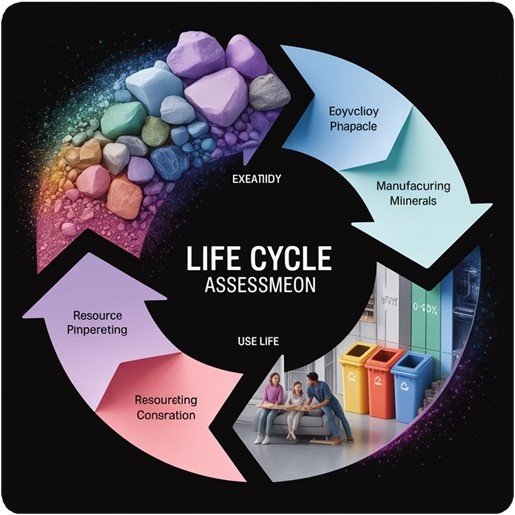
Life Cycle Assessment (LCA) is a comprehensive methodology used to evaluate the environmental impacts of a product or system from cradle to grave. In construction, this involves tracking the full journey of materials—from raw material extraction through manufacturing, transportation, installation, operation, and ultimately, disposal or recycling. Within the built environment, LCA serves as a data-driven foundation for leading green building certifications such as LEED, BREEAM, and the Living Building Challenge. It measures key sustainability metrics including carbon footprint, energy consumption, water usage, and waste generation, empowering project teams to make informed and responsible decisions that enhance long-term performance and environmental stewardship. |
|
Light Gauge Steel: Material Overview
What It Is
Light gauge steel (LGS) consists of cold-formed steel sections ranging from 0.0147 to 0.1180 inches thick. These precision-engineered members are roll-formed for consistent strength and structural reliability.
Common Applications
Used for residential & commercial buildings, modular construction, interior partitions, roof trusses, and multi-story structures. Ideal for both new builds and renovation projects due to versatility and speed of installation.
Key Properties
High strength-to-weight ratio, dimensional stability, fire & corrosion resistance, recyclable, and fast installation. LGS delivers performance across diverse climates with long-term durability.
Environmental Impact Across the Life Cycle
01 — Raw Material Extraction & Processing
Steel production begins with iron ore mining and processing. Modern steel mills increasingly use electric arc furnaces (EAFs) that can accept up to 100% recycled content, significantly reducing embodied carbon.
02 — Manufacturing & Fabrication
Cold-forming consumes less energy than hot-rolling. Precision manufacturing minimizes waste, and advanced facilities recapture heat to reduce carbon footprint.
03 — Transportation & Logistics
LGS is lightweight, reducing transportation emissions and shipment frequency.
04 — Construction & Installation
Pre-engineered systems enable rapid, low-waste construction, minimizing on-site energy and labor.
05 — Use Phase & Performance
LGS requires minimal maintenance and maintains structural integrity without decay or shrinkage.
06 — End of Life & Circularity
Steel is infinitely recyclable. Structural steel recycling rates exceed 85%, supporting circular economy goals.
Key Environmental Metrics for LGS
35%
Lower Embodied Carbon
Compared to traditional construction methods when using recycled content steel.
90%
Recyclability Rate
Steel components can be recovered and reprocessed at end of life.
60%
Reduced On-Site Waste
Pre-fabrication and precision engineering minimize construction waste.
25%
Lighter Weight
Less material needed for equivalent structural performance vs. traditional framing.
These metrics demonstrate why light gauge steel structures are increasingly favored in sustainable building projects. When properly designed and detailed, LGS systems contribute significantly to green building goals while maintaining structural performance and cost-effectiveness.
Best Practices for Sustainable LGS Projects
Specify High Recycled Content
Request steel with 70% or higher recycled content. Document this in your material specifications and submit to green building certification programs for credits.
Optimize Design for Material Efficiency
Use BIM coordination to minimize custom cuts and waste. Standard member sizes and modular planning reduce scrap and simplify fabrication processes.
Address Thermal Bridging
Implement thermal breaks, external insulation, or insulated cavities to prevent heat loss through steel framing, improving operational energy performance significantly.
Plan for Deconstruction
Design connections that allow for disassembly rather than demolition. Bolted connections and modular systems facilitate component reuse and recycling at end of life.
Document Environmental Performance
Conduct LCA studies during design. Use Environmental Product Declarations (EPDs) to compare material options and track sustainability progress.
What's Your Reaction?