Best Practices for Rebar BIM Modeling
Smart implementation strategies for structural engineering teams looking to streamline reinforcement detailing workflows and deliver precision-driven projects.

Why Rebar BIM Modeling Matters?
|
Traditional 2D rebar detailing methods are giving way to intelligent 3D modeling workflows. Building Information Modeling (BIM) transforms how structural engineers approach reinforcement design, offering unprecedented accuracy and coordination capabilities. The construction industry faces mounting pressure to reduce errors, accelerate schedules, and improve collaboration. Rebar BIM modeling addresses these challenges head-on by creating a digital twin of reinforcement systems before a single bar is bent or placed on site. |
|
Core Implementation Strategies
Start with Clear Standards
Establish project-specific BIM execution plans that define modeling detail levels, naming conventions, and coordination protocols from day one.
Build Skilled Teams
Invest in training programs that develop both software proficiency and structural understanding among your detailing staff.
Choose Right Tools
Select BIM platforms that integrate seamlessly with your existing workflows and support industry-standard file formats like IFC.
Streamline Workflows
Develop repeatable processes for common reinforcement scenarios to maximize efficiency without sacrificing quality.
Modeling Accuracy & Detail Management
Define Level of Development (LOD)
Match your modeling detail to project phase requirements — LOD 300 for design development, LOD 400 for fabrication and installation readiness.
Maintain Geometric Precision
Ensure rebar layout respects cover requirements, spacing tolerances, and congestion zones where multiple reinforcements intersect.
Embed Critical Data
Attach bar marks, grades, bending schedules, and quantities directly to model elements to enable automated reporting.
Verify Constructability
Review installation feasibility and resolve congestion before fabrication — preventing costly on-site changes.
Clash Detection and Coordination Excellence
|
|
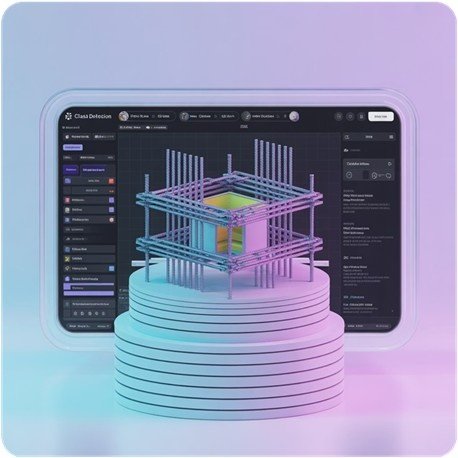
Effective coordination separates good rebar BIM projects from great ones. Run systematic clash detection between reinforcement and other building systems—MEP, structural steel, embedded items, and architectural elements. Companies like Consac have refined coordination workflows that catch conflicts early, when changes cost pennies instead of thousands. Schedule weekly coordination meetings during the modeling phase to review and resolve clashes systematically. Don’t just identify clashes—prioritize them by impact. A rebar conflict with a major beam penetration demands immediate attention, while minor edge conditions might be resolved through field coordination. |
Common Pitfalls to Avoid
Inadequate Planning
Rushing into modeling without establishing clear standards leads to inconsistent outputs and rework. Take time upfront to define your approach.
Software Over-Reliance
No software replaces structural knowledge. Teams must understand reinforcement principles, not just button-clicking sequences.
Poor Data Management
Without file naming, version control, and backup protocols, chaos follows. Implement strong data management from day one.
Ignoring Fabricator Input
Models may appear perfect digitally but be impractical to fabricate or install. Involve fabricators early to validate constructability.
Maximizing Collaboration Across Teams
Designers
Share federated models combining architectural, structural, and MEP elements for clear project visualization.
Engineers
Provide parametric models that adapt to evolving designs, maintaining continuous coordination.
Contractors
Generate fabrication-ready bar schedules, material takeoffs, and clear installation sequences.
Use cloud-based collaboration platforms to provide real-time model access to all stakeholders.
This transparency reduces RFIs, speeds decision-making, and keeps everyone aligned to the latest information.
What's Your Reaction?