Common BIM Coordination Issues and How to Avoid Them

|
Building Information Modeling (BIM) has revolutionized design and construction workflows, enabling unprecedented collaboration and visualization. However, without proper coordination, BIM projects can still face significant challenges including clashes between building systems, project delays, and communication breakdowns that increase risk and cost. |
 |
Major BIM Coordination Challenges
Misaligned Designs Between TradesWhen architectural, structural, and MEP designs aren't properly coordinated, spatial conflicts emerge that can severely impact construction schedules and budgets.
|
Late-Stage Clash DiscoveriesConflicts identified during construction cost 5–15x more to resolve than those caught during design phases, resulting in change orders and schedule delays.
|
Communication BreakdownsSiloed information and fragmented communication between project stakeholders leads to misunderstandings, duplicated work, and missed coordination opportunities.
|
Model Misalignment & Design Clashes
|
Poor initial coordination between disciplines frequently results in significant spatial conflicts that disrupt construction workflows:
These errors often remain undiscovered until construction begins, requiring costly on-site modifications, material waste, and extended timelines. |
|

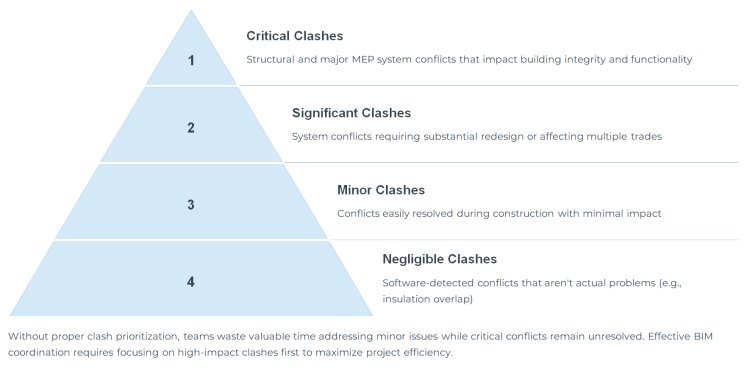
Inadequate Issue Prioritization
Poor Communication & Coordination Meeting
 |
Ineffective MeetingPractices • Meetings without clear agendas or decision frameworks • Static clash reports distributed as PDFs that quickly become outdated • Unclear ownership of issues and resolution timelines • Focus on identifying problems rather than solving them |
Best Practices to Prevent BIM Coordination Issues
|
Establish Clear Standards Develop project-specific BIM execution plans with standardized naming conventions, modeling protocols, and level of development requirements before design begins. |
Implement Clash Hierarchies Create a clash matrix that prioritizes conflicts based on system importance, construction sequence, and resolution complexity to focus coordination efforts. |
|
Structure Coordination Meetings Hold regular, focused coordination sessions with specific agendas, clear issue ownership, and documented action items with resolution deadlines. |
Utilize Common Data Environment Implement a centralized BIM platform that enables real-time collaboration, version control, and transparent issue tracking across all project stakeholders. |
Conclusion: Achieving BIM Coordination Success
Key Benefits of Effective Coordination
• Up to 10% reduction in overall project costs
• Significant decrease in RFIs and change orders
• Improved construction sequencing and scheduling
• Enhanced prefabrication opportunities
• Reduced on-site conflicts and rework
What's Your Reaction?