Light Gauge Steel in Passive House Design
Energy-efficient building standards are reshaping how we approach construction. As the demand for sustainable, high-performance buildings grows, the marriage of light gauge steel framing and Passive House principles offers a compelling solution for modern construction challenges.
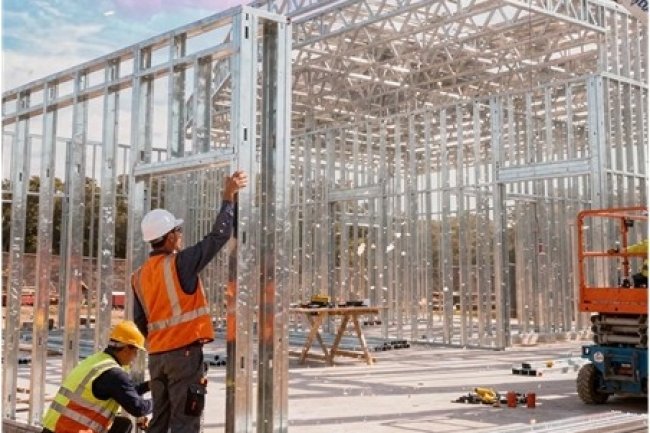
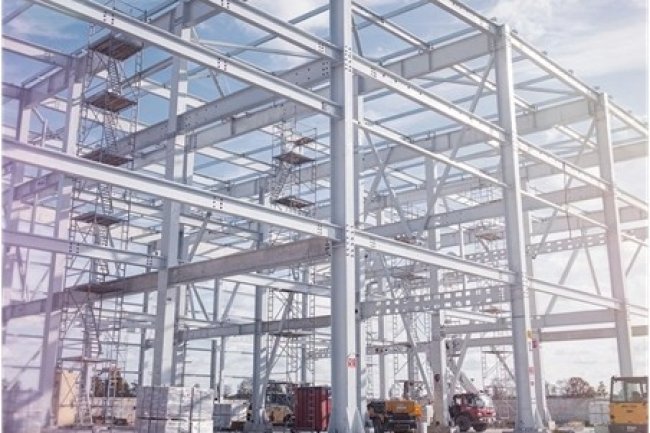
Light gauge steel uses cold-formed steel sections typically ranging from 12 to 25 gauge thickness. These precision-engineered profiles deliver exceptional strength-to-weight ratios while maintaining dimensional stability throughout the building's lifecycle.
Steel framing resists warping, twisting, and shrinking—common issues with traditional wood framing. This dimensional stability is critical for maintaining the airtight envelope integrity essential to Passive House performance over decades.
Steel is infinitely recyclable without quality loss. Most structural steel contains 25–100% recycled content, and at end-of-life components can be reclaimed and repurposed, supporting circular economy principles in modern construction.
Understanding Light Gauge Steel Framing
Material Composition
Structural Benefits
Sustainability Profile
Key Passive House Requirements and Steel's Role
Five Core Principles
Passive House certification hinges on five fundamental requirements: superior insulation, high-performance windows, airtight construction, thermal bridge-free design, and heat recovery ventilation. Each principle demands precision engineering and careful material selection.
Light gauge steel framing excels in several of these areas. Its precise manufacturing tolerances enable consistent installation, supporting the airtightness goals. When detailed properly with thermal breaks, steel frames minimize thermal bridging while providing robust structural support.
Addressing Thermal Bridging Challenges
The Thermal Bridge Problem
Steel's high conductivity can create thermal bridges where heat escapes through the framing members. However, innovative detailing strategies effectively neutralize this challenge through continuous insulation and thermal break technologies.
Advanced Solutions
Advanced solutions include thermally broken clips, exterior continuous insulation layers exceeding R-10, and strategically designed cavity insulation systems. Companies like Consac specialize in engineering these critical details to achieve optimal thermal performance.
Systematic Approach
Locate thermal bridging paths within steel framing connections.
Install uninterrupted exterior insulation to prevent heat transfer.
Use thermally broken clips to isolate steel components.
This systematic approach ensures steel framing meets Passive House thermal performance standards.
Wrapping the entire building envelope in uninterrupted insulation layers prevents thermal bridging. Mineral wool or rigid foam boards installed outboard of steel studs create consistent R-values across the assembly.
Specialized fastening systems physically separate interior and exterior steel components, interrupting conductive heat paths while maintaining structural integrity and load transfer capabilities.
Achieving the required 0.6 air changes per hour demands meticulous air barrier installation. Steel’s dimensional stability provides consistent substrates for membrane adhesion, supporting long-term envelope performance.
BIM workflows enable precise coordination of steel framing, insulation layers, and mechanical systems. Virtual modeling identifies conflicts before construction, reducing errors that could compromise energy performance.
Design Strategies for Optimal Performance
Continuous Insulation
Thermal Break Clips
Airtightness Detailing
Digital Coordination
Traditional building practices focused primarily on meeting basic structural requirements with limited emphasis on energy efficiency.
Structures designed to satisfy minimum building code standards for safety and insulation but without optimized energy performance.
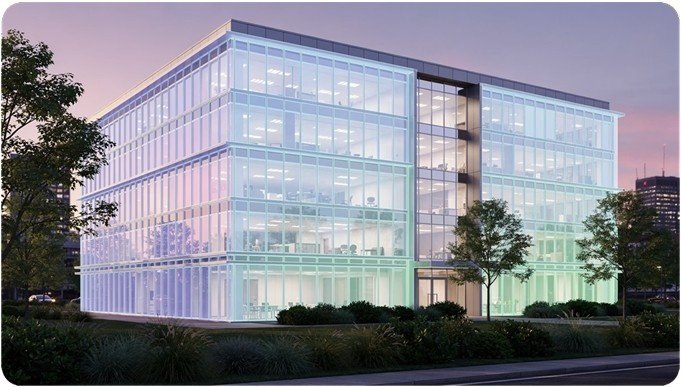
Advanced building systems integrating light gauge steel framing with Passive House principles for maximum efficiency and comfort.
Properly engineered light gauge steel Passive House buildings achieve dramatic energy reductions compared to conventional construction. These savings translate directly to lower operating costs and reduced carbon footprints.
Beyond energy metrics, occupants report superior comfort from consistent temperatures, minimal drafts, and excellent acoustic performance. The combination of structural durability and energy efficiency delivers long-term value that justifies initial investment premiums.
Real-World Performance Benefits
Conventional Construction
Code-Minimum Building
Steel-Frame Passive House
Measurable Impact
Moving Forward with Confidence
Early Planning
Engage structural engineers and energy consultants during schematic design to integrate steel framing and Passive House requirements from the outset.
Detailed Engineering
Develop comprehensive construction documents addressing thermal bridging, airtightness transitions, and structural connections with precision detailing.
Quality Construction
Implement rigorous quality control protocols during installation, with blower door testing and thermal imaging to verify envelope performance.
Performance Verification
Commission systems thoroughly and monitor energy consumption post-occupancy to confirm design assumptions and optimize operations.
Light gauge steel framing represents a proven pathway to achieving Passive House standards without compromising structural performance, design flexibility, or long-term durability. As energy codes tighten and sustainability expectations rise, understanding how to optimize steel systems for ultra-efficient buildings becomes essential for forward-thinking design and construction professionals.
What's Your Reaction?