Emerging Trends in Steel Joist and Girder Design for Industrial Buildings
The industrial building sector is experiencing a design revolution. Steel joist and girder systems are evolving beyond traditional structural frameworks to become smarter, more sustainable, and increasingly efficient. Today's innovations are reshaping how we approach industrial construction4from fabrication shops to distribution centers.
Why Steel Design Innovation Matters Now
Industrial construction is evolving rapidly. New technologies, changing market demands, and increasing performance expectations are driving the next generation of steel joist and girder innovation.
Industry Insight
The combination of market pressure and technological advancement is reshaping steel joist and girder design. Organizations that embrace digital workflows, optimization-driven engineering, and fabrication-integrated design strategies will be best positioned to deliver faster, smarter, and more cost-effective industrial projects.
Modern engineering tools are transforming how steel joists and girders are designed. Instead of relying solely on standardized assumptions, performance-based approaches optimize structures around actual project demands.
Performance-based design marks a fundamental shift from prescriptive engineering methods toward outcome-focused optimization. Instead of overdesigning for generalized assumptions, engineers can create structures that deliver precisely the performance required — improving efficiency, reducing waste, and maximizing value.
Performance-Based Design Optimization
Why It Matters
Building Information Modeling has evolved from a visualization tool into the backbone of modern steel construction. Integrated BIM workflows now connect design, detailing, fabrication, and erection into a single coordinated digital ecosystem.
Intelligent 3D models capture joists, girders, connections, and supporting systems with precise geometric and engineering data.
Automated shop drawings and model-based detailing improve accuracy, reduce rework, and accelerate documentation cycles.
Direct digital data transfer to fabrication systems eliminates manual re-entry and improves production efficiency.
Digital construction models guide field installation, improving sequencing, coordination, and assembly precision.
This seamless digital thread significantly reduces coordination conflicts, minimizes documentation errors, and streamlines project delivery. By connecting every stage of the steel construction lifecycle, BIM-driven workflows are helping project teams shorten schedules, improve accuracy, and deliver higher-quality outcomes. The era of disconnected design and construction processes is rapidly coming to an end.
Digital Integration and BIM-Driven Workflows
Design
Detailing
Fabrication
Erection
Digital Transformation Impact
Environmental responsibility has become a core design driver in industrial construction. Modern steel joist and girder systems are evolving to reduce embodied carbon, optimize material usage, and support long-term sustainability goals.
Advanced steel grades achieve greater load capacity with smaller member sizes, reducing material consumption while maintaining structural performance.
Modern structural steel products frequently contain more than 90% recycled material, supporting circular economy objectives and ESG initiatives.
Performance-based engineering minimizes excess steel usage from the outset, reducing waste while maintaining code compliance and safety.
Designers increasingly evaluate long-term adaptability, durability, maintenance requirements, and end-of-life recyclability during project planning.
Compared with conventional steel production methods through optimized manufacturing and material efficiency.
Typical recycled material content found in modern structural steel products used across industrial projects.
Sustainable steel design is no longer limited to reducing material quantities. Forward-thinking project teams are incorporating lifecycle thinking into every stage of design, balancing structural performance, carbon reduction, adaptability, and recyclability. The result is a new generation of joist and girder systems that deliver both engineering excellence and environmental responsibility.
Sustainable Steel Solutions
High-Strength Steel
Recycled Content
Material Optimization
Lifecycle Assessment
Looking Ahead
Prefabrication is transforming industrial steel construction by shifting work from the jobsite to controlled manufacturing environments. The result is faster delivery, improved quality, and more predictable project outcomes.
Modular and prefabricated steel systems are particularly effective for repetitive building types such as warehouses, fulfillment centers, manufacturing facilities, and distribution hubs where standardization drives efficiency.
The most successful projects strike a balance between standardized modular components and project-specific design requirements. When integrated with BIM-driven workflows and advanced fabrication processes, prefabrication becomes a powerful strategy for improving quality, reducing risk, and accelerating delivery.
Prefabrication and Modular Systems
Where Modular Construction Delivers the Greatest Value
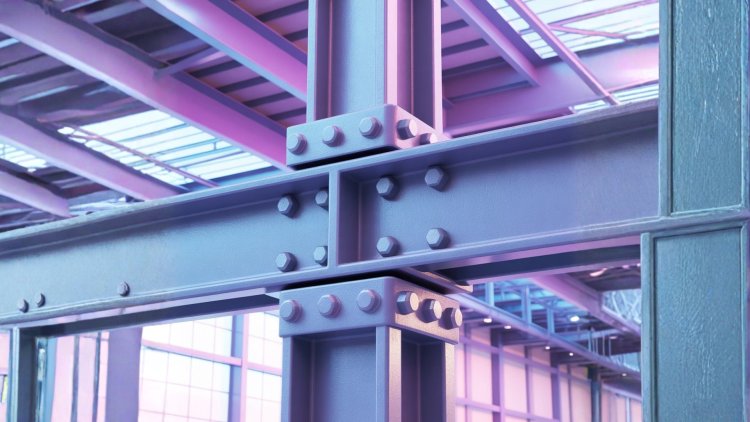
While joists and girders often receive the most attention, connections frequently represent the most complex, time-consuming, and costly aspects of steel construction. Modern connection design innovations are transforming this critical area of structural engineering.
Connections often represent the most time-consuming and costly aspect of steel construction. By improving constructability, reducing fabrication complexity, and accelerating installation, advanced connection strategies can significantly impact overall project performance and lifecycle value.
Bolted systems are increasingly replacing field welding where appropriate, reducing installation time, simplifying inspections, and enabling easier future modifications.
Standardized connection libraries reduce shop drawing effort, improve consistency, and minimize uncertainty for fabricators and erectors.
Advanced slip-critical connection designs improve structural behavior under vibration, dynamic loading, and demanding industrial operating conditions.
Advanced connection design software now integrates directly with BIM and detailing platforms, automatically generating code-compliant connections optimized for specific load conditions. This streamlines coordination between engineers, detailers, fabricators, and field teams while improving accuracy and reducing project timelines.
As steel structures become increasingly optimized, connection design is emerging as one of the industry's most valuable opportunities for improving constructability, reducing costs, and accelerating schedules. The future of steel engineering is not just stronger members—it's smarter connections.
Advanced Connection Design
The Hidden Opportunity
Bolted Connections
Standardized Details
Slip-Critical Performance
Software-Driven Connection Optimization
Why This Trend Matters
Involve structural engineers and steel detailers during conceptual design. Early collaboration unlocks optimization opportunities that often disappear once building layouts and structural grids become fixed.
Invest in BIM capabilities and integrated design platforms. Improved coordination, faster decision-making, and reduced errors generate measurable value throughout the entire project lifecycle.
Design with future adaptability in mind. Industrial facilities evolve over time, and structural systems should accommodate expansion, equipment upgrades, and operational changes without requiring major reconstruction.
Work with firms that combine traditional steel design expertise with modern digital workflows. The strongest project outcomes come from teams that understand both engineering fundamentals and emerging technologies.
The future of industrial steel design is already here—it's simply unevenly distributed. Projects that embrace emerging innovations in optimization, BIM integration, sustainable materials, prefabrication, and advanced connection design will achieve stronger performance, lower lifecycle costs, and faster delivery schedules. The question is no longer whether these trends will shape the industry, but how quickly your next project can take advantage of them.
Preparing Your Next Project for Success
Engage Early
Embrace Digital Tools
Consider the Full Lifecycle
Partner Strategically
The Future Is Already Taking Shape
What's Your Reaction?