Fire-Resistant Coatings for Light Gauge Steel
In the construction and fabrication industries, protecting structural integrity during fire events isn’t just about compliance—it’s about safeguarding lives, investments, and business continuity. Light gauge steel framing systems offer exceptional strength-to-weight ratios, but their performance under extreme heat requires strategic protection.
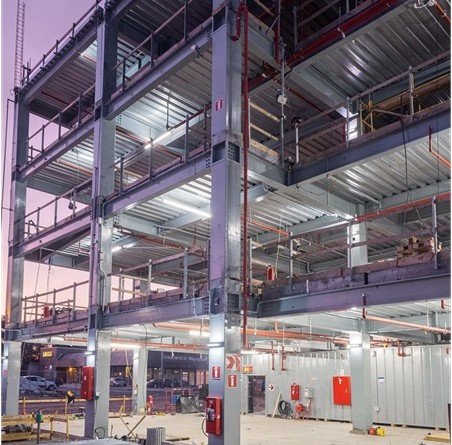
Why Fire-Resistant Coatings Matter for Light Gauge Steel
The Challenge
Steel's high thermal conductivity means it rapidly loses structural capacity when exposed to fire. At approximately 1,000°F, light gauge steel can lose up to 50% of its load-bearing strength. Without proper protection, this can lead to premature structural failure during fire events.
The Solution
Fire-resistant coatings provide a critical thermal barrier that slows heat transfer to steel substrates. These intumescent or cementitious systems can delay temperature rise for hours, maintaining structural integrity long enough for safe evacuation and firefighting operations.
Meeting Safety Compliance Standards
Building codes across the United States mandate specific fire-resistance ratings based on occupancy type, building height, and construction classification. Understanding these requirements is essential for project success.
IBC Requirements
The International Building Code establishes minimum fire-resistance ratings ranging from 1 to 4 hours depending on structural element type and building classification.
ASTM Testing
ASTM E119 standardizes fire-resistance testing methodology, ensuring coating systems meet verified performance benchmarks under controlled conditions.
UL Certification
Underwriters Laboratories provides independent certification for fire-resistant assemblies, giving specifiers confidence in system performance and compliance.
Local Amendments
Many jurisdictions adopt IBC with local modifications. Always verify specific requirements with the authority having jurisdiction before finalizing specifications.
Types of Fire-Resistant Coating Systems
Selecting the right coating system depends on project specifications, environmental conditions, aesthetic requirements, and budget constraints. Each system offers distinct advantages for different applications.
Intumescent Coatings
These thin-film coatings expand when exposed to heat, creating an insulating char layer that can be 50–100 times their original thickness. Ideal for exposed architectural applications where aesthetics matter, they provide up to 3-hour fire ratings while maintaining clean sightlines.
Cementitious (Spray-Applied) Systems
Spray-applied cement-based materials provide robust fire protection in concealed spaces. These cost-effective systems offer excellent performance up to 4 hours and are well-suited for industrial environments where appearance is secondary to durability and protection.
Board Systems
Gypsum or mineral fiber boards mechanically fastened to steel members provide reliable fire resistance. These systems offer installation flexibility and are particularly effective for column and beam protection in commercial construction projects.
Application Best Practices and Considerations
Successful implementation requires careful coordination between design teams, applicators, and inspectors. Companies like Consac integrate fire protection requirements early in the design development phase, ensuring coating systems align with structural detailing, connection design, and construction sequencing.
Design Phase Coordination
Coordinate coating selection with structural engineers and architects. Consider thickness requirements, aesthetic impact, and compatibility with other building systems during BIM coordination.
Environmental Controls
Monitor temperature and humidity during application. Most systems require ambient temperatures between 40–90°F and relative humidity below 85% to achieve proper curing and performance.
Surface Preparation
Steel surfaces must be clean, dry, and free from mill scale, rust, or contaminants. Surface profile requirements vary by coating type—typically SSPC-SP6 or better for intumescent systems.
Quality Control
Implement wet film thickness gauges during application and dry film measurements after curing. Third-party inspections help ensure compliance with manufacturer specifications and code requirements.
Documentation & Compliance
Maintain detailed records including product data sheets, application logs, inspection reports, and UL design numbers. Proper documentation supports inspections, approvals, and long-term building compliance.
Enhanced Performance Beyond Fire Protection
While fire resistance is the primary function, modern coating systems deliver additional performance benefits that add value throughout a building’s lifecycle. Advanced formulations now address multiple protection needs simultaneously, enhancing durability, comfort, and long-term performance.
By delivering corrosion protection, thermal resistance, and acoustic dampening alongside fire performance, modern coating systems provide continuous value—enhancing durability, energy performance, and occupant comfort throughout the building lifecycle.
Understanding Project Economics
Fire-resistant coating decisions directly impact both upfront construction costs and long-term asset performance. Smart specification balances initial investment with lifecycle value.
Average Cost Per Sq. Ft.
Intumescent coatings for 2-hour fire ratings typically range from $8–15 per square foot of steel surface area, including labor and materials. Costs vary by system type, complexity, and site accessibility.
Cost Savings Potential
Using lighter steel sections with fire-resistant coatings instead of heavier, unprotected members can reduce overall structural steel costs by 30–40% on many commercial projects.
Year Service Life
Properly applied and maintained fire-resistant coatings deliver reliable protection for 25+ years, aligning with typical building lifecycles without the need for reapplication.
Moving Forward: Integrating Fire Protection Into Your Next Project
Fire-resistant coatings for light gauge steel represent a critical intersection of safety, performance, and value engineering. As building codes evolve and construction methods advance, these systems will continue playing an essential role in protecting structures and occupants.
For project managers and design teams, early engagement with fire protection requirements streamlines construction documentation, reduces change orders, and ensures seamless coordination across disciplines. Whether you’re working on commercial office buildings, industrial facilities, or mixed-use developments, understanding these systems empowers better decision-making.
Key Takeaways
-
Match coating systems to project-specific requirements and exposure conditions
-
Coordinate fire protection early in design development
-
Verify compliance with local building code amendments
-
Implement rigorous QA/QC protocols during application
What's Your Reaction?