Light Gauge Steel in Coastal Construction: Challenges and Solutions
Coastal environments present unique structural demands that require careful material selection and engineering precision. Light gauge steel framing offers compelling advantages in these challenging conditions, but success depends on understanding corrosion dynamics and wind-load requirements. This presentation explores practical strategies for leveraging steel's benefits while mitigating coastal construction risks.
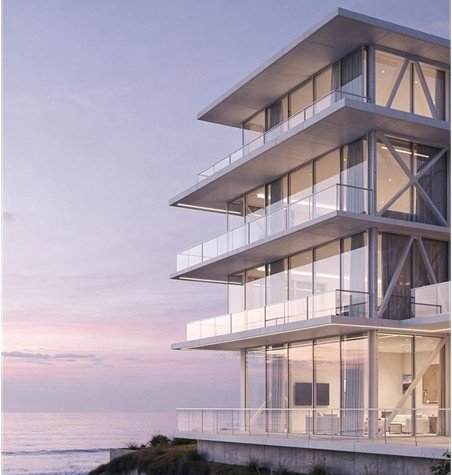
Why Coastal Construction Demands Different Thinking
Coastal zones expose buildings to relentless environmental forces that accelerate material degradation and test structural integrity. Salt-laden air, moisture saturation, hurricane-force winds, and temperature fluctuations create a perfect storm of engineering challenges.
Light gauge steel has emerged as a preferred framing solution for coastal projects due to its strength-to-weight ratio, dimensional stability, and resistance to biological degradation. However, without proper protective measures and design considerations, steel's inherent vulnerabilities to corrosion can compromise long-term performance.
Understanding these dynamics is essential for project managers, engineers, and contractors working in marine environments.
Coastal structures face accelerated corrosion from chloride exposure, with corrosion rates up to 400 times faster than inland environments. Salt particles penetrate protective coatings, initiating electrochemical reactions that degrade unprotected steel surfaces.
Faster Corrosion Rate
Highest Exposure Zone
The distance from shoreline directly correlates with corrosion severity. Properties within 300 feet of breaking surf experience the most aggressive conditions, while structures beyond 3,000 feet see significantly reduced exposure.
Temperature cycling and humidity variations further accelerate degradation, making material specification and protection systems critical to project longevity.
The Corrosion Challenge in Marine Environments
Understanding Salt Spray Corrosion
400x
300 ft
Protection Strategies
Wind Load Considerations for Coastal Steel Framing
Hurricane-prone coastal regions require structural systems engineered to withstand extreme wind events. Light gauge steel's high tensile strength makes it ideal for resisting lateral forces, but connection design and load path continuity become paramount.
Load Path Engineering
Establish continuous connections from roof through walls to foundation, ensuring forces transfer efficiently without weak points or discontinuities in the structural system.
Enhanced Fastening
Specify structural screws with verified pullout resistance, increase fastener density at critical locations, and use hurricane straps or clips at all roof-to-wall connections.
Member Sizing
Calculate uplift forces based on local wind speed maps and exposure categories, then select steel gauges and profiles that provide adequate capacity with appropriate safety factors.
Redundancy Design
Incorporate backup load paths and additional bracing elements so that if one component fails, the system maintains structural integrity during extreme events.
Material Selection and Specification
Selecting appropriate materials starts with understanding exposure severity. Properties directly on the waterfront demand maximum protection, while those farther inland can use standard specifications with confidence.
Galvanization thickness matters significantly. While G90 coating suffices for protected applications, coastal projects benefit from G185 or even G235 coatings that provide substantially more sacrificial zinc protection.
For extreme exposure zones, combining galvanized steel with barrier coatings creates a dual-layer defense system. These hybrid approaches extend service life and reduce long-term maintenance costs, making them economically justified despite higher initial investment.
Document wind load analysis, uplift resistance verification, and connection capacity evaluations following ASCE 7 standards for coastal exposure categories.
Provide comprehensive shop drawings with material specifications, coating requirements, fastener schedules, and installation sequences for field teams.
Establish inspection protocols for coating thickness verification, proper fastener installation, and adherence to approved details throughout construction.
Develop scheduled inspection programs that identify early signs of corrosion or fastener degradation, enabling proactive repairs before major problems develop.
Engineering and Documentation Requirements
Structural Calculations
Construction Documents
Quality Assurance
Maintenance Planning
Building Resilient Coastal Structures
Key Takeaways
Specify appropriate galvanization levels
Match coating thickness to exposure severity for optimal protection and cost-effectiveness.
Engineer complete load paths
Design continuous connections that transfer wind forces safely from roof to foundation.
Detail for drainage and ventilation
Prevent moisture accumulation through thoughtful geometry and material separation.
Plan for long-term maintenance
Establish inspection schedules that catch problems early and extend structural service life.
What's Your Reaction?