Engineering Challenges in Wood Nailer Integration with Steel Structures
Where steel meets wood, precision meets complexity—and understanding the engineering challenges in between is what separates a structurally sound project from costly rework. This guide explores the key technical, material, and design challenges professionals face when integrating wood nailers into steel structural systems, offering practical insights for every stage of the project lifecycle.
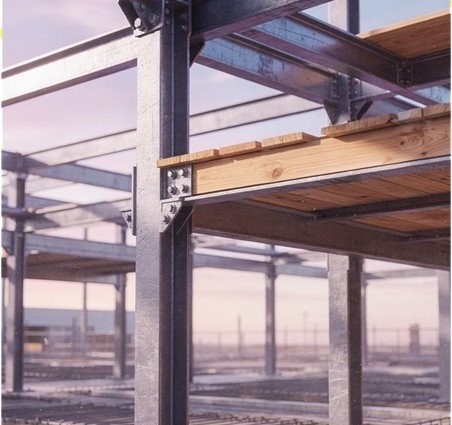
What Is a Wood Nailer — and Why Does It Matter?
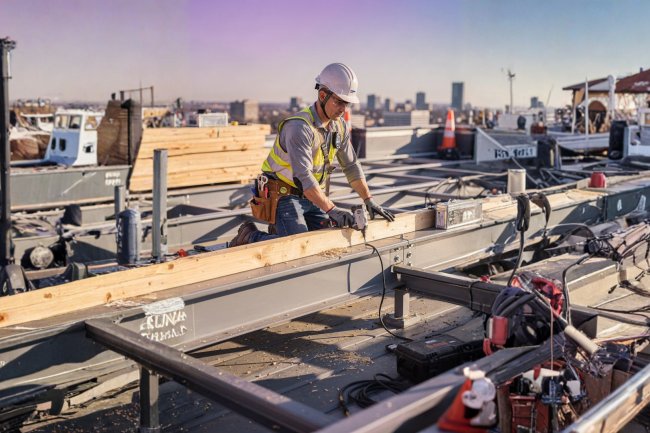
A wood nailer is a piece of dimensional lumber — typically pressure-treated — that is mechanically fastened to steel structural members. It provides a reliable fastening surface for roofing systems, wall sheathing, flashing details, and other finish elements that cannot be directly attached to steel.
While simple in concept, wood nailers form a critical interface between steel and wood — materials with different thermal movement, load behavior, and moisture response. Poorly detailed nailers can become hidden failure points affecting durability and performance.
Wood nailers are a critical interface detail — not just a simple add-on component.
Where Wood Nailers Are Commonly Used
- Roof edge blocking and parapets
- Ledger attachment for floors
- Rooftop curbs and equipment pads
- Storefront and curtain wall sills
- Sheathing at steel stud walls
- Fascia and trim backing
Wood nailers are present across roofing, wall systems, and façade assemblies — making them a recurring and essential detail in nearly every commercial and industrial building.
The Core Engineering Challenges
Integrating wood nailers with steel structures introduces complex, interrelated engineering challenges that require careful detailing and coordination.
Differential Thermal Movement
Steel and wood expand at different rates. Without proper detailing, this mismatch leads to fastener loosening, cracking, and system failure under temperature variation.
Moisture & Corrosion Risk
Moisture trapped at the wood-steel interface accelerates corrosion and decay. Protective barriers and compatible materials are essential.
Fastener Selection & Load Path
Incorrect fasteners or unclear load paths lead to failure. Design must define how loads transfer from nailer to steel structure.
Embedment & Bearing Issues
Insufficient bearing area causes stress concentrations. Proper sizing and bolt placement prevent splitting and structural weakness.
These challenges are interconnected — solving one without considering the others can introduce new risks. Successful detailing requires a holistic approach.
Detailing Precision: Where Most Projects Go Wrong
Engineering intent only delivers performance when details are complete, coordinated, and buildable. Missing or unclear nailer details often lead to costly downstream issues in construction.
Common Detailing Gaps
Missing Thermal Break
Direct wood-to-steel contact without membranes or insulation leads to moisture buildup and thermal bridging, especially in cold climates.
Uncoordinated Fastener Patterns
Conflicting specifications result in over-drilling, improper spacing, or edge-distance violations that weaken connections.
Absent Uplift Calculations
Designing for gravity loads only — without wind uplift verification — can result in failure at roof edges and corners under high wind conditions.
Best Practice Standards
ASCE 7
Wind uplift pressures at roof edges and corners
NDS (AWC)
Wood fastening design and connection requirements
AISC 360
Steel connection and bolt capacity standards
FM / NRCA
Roofing system and nailer attachment guidelines
Precision in detailing is not optional — it is essential for structural reliability, code compliance, and long-term building performance.
Material Compatibility: Treated Lumber Meets Structural Steel
Modern treated lumber introduces corrosion risks when paired with steel. Proper material selection and detailing are essential to ensure long-term performance and durability.
Hot-Dipped Galvanized vs. Stainless Fasteners
ACQ and CA-treated lumber contain high copper levels that accelerate corrosion. Standard zinc-plated fasteners are not suitable. Specify hot-dipped galvanized (G185 or better) or stainless steel fasteners to ensure long-term connection integrity.
Isolating the Steel Substrate
Install a non-absorptive isolation layer such as EPDM gasket, closed-cell foam, or flashing membrane between wood and steel. This minimizes corrosion risk and prevents moisture migration at critical interfaces.
Moisture Content & Lumber Species
High-moisture lumber shrinks over time, loosening fasteners and creating gaps. Specify kiln dried lumber (≤19% moisture content) and verify species-specific properties for accurate fastener capacity design.
Material compatibility is not optional — it is critical to preventing hidden corrosion and long-term structural failure.
BIM and CAD Coordination: Closing the Gap Between Design and Field
Why Coordination Matters More Than Ever
Wood nailer integration may seem minor, but its impact on roofing, waterproofing, curtain wall, and mechanical trades is significant. Poor coordination leads to RFIs, delays, and rework.
Modeling nailers in BIM with accurate geometry and material properties allows early clash detection, better coordination, and precise quantity take-offs — reducing costly field issues.
Model Nailers in Structural BIM
Include nailers as structural elements with accurate dimensions, material properties, and treatment specifications.
Coordinate With Envelope Systems
Perform clash detection with steel, insulation, and waterproofing systems to resolve conflicts early.
Produce Shop-Ready Drawings
Generate detailed 2D drawings with bolt layouts, edge distances, and installation notes for fabrication.
Embed Specification References
Link BIM elements to specifications to maintain consistency and a single source of truth across the project team.
Field Installation Challenges and Quality Control
Even the best detailing can fail without proper execution. Clear installation practices and strict quality control are essential for long-term performance.
Bolt Pre-Drilling & Edge Distance
Incorrect drilling or edge distances can split lumber and reduce pullout resistance. Pre-drill accurately to ensure proper fastener alignment with steel and maintain structural integrity.
Layered & Blocked Assemblies
Multi-layer nailers must be individually fastened and staggered. Fastening only the top layer creates instability and increases the risk of delamination under load.
Pre-Roofing Inspection Protocols
Conduct inspections for continuity, fastener placement, and isolation layers before roofing begins. Post-installation corrections are costly and difficult once covered.
Protection During Construction
Exposed nailers absorb moisture if left unprotected. Use temporary coverings to prevent swelling, shrinkage, and reduced fastener performance.
Quality control in the field is the final checkpoint — without it, even the best design will fail to deliver intended performance.
Key Takeaways for Your Next Project
Wood nailer integration demands attention across design, coordination, and construction. Use this quick-reference guide to avoid costly mistakes and ensure long-term performance.
Specify Early, Specify Completely
Define nailer details during design development — including species, treatment, moisture content, fasteners, and isolation materials.
Run the Uplift Numbers
Always verify wind uplift calculations for roof edge nailers — avoid relying on standard details without project-specific validation.
Coordinate Across Disciplines
Use BIM coordination and cross-review to align structural, roofing, and MEP requirements before construction begins.
Inspect Before You Cover
Conduct pre-roofing inspections to verify installation before concealment — fixing issues early saves significant time and cost.
Attention to detail at every stage turns a small component into a major performance advantage.
Conclusion: Precision at the Interface
The integration of wood nailers into steel structures is a microcosm of a broader engineering truth: no detail is too small to get right. What appears simple is a multi-discipline coordination challenge involving structural performance, material compatibility, moisture control, thermal behavior, and code compliance.
The most successful projects treat nailers as engineered connections — supported by detailed design, coordination, and quality control — ensuring long-term performance and code compliance.
Engineering Rigor
Design nailers as structural connections with full calculations, material specs, and code compliance.
Digital Coordination
Use BIM and CAD workflows to model, coordinate, and document nailer systems with precision.
Field Quality Assurance
Validate design intent through inspections, installation guidelines, and verification protocols.
Whether managing a commercial roof, coordinating a steel structure, or reviewing detailed drawings, applying these principles ensures confidence, clarity, and long-term performance.
What's Your Reaction?