How Collaborative Detailing Improves Structural Efficiency and Project Delivery
In today's fast-paced construction and engineering landscape, the way teams coordinate and communicate during the detailing phase can make or break a project. Collaborative detailing — a practice that brings together architects, structural engineers, fabricators, and contractors around a shared, intelligent model — is rapidly becoming the gold standard for delivering complex projects on time, within budget, and to the highest quality standards. This post explores how this approach transforms structural workflows and why more industry professionals are making the shift.
What Is Collaborative Detailing — and Why Does It Matter?
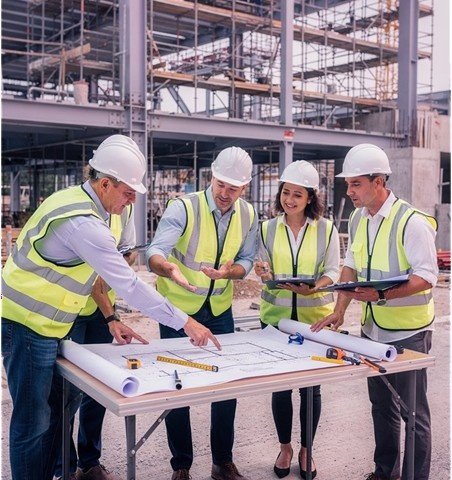
Collaborative detailing creates a connected workflow where architects, engineers, fabricators, and contractors work together in real time to improve accuracy, coordination, and project delivery.
The Core Concept
Collaborative detailing is the practice of developing structural and fabrication drawings through a synchronized, multi-disciplinary workflow.
Rather than working in isolated silos — where the architect hands off to the engineer, who then passes to the fabricator — all key stakeholders contribute simultaneously to a shared digital environment.
Why It Matters Now More Than Ever
Modern structural projects involve increasingly complex geometries, tighter schedules, and tighter margins.
Traditional sequential detailing introduces delays and coordination gaps. Collaborative detailing enables parallel workflows and continuous feedback loops that keep projects moving efficiently.
Faster Clash Resolution
Detect and resolve design interferences before construction begins.
Fewer RFIs
Reduce Requests for Information through better coordination accuracy.
Better Alignment
Ensure detailing reflects real fabrication and erection conditions.
Stronger Collaboration
Create accountability and teamwork across all project disciplines.
Modern detailing collaboration depends on intelligent digital platforms that connect design, engineering, fabrication, and construction teams into one synchronized workflow.
BIM platforms like Revit, Tekla, and Advance Steel allow structural, architectural, and MEP teams to collaborate within a unified federated model.
Automated clash detection identifies conflicts early, preventing costly field issues while keeping all stakeholders aligned through a single source of truth.
Advanced CAD workflows generate fabrication-ready drawings that remain parametrically connected to the master model.
When upstream design changes occur, downstream drawings update automatically, reducing manual rework and minimizing outdated documentation risks.
Cloud platforms allow distributed teams across offices, fabrication shops, and job sites to review and coordinate models in real time.
This flexibility is especially valuable for large infrastructure and commercial projects where multiple firms contribute simultaneously.
The Role of BIM & CAD in Enabling Collaboration
BIM Coordination
Intelligent CAD Detailing
Cloud-Based Collaboration
Collaborative detailing improves project performance across design, fabrication, coordination, and construction — reducing errors, accelerating schedules, and strengthening communication.
When detailers, engineers, and fabricators review models together, structural connections, member profiles, and load-path logic are validated by multiple experts simultaneously.
This collaborative review catches issues before fabrication begins, preventing costly field corrections and coordination failures.
Rework is one of the largest hidden costs in structural construction. Collaborative detailing ensures fabricated members arrive with correct dimensions, orientation, and connection details.
Fewer site modifications lead to lower labor costs, reduced material waste, and safer working conditions during erection.
Parallel detailing workflows allow fabrication drawings to be released in packages while design development continues on other project areas.
This phased release strategy enables procurement and production to begin earlier, significantly compressing overall project timelines.
Shared models and regular coordination meetings create transparency between engineers, detailers, fabricators, and contractors.
Over time, this collaborative culture strengthens professional relationships and improves efficiency across future projects.
Key Benefits of Collaborative Structural Detailing
Improved Structural Accuracy
Reduced Construction Waste & Rework
Accelerated Project Schedules
Stronger Cross-Team Communication
How Collaborative Detailing Works in Practice
Understanding the concept is one thing — seeing how it plays out on an actual project is another. The process follows a structured yet flexible workflow that adapts to the project’s scale, complexity, and team composition.
Concurrent Detailing
Run parallel workstreams using shared models and real-time coordination to keep design, engineering, and fabrication aligned throughout the project lifecycle.
Coordination Kickoff
Bring all stakeholders together early to establish BIM standards, communication protocols, project responsibilities, and coordination procedures before detailing begins.
Clash Review & Approval
Conduct multi-disciplinary review cycles to identify and resolve clashes between structural, architectural, and MEP systems before fabrication or construction starts.
Fabrication Release
Issue fully coordinated and approved drawing packages to the fabrication shop, ensuring accurate production and minimizing costly revisions or delays.
This four-phase process ensures that coordination happens continuously — not only during major handoff milestones. Regular model-sharing sessions, structured RFI response workflows, and clearly defined responsibility matrices help maintain momentum and eliminate bottlenecks. Teams that adopt this collaborative model consistently experience fewer construction surprises, smoother field execution, and stronger alignment between design intent and final structural performance.
Consac’s integrated approach to structural detailing combines CAD, BIM, and multi-disciplinary coordination under one roof — delivering greater accuracy, faster turnaround times, and seamless project delivery for structures of every scale.
Collaborative detailing delivers measurable value when teams establish the right workflows, communication systems, and technical expertise from the beginning of the project lifecycle.
Choose your BIM or CAD platform before design begins — not halfway through the project.
Define file formats, revision standards, naming conventions, and model ownership rules from day one to ensure smooth coordination between all disciplines.
Collaborative workflows succeed when every participant knows exactly what they own and when reviews are required.
Use responsibility matrices and milestone tracking to avoid duplication, missed tasks, and coordination confusion.
Weekly or bi-weekly model coordination sessions are among the highest-value activities on complex structural projects.
Reviewing the federated model together helps teams identify conflicts early — when they are inexpensive and easy to resolve.
Technology is only effective when backed by experienced detailing professionals who understand constructability, tolerances, and fabrication logic.
Skilled detailing teams help transform accurate models into efficient, buildable structures that reduce downstream risk.
Practical Takeaways for Your Next Project
Establish a Common Data Environment Early
Define Roles & Responsibilities Clearly
Schedule Regular Coordination Meetings
Invest in Detailing Expertise
What's Your Reaction?