Fire Resistance Considerations in Wood Nailer Design
A practical guide for design engineers, contractors, and construction professionals navigating fire safety in timber-based assemblies—brought to you by Consac’s engineering and detailing expertise.

Introduction: Why Fire Resistance Matters in Wood Nailer Design
Wood nailers are a staple in modern construction—they anchor roofing membranes, secure cladding systems, and tie structural assemblies together across commercial, industrial, and institutional buildings. Yet despite their widespread use, fire resistance in wood nailer design is frequently treated as an afterthought rather than a first-principle design consideration.
This oversight can have serious consequences. When a fire event occurs, the performance of a nailer assembly directly impacts the integrity of the surrounding structure, the speed of fire spread, and the overall safety of occupants. Understanding the interplay between material selection, code compliance, thermal behavior, and detailing accuracy is no longer optional—it is a fundamental design responsibility.
As construction projects grow in complexity and fire codes become increasingly stringent, professionals across the built environment must approach wood nailer design with a sharper technical lens. This guide walks through the key fire resistance considerations that should inform every nailer design decision—from material selection to connection detailing.
Definition
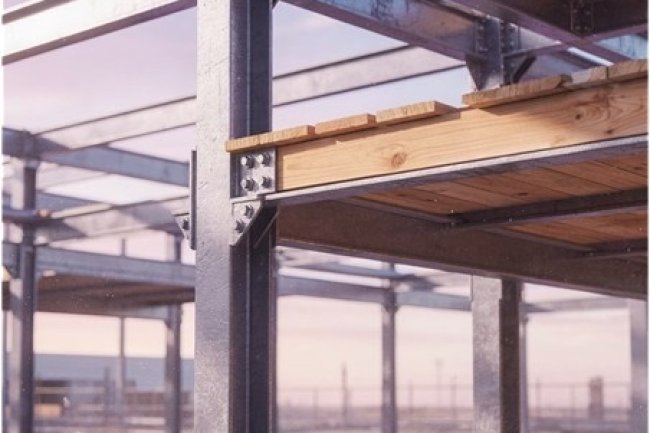
A wood nailer is a dimensional lumber member — typically pressure-treated or fire-retardant-treated (FRT) wood — fastened to a structural substrate to provide a secure nailable surface for roofing, cladding, and building envelope components.
Nailers act as the critical interface between structural systems and finish assemblies.
Common Applications
- Roof edge and perimeter blocking on steel or concrete decks
- Substrate for low-slope roofing membranes and flashings
- Attachment base for wall cladding and curtain wall systems
- Curb framing for rooftop mechanical equipment
- Transition blocking between dissimilar structural systems
Understanding Fire Behavior in Wood Members
Wood behaves differently than steel under fire exposure. Understanding these principles is key to designing safe and fire-resistant nailer assemblies.
Charring Rate Principle
Wood chars at a predictable rate (~1.5 inches per hour), forming a protective layer that insulates inner material. Engineers use this behavior to calculate residual strength and design fire-resistance ratings.
Dimensional Lumber Limitations
Smaller cross-sections in standard nailers (2x, 3x) reduce fire resistance. Without protection, these members can lose structural integrity quickly under fire exposure.
Fire-Retardant Treatment (FRT)
FRT wood reduces flame spread and combustion rate. Proper specification extends structural performance during fire events, providing critical time for evacuation and response.
Fire performance in wood is predictable — but only when properly understood, specified, and detailed in design.
Key Fire Resistance Considerations in Nailer Design
DESIGN ESSENTIALS
1. Material Specification: FRT vs. Standard Lumber
Fire-retardant-treated (FRT) lumber is essential for fire-rated assemblies. It must comply with AWPA U1 standards and be tested per ASTM E84 or UL 723. Always verify that the treatment type matches the application — interior, exterior, or rooftop exposure conditions.
2. Code Compliance and Fire-Rated Assembly Requirements
Building codes such as IBC and NFPA 285 govern nailer use in fire-rated systems. Verify that specifications align with UL-tested assemblies and local AHJ requirements, especially in non-combustible construction types.
3. Nailer Location Within the Assembly
Nailer placement directly impacts fire performance. Fully encapsulated nailers behave differently than exposed ones. Pay special attention to roof edges and parapets, where exposure risk is highest and fire barriers must be carefully integrated.
Fire-resistant design is not just about materials — it’s about correct placement, code alignment, and system integration.
Connection Design and Thermal Bridging at Nailer Joints
Fire resistance is not just about the wood member itself—it extends to how the nailer is connected to the structural substrate and how heat is conducted through those connections.
Fastener Selection
Steel fasteners conduct heat efficiently, which can accelerate combustion at the nailer-to-substrate interface. Specifying stainless steel or hot-dip galvanized fasteners with appropriate embedment depths is important, as is ensuring fasteners are not exposed on the fire-side face of the assembly. Powder-actuated fasteners should be carefully evaluated for use in fire-rated conditions.
Thermal Bridging Risk
Steel clips, angles, and anchor bolts used to secure nailers to steel framing or concrete substrates can act as thermal bridges—transferring heat directly into the wood. Isolating these connections with non-combustible thermal break materials helps maintain the integrity of the fire-rated assembly while also improving energy performance.
Splice and Continuity Details
At nailer splices, joints, and transitions, fire can find pathways through gaps or misaligned members. Detailing best practices include:
- Tight butt joints with no visible gaps
- Staggered splice locations where multiple nailer courses are used
- Fire-rated caulk or sealant at penetrations through nailer members
- Continuity of the fire barrier membrane across nailer transitions
Thorough connection detailing—often developed in BIM or CAD environments—is essential to ensure these nuances are captured and clearly communicated to the installation team.
Integrating Nailer Design with Fire-Rated Roof Assembly
-
01. Verify UL Assembly Listings
Reference tested UL roof or wall assembly listings that include nailers. Substituting untested materials or dimensions can void the assembly's fire-resistance rating.
-
02. Coordinate with Roofing Membrane Manufacturer
Follow manufacturer requirements for nailer size, spacing, and treatment. Deviating from these specifications can affect both warranty and fire compliance.
-
03. Align with Structural Engineer of Record
Confirm that nailer sizing accounts for gravity, wind uplift, and fire-rated assembly requirements. Ensure structural approval before procurement.
-
04. Document in Construction Drawings
Clearly call out nailer species, size, treatment, and attachment method in construction documents to prevent substitution or installation errors.
The Role of BIM and CAD in Fire-Resistant Nailer Detailing
Accurate detailing bridges fire engineering principles and on-site execution. BIM and CAD enable fire-rated nailer assemblies to be executed exactly as designed.
How BIM Enhances Fire Safety Detailing
- 3D clash detection identifies conflicts between nailers, insulation layers, and structural members before construction begins
- Material attribute tagging ensures FRT specifications are embedded in the model
- Assembly sequence modeling guides correct layering critical to fire performance
- RFI reduction through coordinated shop drawings minimizes field substitutions
Key BIM Deliverables for Nailer Assemblies
- Coordinated roof edge and parapet details
- Nailer layout plans with treatment call-outs
- Section details showing assembly sequence
- Connection details for fasteners and anchors
- Clash reports and coordination logs
- Material schedules with FRT specifications
Integration with Project Teams
Companies like Consac combine structural detailing expertise and BIM/CAD capabilities to produce construction-ready documents that reflect real-world fire-resistance requirements, reducing risk, rework, and liability across the project lifecycle.
Common Mistakes to Avoid in Wood Nailer Fire Design
Conclusion: Precision in Nailer Design Is Non-Negotiable
Fire resistance in wood nailer design deserves far more attention than it typically receives. Every decision — from material selection and code compliance to connection detailing and BIM coordination — carries fire safety implications beyond the nailer itself. The most dangerous assumption is that "standard practice" is sufficient. Fire safety is built or broken in the details.
FRT Specification
Match treatment type to use condition
Documentation
Ensure detailed drawings and specifications are coordinated
Code Compliance
Align with IBC, NFPA, and UL listings
Connection Detailing
Address thermal bridging and fasteners
BIM Coordination
Resolve conflicts before construction
Specify everything — leave nothing to chance. Accurate specification, disciplined detailing, and coordinated documentation are the responsible standard of care in fire-resistant nailer design.
What's Your Reaction?