Common Detailing Challenges in Light Gauge Steel Projects
Navigating the complexities of light gauge steel detailing requires precision, technical expertise, and a clear understanding of common pitfalls. Let’s explore the challenges that project teams face—and how to overcome them.
Connection Complexity and Load Transfer Issues
|
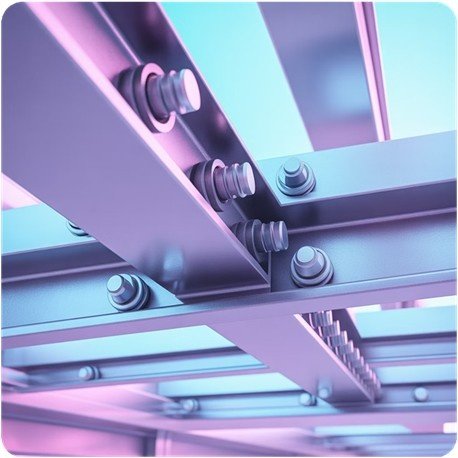
Light gauge steel framing presents unique challenges in connection design. Unlike heavy structural steel, these thin-walled members require careful consideration of localized stresses, bearing capacity, and connection configurations. Connection failures often result from inadequate detailing of track-to-stud connections, insufficient fastener spacing, or improper load-path planning. The thin material is susceptible to web crippling, localized buckling, and pull-through failures at connection points. |
|
Thermal Bridging and Energy
Performance
Continuous Metal Paths
Steel studs create direct thermal pathways through insulated wall assemblies, significantly reducing the effective R-value of the building envelope and increasing energy consumption.
Code Compliance Challenges
Meeting increasingly stringent energy codes requires careful detailing strategies including thermal breaks, exterior continuous insulation, and proper sequencing of materials.
Condensation Risk
Inadequate thermal bridging mitigation can lead to condensation on interior surfaces, potentially causing mold growth, material deterioration, and indoor air quality issues.
Coordination Between Disciplines
Effective collaboration eliminates conflicts and improves constructability
Architectural Intent
Translating design vision into buildable steel assemblies while maintaining aesthetic requirements
Structural Engineering
Ensuring load-bearing capacity, lateral stability, and compliance with structural calculations
MEP Systems
Accommodating ductwork, plumbing, electrical conduits, and maintaining member integrity
Construction Sequencing
Coordinating installation logistics, material delivery, and field modifications
Poor coordination leads to costly field changes, penetrations that compromise structural integrity, and installation delays. Companies like Consac leverage advanced BIM coordination workflows to identify and resolve these conflicts during the detailing phase, preventing expensive on-site surprises.
Deflection Control and Serviceability Limits
|
|
Light gauge steel members are significantly more flexible than their heavy steel counterparts, making deflection control a critical consideration often underestimated in the detailing process. Excessive deflection can lead to cracked finishes, misaligned doors and windows, roof ponding, and aesthetic concerns. Detailers must carefully evaluate span-to-depth ratios, member spacing, and support conditions. The challenge intensifies when addressing long spans, concentrated loads, or cases where architectural requirements limit member depth. Proper deflection analysis demands consideration of both immediate and long-term creep effects under sustained loading conditions. |
Material Specification and Tolerance Management
Gauge Variations
Subtle differences in material thickness can significantly impact structural performance. Detailers must specify precise gauges and verify availability, as not all gauges are stocked by every manufacturer.
Yield Strength Classifications
Light gauge steel is available in different yield strengths (33 ksi, 50 ksi, etc.). Incorrect specification can create costly over-designs or dangerous under-capacity failures.
Coating Requirements
Galvanized coatings (G40, G60, G90) must be specified based on exposure level and compatibility with finishes and fire-resistance requirements.
Dimensional Tol
Navigating Code Requirements and Standards
01 - Multiple Code References
Light gauge steel detailing requires familiarity with AISI S100, IBC, local amendments, and specialty standards for seismic and wind design.
02 - Fire-Resistance Ratings
Achieving required fire ratings demands specific assembly configurations, materials, and tested systems documentation.
03 - Seismic Design Categories
Higher seismic zones require special detailing for ductility, redundancy, and energy dissipation in lateral systems.
04 - Accessibility Compliance
ADA requirements affect framing details around doors, fixtures, and accessible routes through the structure.
Overcoming Challenges with Precision Detailing
Advanced BIM Integration
Leverage 3D modeling and clash detection to identify issues before fabrication, reducing costly field modifications and improving coordination across all trades.
Rigorous Quality Control
Implement multi-stage review processes that verify connections, deflections, material specifications, and code compliance at every phase of the detailing process.
Early Collaboration
Engage detailing professionals during design development to address constructability, identify value engineering opportunities, and streamline the path to installation.
Success in light gauge steel projects comes from recognizing these challenges early and partnering with experienced detailing teams who understand both the technical requirements and practical realities of construction. With proper planning, coordination, and expertise, these challenges transform into opportunities for efficient, high-performance building systems.
What's Your Reaction?