Robotics in Light Gauge Steel Prefabrication
Automation is transforming construction manufacturing, bringing precision, speed, and consistency to light gauge steel framing. As the industry embraces digital fabrication, robotics is emerging as a game-changer for prefabrication workflows.

The Automation Revolution in Steel Framing
|
Light gauge steel (LGS) framing has long been valued for its strength-to-weight ratio, dimensional stability, and sustainability. Now, robotic automation is unlocking new levels of efficiency in prefabrication facilities across North America. The shift from manual fabrication to automated systems addresses critical industry challenges: labor shortages, quality control variability, and the demand for faster project delivery. Robotics brings manufacturing-level precision to construction components. |
|

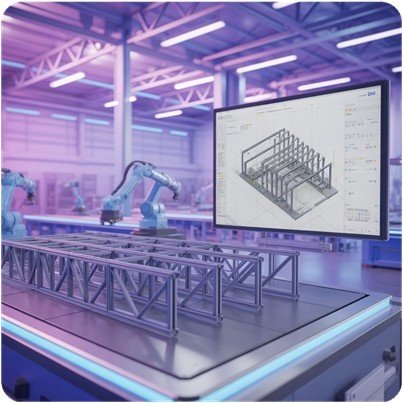
How Robotic Systems Transform LGS Workflows
Digital Model Integration
BIM models feed directly into robotic systems, translating design intent into precise fabrication instructions.
Automated Material Handling
Robotic arms retrieve, position, and process steel with consistent accuracy, improving utilization.
Precision Fabrication
CNC robots perform cutting, punching, and forming with repeatable accuracy across all components.
Quality Verification
Sensors and vision systems ensure dimensional accuracy in real-time before assembly.
Intelligent Assembly
Collaborative robots assist technicians with complex assemblies, improving speed and safety.
Key Benefits of Robotic Prefabrication
Enhanced Precision
Robotic systems achieve tolerances within ±1/16", ensuring perfect field installation without rework.
Accelerated Production
Automated cutting, punching, and assembly reduce fabrication time by 40–60%.
Improved Safety
Robots handle repetitive and hazardous tasks, improving worker safety and reducing injuries.
Quality Consistency
Precision automation eliminates human errors and reduces material waste significantly.
Integration with Digital Design Workflows
The true power of robotic prefabrication emerges when integrated with advanced digital workflows. Companies like Consac are bridging the gap between design and fabrication through comprehensive BIM and CAD services that optimize models for automated manufacturing.
|
|
This integration creates a seamless digital thread from initial concept through final installation. Structural engineers can design with fabrication constraints in mind, while fabricators receive construction-ready models that eliminate interpretation errors. Critical Integration Points:
|
Real-World Impact: By the Numbers
The adoption of robotic prefabrication is delivering measurable results for forward-thinking fabricators and construction firms. These performance improvements demonstrate the tangible value of automation investment:
50% Faster Delivery
Reduction in overall project timelines from design to installation
30% Less Waste
Decrease in material waste through optimized nesting and cutting
25% Labor Efficiency
Improvement in labor productivity per fabricated component
90% Quality Rate
First-time-right fabrication accuracy with minimal rework needed
How Robotic Systems Transform LGS Workflows
BIM models deliver accurate fabrication instructions directly to robotic systems.
Robots retrieve and position steel materials with consistent accuracy.
CNC robots cut, punch & form components with millimeter accuracy.
Real-time sensors and vision systems ensure dimensional precision.
Collaborative robots assist technicians with complex assemblies.
The Future of LGS Prefabrication
What's Next?
Robotics in light gauge steel prefabrication is not just a trend—it's the new standard for competitive fabrication. As AI-driven optimization, machine learning for quality control, and collaborative robots become more accessible, even smaller fabricators can benefit from automation.
The path forward requires thoughtful integration of technology with skilled human expertise. Success depends on embracing digital workflows, investing in training, and partnering with experts who understand both construction and manufacturing.
Ready to explore automation for your projects? Start by evaluating your current workflows, identifying bottlenecks, and consulting with digital fabrication specialists who can help you build a roadmap to robotic prefabrication.
What's Your Reaction?