BIM-Based Coordination of Steel Deck with MEP Systems
Streamlining complex construction through intelligent 3D coordination and clash detection
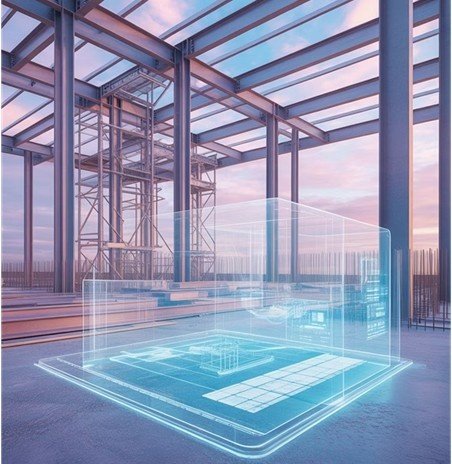
The Coordination Challenge in Modern Construction
|
Steel deck installation in commercial and industrial projects has become increasingly complex. As buildings grow more sophisticated, the coordination between structural steel joists and MEP (mechanical, electrical, and plumbing) systems requires precision that traditional 2D drawings simply cannot deliver. The overlapping of ductwork, piping, electrical conduits, and structural elements creates a web of potential conflicts. Without proper coordination, these clashes lead to costly rework, project delays, and field modifications that compromise both budget and timeline. |
|
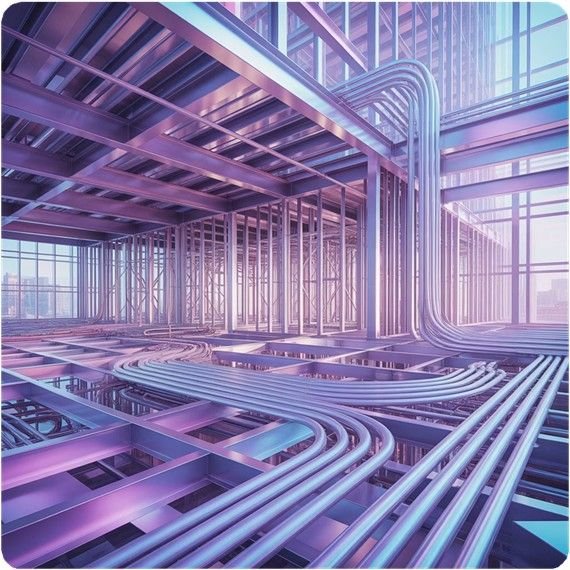
Why Steel Joist 3D BIM Changes Everything
Visual Clarity
3D BIM models provide a complete view of how steel joists, deck, and MEP systems interact in real space, eliminating guesswork and interpretation errors that plague 2D documentation.
Early Clash Detection
Identify conflicts between steel deck and MEP runs during the design phase, not in the field. Automated clash detection flags issues before fabrication begins, saving time and materials.
Enhanced Collaboration
All stakeholders—structural engineers, MEP designers, contractors, and fabricators—work from a single coordinated model, ensuring everyone sees the same accurate information.
The Steel Joist 3D BIM Coordination Process
Structured workflow for accurate modeling, clash detection, and coordinated fabrication
Model Development
Create detailed 3D models of steel joists, deck profiles, and bearing conditions. Include accurate geometry, member sizes, spacing, and connection details that reflect actual fabrication requirements.
Clash Analysis
Run automated clash detection to identify hard clashes (physical intersections) and soft clashes (clearance violations). Prioritize conflicts based on constructability and code compliance impact.
MEP Integration
Import MEP models and overlay them with the structural steel joist model. This step reveals spatial relationships between ductwork, piping, cable trays, and the steel deck system.
Resolution & Documentation
Work collaboratively to resolve conflicts through joist re-routing, MEP adjustments, or deck penetrations. Document all changes and generate coordinated shop drawings for fabrication.
Key Coordination Considerations
Deck Penetrations
Plan and model all required openings for MEP elements passing through the steel deck. Coordinate with structural engineers to ensure penetrations don’t compromise deck diaphragm action or load capacity. Include proper reinforcement details around larger openings.
Clearance Requirements
Maintain adequate clearances for MEP installation and future maintenance access. Consider insulation thickness on ducts and pipes, valve handle clearances, and access panels when coordinating spatial relationships in the model.
MEP Coordination & Accuracy
Coordinate pipe and duct routing in 3D to avoid clashes with structural members. Validate dimensions, slopes, and service routes early to reduce field modifications and improve installation efficiency.
Real-World Impact: By the Numbers
75%
Fewer Field Changes
Projects using 3D BIM coordination report dramatic reductions in construction phase modifications and RFIs related to steel-MEP conflicts.
3–6
Weeks Saved
Early clash resolution through BIM coordination typically saves multiple weeks in project schedules by eliminating costly rework delays.
12%
Cost Reduction
Comprehensive coordination reduces material waste, labor inefficiencies, and schedule impacts, delivering measurable cost savings across the project.
Best Practices for Successful Coordination
Structured strategies for effective BIM coordination and project collaboration
Establish Clear Protocols
- Define model coordination standards early in the project
- Set clash tolerance criteria appropriate for your building type
- Create a coordination schedule with clear milestone reviews
- Assign responsibility for resolving different clash types
Leverage Technology
- Use cloud-based collaboration platforms for real-time model sharing
- Implement automated clash detection routines
- Generate coordinated fabrication drawings directly from the BIM model
- Maintain model version control throughout the process
Foster Collaboration
- Schedule regular coordination meetings with all trades
- Encourage early involvement of steel fabricators and MEP contractors
- Document decisions and distribute updated models promptly
- Maintain open communication channels for quick issue resolution
Building Smarter, Not Harder
Steel Joist 3D BIM coordination represents more than just technology; it is a fundamental shift in how we approach complex construction projects. By identifying and resolving conflicts in the virtual environment, we eliminate the surprises and inefficiencies that have long plagued the construction industry.
The integration of steel deck systems with MEP infrastructure no longer needs to be a source of project risk. With comprehensive 3D coordination, teams can confidently move forward knowing that what is designed is truly buildable.
What's Your Reaction?