Advantages of Light Gauge Steel in Residential Projects
Discover how light gauge steel is revolutionizing residential construction with superior strength, speed, and sustainability for today’s building challenges.
What Makes Light Gauge Steel a Game-Changer?
|
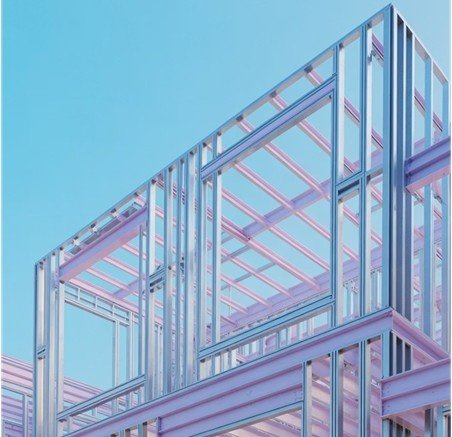
Light gauge steel (LGS) framing has emerged as a transformative solution in residential construction, offering a compelling alternative to traditional wood framing. This cold-formed steel system uses thin steel sheets shaped into structural members, delivering exceptional performance across multiple dimensions. For project managers and design engineers, LGS represents a paradigm shift in how we approach residential construction. The material combines the strength of steel with the flexibility of modern fabrication techniques, creating opportunities for innovative design and faster project delivery. |
|
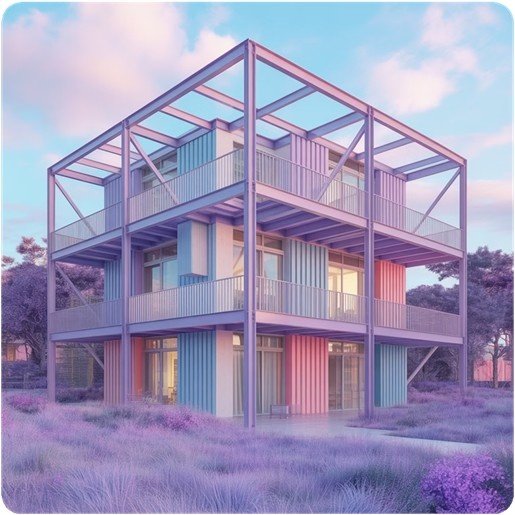
LGS delivers exceptional load-bearing capacity while remaining significantly lighter than traditional materials, reducing foundation requirements and overall structural load.
Unlike wood, steel won't warp, split, crack, or creep over time. This consistency ensures long-term structural integrity and minimizes callbacks for contractors.
Steel's ductility and engineered connections provide superior performance in earthquake-prone regions, meeting stringent building codes with ease.
These structural advantages translate directly into reduced liability and enhanced building performance across the project lifecycle.
Superior Structural Performance
High Strength-to-Weight Ratio
Dimensional Stability
Seismic Resilience
Superior Structural Performance
High Strength-to-Weight Ratio
LGS delivers exceptional load-bearing capacity while remaining significantly lighter than traditional materials, reducing foundation requirements and overall structural load.
Dimensional Stability
Unlike wood, steel won’t warp, split, crack, or creep over time. This consistency ensures long-term structural integrity and minimizes callbacks for contractors.
Seismic Resilience
Steel’s ductility and engineered connections provide superior performance in earthquake-prone regions, meeting stringent building codes with ease.
These structural advantages translate directly into reduced liability and enhanced building performance across the project lifecycle.
Accelerated Construction Timelines
Prefabrication Efficiency
Components arrive on-site pre-cut and labeled, ready for assembly with minimal waste and maximum precision.
Weather-Independent Installation
Steel framing can be installed in virtually any weather condition, eliminating costly delays from rain or humidity.
Faster Project Completion
Reduced construction time means earlier occupancy, faster ROI, and lower carrying costs for developers.
For general contractors and operations heads, these timeline advantages can mean the difference between meeting aggressive delivery schedules and facing penalties.
Cost-Effectiveness Across the Lifecycle
Initial Construction
|
Long-Term Savings
|
When partnering with experienced firms like Consac for BIM coordination and steel detailing, project teams can optimize these cost advantages through precise planning and clash detection before fabrication begins.
Sustainability and Environmental Benefits
100% Recyclable
Steel is infinitely recyclable without loss of properties. Most LGS contains 25-90% recycled content, supporting LEED and green building certifications.
Forest Preservation
Choosing steel over wood eliminates pressure on forest resources, preserving natural ecosystems while meeting building material demands.
Energy Efficiency
Precise framing allows for consistent insulation installation, reducing thermal bridging and improving overall building envelope performance.
Design Flexibility and BIM Integration
Complex Geometries
LGS enables creative architectural designs including curved walls, cantilevers, and open floor plans that would be challenging with conventional framing.
Digital Workflow Integration
Steel framing pairs seamlessly with BIM and CAD technologies, enabling precise shop drawings, automated fabrication, and virtual construction coordination.
MEP Coordination
Pre-punched web openings in steel studs simplify electrical and plumbing installations, reducing field conflicts and rework for facility planners.
For CAD and technical teams, the compatibility between LGS and digital fabrication workflows streamlines the entire design-to-construction process.
What's Your Reaction?