Advanced Attachment Techniques for Wood Nailers in High-Rise Buildings
In high-rise construction, the details that don’t make headlines are often the ones that matter most. Wood nailers—those horizontal or vertical wood members anchored to structural steel or concrete—play a critical role in supporting roofing systems, curtain walls, parapets, and cladding assemblies. Yet their attachment methods are frequently underspecified or misunderstood. This guide takes a deep dive into advanced attachment techniques for wood nailers in high-rise buildings, offering practical guidance for engineers, contractors, and technical teams working on complex vertical structures.

What Are Wood Nailers and Why Do They Matter?
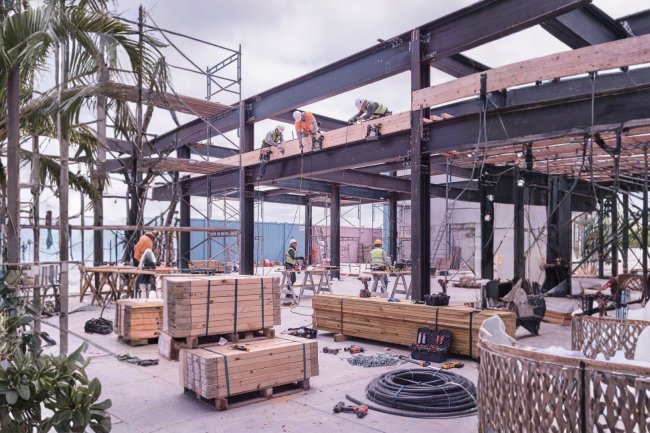
Wood nailers are structural wood members — typically pressure-treated lumber — attached to a building’s primary structure. They act as the interface between structural framing and finish systems such as roofing membranes, metal fascia, and wall cladding.
In high-rise construction, nailers must resist wind uplift, thermal expansion, seismic forces, and differential movement between materials. These demands make proper anchorage critical to overall system performance.
Failure of a wood nailer can compromise the entire roofing or cladding system. Proper design and attachment are essential from the start.
Key Functions
- Provide nailable substrate for roofing and cladding
- Transfer uplift and lateral loads to structure
- Bridge transitions between dissimilar materials
- Support flashings, parapets, and copings
- Maintain thermal and moisture barrier continuity
Understanding the Structural Environment in High-Rise Buildings
High-rise structures are subject to amplified forces and movement demands. Proper nailer attachment design must account for wind, seismic, thermal, and environmental conditions.
Wind Uplift
Upper floors and roof zones experience extreme uplift forces. Nailer connections must resist pull-through and shear under high wind loads.
Seismic Drift
Inter-story drift induces racking forces. Flexible fastening or slotted connections may be required to accommodate structural movement.
Thermal Movement
Differential expansion between steel, concrete, and wood creates stress. Connections must allow movement to prevent cracking or failure.
Moisture & Decay
Exposure to harsh conditions requires pressure-treated lumber and corrosion-resistant fasteners to ensure long-term durability.
Core Attachment Methods: An Engineering Overview
Selecting the right attachment method depends on substrate type, load conditions, and structural detailing requirements in high-rise construction.
Cast-in-Place Anchor Bolts
Embedded during concrete placement, these anchors provide excellent pullout resistance. Ideal for parapet walls and roof curbs, they must be engineered for spacing, embedment depth, and diameter based on structural load requirements.
Post-Installed Anchors
Mechanical and chemical anchors offer flexibility when cast-in-place options are not feasible. Epoxy anchors perform well in cracked concrete and provide consistent strength across varying conditions and edge distances.
Welded Steel Angles & Clip Plates
Used for steel substrates, welded angles or clip plates create a rigid base for nailers. The wood is then mechanically fastened, making this method effective for roof edges and steel-framed parapets.
Advanced Fastening Systems for High-Rise Applications
Modern fastening solutions address vibration, movement, and corrosion challenges in tall-building construction environments.
Helical Screw Anchors
Provide strong shear and pullout resistance in metal decks without pre-drilling, improving installation efficiency.
Heavy Hex Lag Screws
Used with load-rated plates to distribute loads across masonry and precast substrates.
Slotted Connections
Allow controlled movement in steel connections, reducing stress from thermal and seismic shifts.
Shot-Pin Systems
High-velocity fastening into steel or concrete, ideal for rapid installation with verified load capacities.
Composite Assemblies
Combine nailers with insulation and thermal breaks to improve energy performance and structural efficiency.
Adhesive Bonded Systems
Structural adhesives provide attachment for specialized applications with strict installation controls.
Material Specifications: Lumber, Coatings, and Corrosion Resistance
Proper material selection ensures durability in demanding environments exposed to moisture, temperature variation, and corrosion.
Pressure-Treated Lumber
Specify UC3B or UC4A for above-grade use. For wet zones or contact with concrete and metal flashings, use UC4B for enhanced durability.
Fire-Retardant Treatment (FRT)
Required in many code-regulated assemblies. Ensure compliance with IBC requirements and compatibility with fastener materials.
Corrosion-Resistant Fasteners
Use HDG (ASTM A153) or stainless steel (Type 304/316) fasteners to prevent corrosion caused by treated wood chemicals.
Engineered Wood Alternatives
LVL and LSL provide improved dimensional stability and consistent load performance in demanding conditions.
The Role of BIM and Structural Detailing in Nailer Design
Why BIM Changes Everything
Building Information Modeling (BIM) transforms how wood nailer systems are designed and coordinated. Nailer components can be modeled in 3D with full parametric data — including attachment type, fastener spacing, treatment specification, and load capacity.
Early conflict detection reduces costly field modifications.
Structural Detailing Best Practices
Shop drawings and connection details translate engineering intent into field-ready instructions. Proper detailing ensures installation accuracy and performance.
- Plan & section views showing nailer locations
- Fastener schedule with spacing and embedment depth
- Material call-outs and treatment specifications
- Corner, penetration, and transition detailing
- Coordination notes with roofing/cladding systems
Coordinated detailing reduces RFIs and accelerates approvals.
Integrated BIM workflows combined with precise structural detailing create fully coordinated nailer systems — minimizing RFIs, improving installation accuracy, and ensuring long-term building performance.
Code Compliance and Standards Reference
Wood nailer attachment in high-rise construction is governed by an intersecting matrix of building codes, material standards, and manufacturer requirements. Staying current with applicable standards is a fundamental responsibility for every design and construction professional on the project team.
Primary Governing Codes & Standards
ASCE 7
Minimum Design Loads and Associated Criteria for Buildings and Other Structures—the primary reference for wind, seismic, and gravity loads applied to nailer connection design.
IBC / IRC
The International Building Code governs wood construction requirements, fire-retardant treatment mandates, and fastener specifications for buildings of all occupancy types and heights.
AWPA Standards
The American Wood Protection Association publishes Use Category (UC) standards for preservative treatment of lumber—the definitive reference for specifying treated nailers in high-moisture, above-grade, and ground-contact applications.
ASTM Standards
ASTM A153 (hot-dip galvanizing), ASTM F1554 (anchor bolts), and ASTM E488 (anchor testing) provide standardized testing and specification criteria for fasteners and connectors used in structural applications.
Manufacturer & Roofing Industry References
NRCA Guidelines
The National Roofing Contractors Association publishes detailed guidelines for wood nailer attachment as part of its Roofing Manual series. These guidelines are widely referenced in project specifications and provide prescriptive attachment details for common conditions.
FM Global Standards
For buildings with FM-insured roofing systems, FM Global’s Loss Prevention Data Sheets (particularly DS 1-29 and DS 1-49) govern nailer attachment requirements and are often more stringent than code minimums in wind-critical regions.
Fastener Manufacturer ETA / ICC-ES Reports
Proprietary fasteners require ICC-ES Evaluation Service Reports (ESRs) confirming code compliance and providing published load tables. Always verify that the ESR covers the specific substrate material and condition specified on the project.
Common Installation Challenges and How to Overcome Them
Identifying field challenges early allows teams to plan mitigation strategies and maintain construction quality.
Substrate Variability
Field conditions may differ from design assumptions. Specify minimum substrate requirements and include approved alternate fasteners.
Access Constraints
Limited access at height restricts installation methods. Use fastening systems that can be installed from a single working face.
Sequencing Conflicts
Coordinate installation with roofing, curtain wall, and MEP trades. Ensure anchors are installed before concrete pours close access.
Inspection & Documentation
Require photographic records and inspection sign-offs before concealment to ensure compliance and traceability.
Practical Takeaways for Your Next High-Rise Project
Whether you're a structural engineer detailing connection assemblies, a project manager coordinating trade sequencing, or a BIM technician modeling attachment systems, the principles covered in this guide translate directly into better outcomes on your next high-rise project. Here are the key takeaways to carry forward:
1. Engineer Every Attachment — Don’t Prescribe by Habit
Wood nailer attachment in high-rise buildings demands project-specific load calculations. Resist the temptation to copy standard details from previous projects without verifying that loads, substrates, and code requirements align.
2. Coordinate Early Across All Disciplines
Nailer systems sit at the intersection of structural, architectural, roofing, and cladding scopes. Bring all parties into the coordination process during design development—not during shop drawing review or, worse, during construction.
3. Specify Materials With the Full Service Environment in Mind
Lumber treatment class, fastener corrosion category, and fire-retardant requirements should all be determined by analyzing the actual exposure conditions of each nailer location—not by applying a single blanket specification to the entire project.
4. Leverage BIM for Coordination and Documentation
A fully coordinated BIM model with embedded nailer data reduces conflicts, accelerates approvals, and creates a permanent record of design intent that supports future maintenance and renovation work throughout the building’s lifecycle.
5. Build in Inspection and Documentation Requirements
Specify special inspection requirements for nailer attachments in the structural notes. Require photographic documentation and inspection reports before concealment. This protects all parties and ensures the finished building performs as designed.
Precision in the Details Defines Performance
Wood nailers may seem like a small component in high-rise construction, but their attachment to the primary structure directly influences building performance. From wind uplift resistance to thermal movement accommodation, and from corrosion protection to BIM-integrated detailing — every decision has long-term consequences for durability and reliability.
As construction technology evolves and energy codes become more demanding, the industry is moving toward smarter, better-coordinated nailer systems. Professionals who focus on precision, proactive coordination, and rigorous documentation consistently deliver buildings that perform over time.
Mastering nailer attachment is not just technical — it reflects the level of care and engineering discipline required for high-performance buildings.
Key Topics Covered
- Role of wood nailers in high-rise buildings
- Structural forces in tall buildings
- Core and advanced attachment methods
- Load calculations and fastener spacing
- Material specs and corrosion resistance
- BIM integration and detailing workflows
- Installation challenges and solutions
- Code compliance and best practices
What's Your Reaction?