How to Ensure Code Compliance in Wood Nailer Detailing
Wood nailer detailing is a critical—yet often underestimated—component of structural integrity in modern construction. Whether you're working on a commercial rooftop assembly, a steel-to-wood connection, or a curtain wall system, getting the nailer details right isn’t just a matter of craftsmanship—it’s a matter of code compliance. From load path continuity to fastener schedules and fire-resistance ratings, every element of a wood nailer detail must align with applicable building codes, structural requirements, and material standards. This guide walks you through the key principles, common pitfalls, and best practices to ensure your wood nailer detailing meets code—every time.

What Is Wood Nailer Detailing — and Why Does It Matter?
Definition
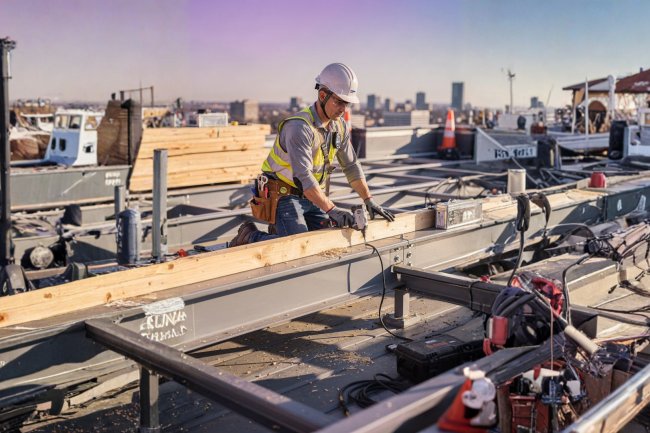
A wood nailer is a piece of dimensional lumber — typically pressure-treated — anchored to steel, concrete, or masonry to provide a secure fastening surface for roofing, cladding, and finish systems.
Common Applications
- Low-slope roofing at parapets and curbs
- Steel-framed buildings for MEP and finish attachments
- Concrete tilt-up and CMU wall systems
- Structural steel connections with decking or sheathing
Why Nailer Details Get Overlooked
Nailers are often treated as secondary elements in design documentation, added late in drawings or left to contractor interpretation — creating a gap between design intent and field execution.
Without properly detailed and code-compliant nailers, roofing systems, flashing, and cladding are vulnerable to failure from wind uplift, seismic forces, and moisture intrusion.
Understanding the Applicable Codes and Standards
Wood nailer compliance spans multiple standards. Understanding how these codes work together is critical before drafting any detail.
1. IBC – International Building Code
Governs structural performance, fire resistance, and material requirements. Nailer assemblies must comply with Chapter 7 for fire-rated construction.
2. NDS – Wood Design Specification
Provides engineering criteria for wood members, including fastener capacity, connection design, and load duration factors.
3. ASCE 7 – Minimum Design Loads
Defines wind load calculations, critical for designing nailer anchorage at roof edges, parapets, and uplift-prone zones.
4. NRCA & FM Global Guidelines
Provide roofing-specific detailing requirements aligned with warranty and insurance standards — often exceeding minimum code requirements.
No single code governs nailers — true compliance comes from integrating all applicable standards.
Key Compliance Areas in Wood Nailer Detailing
Code compliance in nailer detailing is multidimensional — spanning material selection, anchorage design, wind resistance, and fire-rated assembly integration.
Material Specification
Nailers in contact with concrete or masonry must be pressure-treated lumber rated for ground contact (UC4A/UC4B per AWPA). Using untreated lumber creates code violations and moisture risks.
Fastener Schedules & Anchor Design
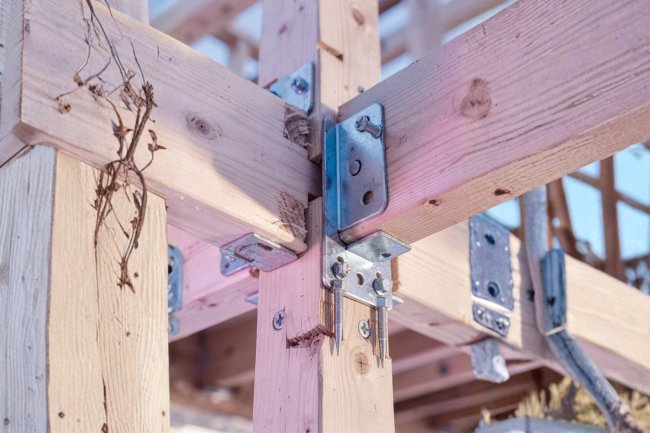
Fastener type, spacing, and embedment must be clearly defined. Anchors must be engineered for combined shear and uplift loads — not selected arbitrarily.
Wind Uplift Resistance
Roof edge nailers must resist high uplift pressures per ASCE 7 and ANSI/SPRI ES-1. Proper spacing, embedment, and sizing are critical to meet design loads.
Fire Rating Continuity
Nailers in fire-rated assemblies must not compromise fire resistance. Use approved materials and ensure the full assembly is tested per UL or FM standards.
Structural Load Path: The Foundation of Compliant Nailer Design
Continuous load path design ensures every force has a clear route to the foundation. Wood nailers are part of this chain — and must be detailed with precision to maintain structural integrity.
1. Wind Uplift Acts
Roofing membrane, insulation, and cover board experience uplift pressure from wind.
2. Load Transfers
Fasteners transfer uplift forces from roofing layers into the wood nailer.
3. Anchors Resist
Anchors transfer loads into the structural deck or parapet system.
⚠ Critical Insight: A weak link — such as oversized spacing, inadequate embedment, or undersized anchors — compromises the entire system. Avoid relying on “standard spacing” without verifying actual wind uplift requirements.
Pro Tip: Coordinate nailer anchor design with the Structural Engineer of Record (SER) early to avoid plan rejections and costly field changes.
Proper load path documentation helps inspectors and reviewers clearly trace the design logic — streamlining approvals and reducing delays during permitting and construction.
A Practical Compliance Checklist for Wood Nailer Details
Use this checklist as a final quality review before issuing nailer details for construction or permit submission.
Material & Specification Checks
Structural & Assembly Checks
A detail that satisfies all checklist items is well-positioned for compliance, approval, and smooth field execution.
Bringing It All Together: Compliance as a Design Standard
Wood nailer detailing sits at the intersection of architecture, structural engineering, and field construction. When improperly specified or coordinated, it can compromise the entire building envelope — from roofing systems to wall cladding.
With a disciplined, knowledge-driven approach — grounded in codes, load design, material compatibility, and coordination — nailer detailing becomes a critical contributor to performance, durability, and safety.
Know Your Codes
Understand IBC, NDS, ASCE 7, and NRCA standards before detailing begins.
Specify Completely
Define lumber, treatment, fasteners, spacing, and embedment clearly.
Engineer for Loads
Verify anchor spacing against real wind uplift calculations.
Coordinate Across Teams
Align structural, architectural, and roofing drawings using BIM/CAD.
Consistent application of these principles elevates the quality, reliability, and compliance of every wood nailer detail — setting a higher standard for construction excellence.
What's Your Reaction?