Steel Joist 3D BIM: Revolutionizing Structural Detailing and Quantity Takeoffs
In today's fast-paced construction industry, precision isn't just preferred — it's essential. Steel joist detailing using 3D BIM technology has transformed how structural engineers, fabricators, and contractors approach project planning, execution, and cost estimation.

Why Steel Joist 3D BIM Matters in Modern Construction
|
Traditional 2D drawings and manual takeoffs have long been the industry standard, but they come with significant drawbacks: human error, miscommunication between trades, and costly material waste. Steel joist systems, critical load-bearing components in commercial and industrial buildings, demand absolute accuracy. 3D BIM addresses these challenges directly by creating intelligent, data-rich models that serve multiple purposes throughout a project’s lifecycle. |
|
The Core Benefits of Steel Joist 3D BIM Detailing
Data-driven modeling improves precision, coordination, and project efficiency
Precision Modeling
Every connection, member size, and load path is captured digitally, eliminating guesswork and reducing field conflicts by up to 80%.
Enhanced Coordination
Clash detection identifies conflicts with MEP systems, structural members, and architectural elements before fabrication begins.
Automated Quantity Takeoffs
Generate accurate material lists instantly from the model, ensuring procurement teams order exactly what's needed—no more, no less.
Accelerated Schedules
Streamlined workflows and fewer RFIs mean faster approvals, quicker fabrication, and earlier project completion dates.
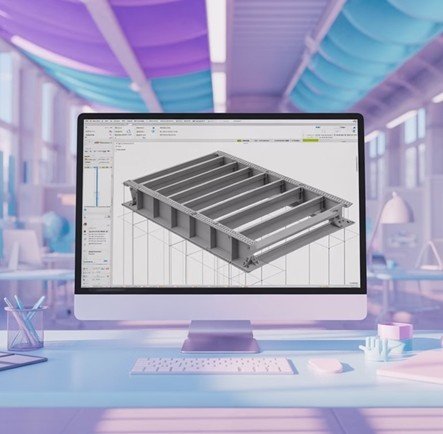
One of the most powerful applications of steel joist BIM is in generating precise quantity takeoffs. Unlike manual methods that rely on scaling drawings and assumptions, BIM models contain embedded data for every component—enabling automated quantity extraction and accurate cost estimation.
Engineers create detailed 3D representations of steel joists, including geometry, material properties, and connection details.
Each joist element is tagged with specifications—length, depth, gauge, coatings, and fabrication requirements—creating a data-rich model.
BIM software instantly generates comprehensive schedules and bills of materials directly from the model—eliminating manual takeoff errors.
Quantity data flows seamlessly into estimating software, providing real-time cost projections and budget tracking.
How Steel Joist 3D BIM Drives Accurate Quantity Takeoffs
Model Development
Data Integration
Automated Extraction
Cost Estimation
Real-World Impact: By the Numbers
Quantifiable benefits of BIM-driven steel joist detailing and coordination
Faster Detailing
Projects using steel joist 3D BIM complete the detailing phase significantly faster than traditional methods.
Takeoff Accuracy
BIM-generated quantity takeoffs achieve exceptional accuracy compared to manual measurements.
Reduced Waste
Precise material ordering minimizes over-ordering and on-site waste, improving sustainability metrics.
Fewer RFIs
Detailed coordination reduces requests for information during construction, keeping projects on schedule.
These improvements translate directly to bottom-line savings and competitive advantages for contractors, fabricators, and project owners alike.
Best Practices for Steel Joist BIM Implementation
Level of Detail Matters
Define your LOD (Level of Development) requirements early. For fabrication and quantity takeoffs, LOD 350 or higher ensures sufficient detail for accurate material extraction and shop drawing coordination.
Standardize Your Workflows
Establish consistent naming conventions, layer structures, and modeling protocols across your team. This standardization prevents confusion and ensures quality control as models pass between disciplines.
Leverage Parametric Families
Create reusable joist families with built-in parameters for common configurations. This accelerates modeling time while maintaining accuracy across similar conditions.
Companies like Consac have refined these processes through years of experience, developing proprietary workflows that maximize efficiency while maintaining the highest quality standards for structural steel detailing.
Overcoming Common Challenges in Steel Joist BIM
Practical solutions to improve BIM adoption, coordination, and fabrication readiness
Software Learning Curve
Solution: Invest in comprehensive training programs and start with pilot projects to build team confidence before tackling complex structures.
Integration with Fabrication
Solution: Ensure your BIM software can export to fabrication formats (DSTV, CIS/2) that drive automated cutting and welding equipment.
Data Management
Solution: Implement a Common Data Environment (CDE) where all stakeholders access the latest model versions, preventing costly miscommunication.
Quality Control
Solution: Establish checkpoint reviews at key milestones—preliminary design, design development, and pre-fabrication—to catch issues early.
The Future of Steel Joist Detailing Is Here
Steel joist 3D BIM isn't just a trend—it’s the new standard for structural detailing and quantity takeoffs. As the construction industry continues its digital transformation, the question is no longer whether to adopt BIM, but how quickly you can integrate it into your workflows.
The competitive advantages are clear: faster project delivery, improved accuracy, reduced costs, and better coordination across all trades. Whether you're a fabricator looking to streamline shop drawings, a contractor seeking to minimize field conflicts, or a project owner demanding greater cost certainty, steel joist BIM delivers measurable results.
Ready to elevate your steel detailing process? Embrace 3D BIM technology and transform how you approach structural projects—from initial concept through fabrication and installation.
What's Your Reaction?