Steel Joist 3D BIM Standards and Best Practices
Discover how intelligent modeling transforms steel joist detailing from a drafting task into a strategic advantage for construction teams
Why Steel Joist BIM Matters Now
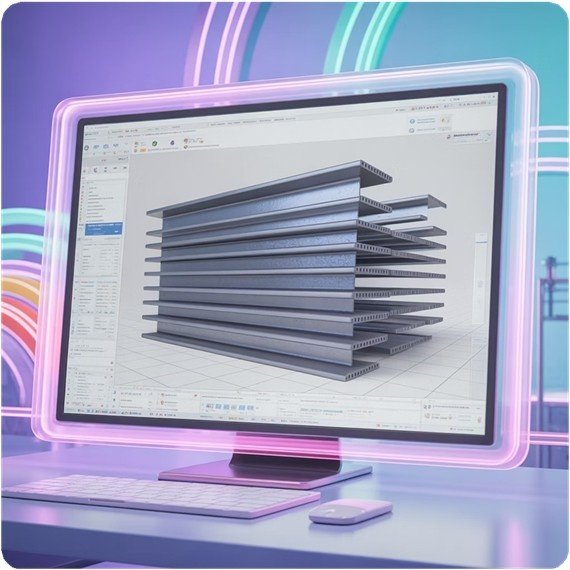
The construction industry is experiencing a fundamental shift in how we design and document steel joist systems. Traditional 2D approaches can no longer keep pace with the complexity of modern projects or the coordination demands of integrated delivery methods.
Steel joist 3D BIM enables teams to visualize conflicts before fabrication, accelerate shop drawing approvals, and reduce costly field rework. When properly implemented, these digital models become the single source of truth — connecting designers, fabricators, and installers in real time.
Core Standards for Steel Joist Modeling
Foundational modeling standards that ensure fabrication accuracy and coordination success
Level of Development (LOD)
Define LOD requirements early—typically LOD 350 for fabrication models. Include member sizes, connection details, bridging locations, and support conditions with full dimensional accuracy.
Coordinate Systems
Align all joist models to a shared project coordinate system. Reference survey points and structural grids to maintain spatial accuracy throughout the coordination process.
Naming Conventions
Establish consistent element naming that captures joist designation, bay location, and sequence. Use standardized abbreviations across all project phases to ensure clarity and traceability.
Data Requirements
Embed essential attributes including load capacity, steel grade, camber specifications, and fire rating. Structure data fields to support quantity takeoffs and material tracking.
Building Intelligent Joist Models
Intelligent modeling goes beyond geometry — it is about embedding the information that drives fabrication and installation decisions. Start with accurate manufacturer families that include parametric controls for span, depth, and chord sizes.
Model joists as individual elements rather than generic placeholders. This granularity enables precise clash detection, particularly at bearing conditions and mechanical penetrations. Include bridging, extensions, and non-standard details that affect field assembly.
Companies like Consac build joist models with fabrication-ready detail, ensuring that what is modeled can actually be built. The goal is a digital twin that reflects shop-level accuracy while remaining manageable within the coordination environment.
Validate incoming models against project standards. Check for coordinate alignment, proper naming, and completeness before integration.
Run systematic clash tests between joists and MEP systems, deck bearing, and ceiling assemblies. Prioritize hard clashes and clearance violations.
Document all coordination decisions in BCF format. Track resolutions through to model updates and ensure all trades acknowledge changes.
Conduct final reviews before releasing for fabrication. Verify all clashes are resolved and models reflect approved shop drawings.
Coordination Workflow Best Practices
Model Receipt & QA
Clash Detection
Resolution & Documentation
Final Validation
Common Modeling Challenges and Solutions
Addressing technical complexities in steel joist BIM for improved coordination and fabrication readiness
Non-Standard Joist Configurations
Sloped joists, curved members, and custom profiles require specialized families. Invest time upfront creating parametric templates that handle these conditions consistently. Build libraries of proven families to accelerate future projects.
Bridging and Bracing Systems
Don’t oversimplify bridging—model diagonal and horizontal bracing with correct spacing per specifications. This level of detail prevents coordination issues and supports accurate material quantities.
Bearing and Support Details
Accurately model bearing seats, clip angles, and header connections. These details drive clash detection at critical interfaces. Include seat extensions and shim space to reflect actual installation requirements.
Managing Model File Sizes
Balance detail with performance by using simplified representations where full detail isn’t required. Consider phased modeling for large projects and leverage worksets to manage team access efficiently.
Data-driven coordination delivers real-world performance gains across engineering, detailing, and field execution.
Reduction in joist-related information requests through better visualization and model clarity.
Accelerated shop drawing review cycles enabled by fully coordinated 3D joist models.
Decrease in field modifications and fabrication errors through early clash resolution.
These improvements translate directly to schedule compression and cost savings. Teams report better collaboration across disciplines when working from coordinated joist models.
The upfront investment in proper BIM standards pays dividends throughout fabrication and installation. Early clash detection prevents costly field conflicts during steel erection—when corrections require cutting, grinding, and field welding.
Measurable Benefits of Steel Joist BIM
65%
Fewer RFIs
40%
Faster Approvals
30%
Less Rework
Moving Forward with Steel Joist BIM
Success with steel joist BIM starts with commitment to standards before modeling begins. Define your LOD requirements, establish naming protocols, and ensure all team members understand the coordination workflow.
Invest in training your team on joist-specific modeling techniques. The capabilities of your BIM software matter less than the knowledge of the people using it. Build your family libraries incrementally, documenting lessons learned from each project.
As design and construction processes continue to integrate, steel joist 3D BIM will become table stakes rather than a competitive advantage. The teams that master these practices now will be positioned to lead more complex projects with confidence — delivering structures that are better coordinated, faster to build, and more profitable for everyone involved.
What's Your Reaction?