Revolutionizing Construction Safety: BIM Meets Virtual Reality Training
The construction industry faces an alarming reality: workplace fatalities occur at rates significantly higher than other sectors. But innovative technology is changing how we approach safety training. By combining Building Information Modeling (BIM) with Virtual Reality (VR), construction companies across the United States are creating immersive, risk-free environments where workers can learn to identify hazards and practice safety protocols before stepping onto actual job sites.
Traditional Training Limitations
Classroom presentations, printed manuals, and basic simulations often provide information in a passive format. Workers may understand procedures conceptually but struggle to apply them when faced with complex, fast-moving construction environments.
Real-World Site Complexity
Construction sites involve dynamic hazards, changing conditions, multiple trades, equipment interactions, and time-sensitive decisions. Replicating these realities in traditional training environments is extremely difficult.
Why the Industry Needs Better Solutions
When safety training fails to prepare workers effectively, the consequences extend far beyond individual incidents. Injuries, fatalities, project delays, productivity losses, insurance costs, legal exposure, and reputational damage can all impact project success. The industry requires training approaches that close the gap between theoretical instruction and practical jobsite decision-making.
Bridging the Gap Between Training and Reality
The future of construction safety lies in immersive, realistic training experiences that allow workers to identify hazards, practice responses, and build confidence before stepping onto active job sites. By creating environments that closely mirror real-world conditions, organizations can improve retention, enhance preparedness, and strengthen overall safety performance.
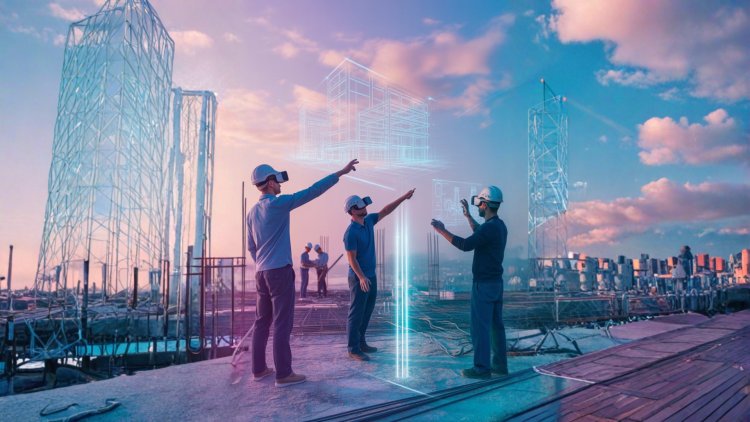
BIM-powered VR training combines the intelligence of Building Information Modeling with immersive Virtual Reality experiences. Detailed project models become realistic training environments where workers can safely identify hazards, practice procedures, and build confidence before entering active construction sites.
Detailed 3D building models are developed using accurate architectural, structural, and MEP information, creating a realistic digital representation of the project.
BIM models are transformed into immersive VR environments featuring realistic interactions, site conditions, equipment behavior, and construction workflows.
Workers navigate virtual job sites, identify hazards, evaluate risks, and practice safety procedures in real time without exposure to actual danger.
What is BIM-Powered Virtual Reality Training?
BIM Model Creation
VR Integration
Interactive Training
Workers can safely experience hazardous situations, practice emergency responses, and learn from mistakes without any physical danger. Repetition builds confidence and strengthens safety awareness before entering active job sites.
Immersive experiences engage multiple senses simultaneously, helping workers remember critical safety procedures longer and apply them more effectively in real-world construction environments.
Virtual training reduces reliance on physical training facilities, printed materials, and site interruptions. Sessions can be conducted repeatedly without disrupting construction schedules.
Key Benefits of BIM-VR Safety Training
Risk-Free Learning
Enhanced Retention
Cost-Effective Training
Leading construction companies across the United States are already using BIM-powered VR training to strengthen safety programs, improve workforce readiness, and reduce jobsite incidents. The technology is proving its value across a wide range of real-world construction scenarios.
Virtual crane operations, excavator blind spots, equipment movement zones, and machine interaction scenarios help workers understand safe practices around heavy machinery before entering active worksites.
Realistic virtual environments allow workers to practice chemical storage procedures, spill response actions, and proper PPE usage while developing confidence in handling potentially dangerous materials.
Teams can rehearse evacuation routes and emergency procedures for scenarios such as fires, structural failures, severe weather events, and other high-risk situations. Repeated exposure improves response times, decision-making, and overall emergency preparedness.
Real-World Applications & Success Stories
Heavy Equipment Safety
Hazardous Material Handling
Emergency Evacuation Training
Implementation Considerations
Technical Requirements
Training Considerations
BIM-powered Virtual Reality training represents more than a technology upgrade—it signals a shift toward a proactive, data-driven safety culture. As BIM adoption expands and VR technology becomes increasingly accessible, immersive safety training is positioned to become a core component of construction workforce development.
Emerging technologies such as haptic feedback, AI-powered training scenarios, and cloud-based learning platforms will make virtual training even more realistic and effective.
As implementation costs continue to decline and measurable benefits become increasingly evident, BIM-VR training will become a standard across the construction sector.
The construction industry stands at the beginning of a major transformation in workforce safety. Organizations that embrace BIM-VR training today are investing not only in technology but also in the long-term wellbeing of their teams. By enabling workers to learn, practice, and respond to risks in immersive environments, companies can strengthen safety culture, improve project outcomes, and create a foundation for sustainable success in an increasingly competitive industry.
The Future of Construction Safety Training
Continued Innovation
Industry Adoption
Building a Safer Construction Industry
What's Your Reaction?