Steel Joist Design and Detailing in the U.S.: AISC & SJI Standards
Steel joists are the backbone of countless American construction projects—from warehouses and manufacturing facilities to commercial buildings and institutional structures. Understanding how to properly design and detail these critical structural elements according to AISC and SJI standards isn't just about compliance; it's about delivering safe, efficient, and cost-effective solutions that stand the test of time.

Understanding Steel Joists
The Foundation of Modern Construction
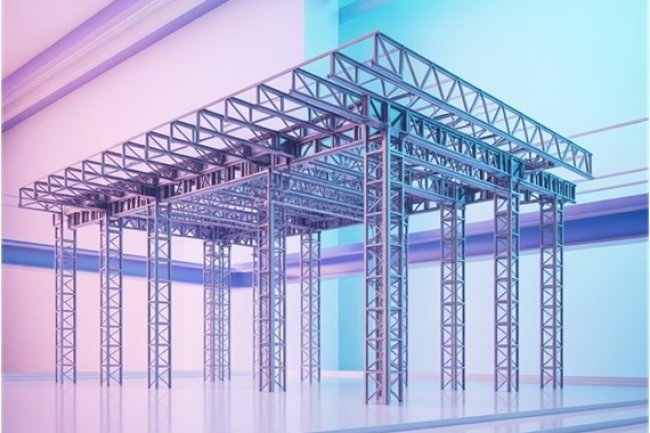
Steel joists are prefabricated, parallel-chord trusses designed to support floors and roofs in building construction. Their exceptional strength-to-weight ratio makes them ideal for spanning large distances without intermediate supports.
In the United States, steel joist design is governed by two primary organizations: the American Institute of Steel Construction (AISC) and the Steel Joist Institute (SJI), ensuring consistency, safety, and performance across projects.
Open-web joist configurations allow mechanical, electrical, and plumbing systems to pass through the structure efficiently. This reduces overall building height, minimizes material usage, and accelerates construction through controlled, off-site fabrication.
Lightweight
High strength-to-weight ratio enables long spans with minimal structural mass and reduced foundation demands.
Cost-Effective
Reduced material quantities and faster installation translate directly into lower labor costs and overall project savings.
Fast Installation
Prefabricated joists arrive ready to install, allowing rapid assembly and shortened construction schedules.
AISC Standards: The Structural Framework
The American Institute of Steel Construction provides comprehensive guidelines for structural steel design through its flagship document, AISC 360 – Specification for Structural Steel Buildings. While AISC does not publish joist-specific standards, it defines the governing design philosophy for all structural steel elements, including load combinations, connections, and design methodologies.
AISC standards emphasize both Load and Resistance Factor Design (LRFD) and Allowable Strength Design (ASD). These methods guide engineers in designing joist-supporting members, connections, and complete structural systems while addressing material properties, fabrication tolerances, and quality control.
Material Selection
Specify appropriate steel grades in accordance with ASTM standards to ensure strength, durability, and compliance with AISC requirements.
Load Analysis
Calculate dead, live, wind, and seismic loads in accordance with ASCE 7 to establish accurate and reliable design forces.
Design Methodology
Apply LRFD or ASD approaches per AISC 360 to achieve safe, efficient, and code-compliant structural designs.
Connection Design
Detail bolted and welded connections following AISC specifications to ensure constructability, safety, and load transfer efficiency.
SJI Standards: Joist-Specific Guidelines
Steel Joist Institute Specifications for Open Web Steel Joists & Joist Girders
The Steel Joist Institute (SJI) publishes detailed specifications specifically for open web steel joists and joist girders. These standards are the definitive resource for joist design, covering K-Series, LH-Series, DLH-Series joists, and joist girders.
The specifications provide standard load tables, span ranges, and design criteria that significantly simplify the specification process while ensuring structural safety and efficiency.
SJI standards include comprehensive requirements for manufacturing, testing, and quality assurance. They establish bridging requirements, specify minimum design loads, and provide guidance on handling and erection.
The specifications also address special considerations such as concentrated loads, non-uniform loading, and unusual support conditions commonly encountered by engineers.
K-Series Joists
Spans up to 60 feet for roof applications with economical depth, providing efficient and cost-effective solutions.
LH & DLH Series
Long-span and deep long-span joists designed for large commercial and industrial projects.
Joist Girders
Primary framing members supporting concentrated joist reactions in structural systems.
Critical Design Considerations for Steel Joists
Beyond basic strength calculations, successful steel joist design demands careful attention to serviceability, stability, vibration performance, and force transfer throughout the structural system.
Deflection limits often govern steel joist selection more than strength. The Steel Joist Institute (SJI) recommends L/240 for floors and L/360 for roofs under live load, with many projects requiring stricter criteria.
Floor vibration performance is critical in occupied spaces. Engineers must evaluate natural frequencies and walking-induced excitation—factors not captured by standard deflection checks.
Load path continuity is equally essential. Forces must transfer cleanly from decking through joists, bridging, beams, columns, and foundations. Consac specializes in converting these engineering requirements into precise fabrication drawings that ensure proper installation and long-term structural performance.
Deflection Control
Monitor live load deflection (L/240 floors, L/360 roofs) and verify total load deflection against project-specific criteria.
Bridging Requirements
Install horizontal and diagonal bridging per SJI specifications to ensure lateral stability and load sharing.
Vibration Analysis
Evaluate floor systems for occupant comfort using natural frequency checks and walking excitation models.
Connection Details
Design seat angles, headers, and bearing conditions to achieve full load transfer capacity and reliable performance.
Detailing Best Practices: From Design to Fabrication
Coordinate Early and Often
Effective joist detailing begins during the design development phase. Coordinate with architects, MEP engineers, and steel fabricators to identify potential conflicts before they become costly field issues.
Early coordination helps optimize joist depths, establish realistic floor-to-floor heights, and plan for penetrations and equipment support.
BIM coordination has revolutionized this process by enabling 3D clash detection between structural, architectural, and MEP systems. Detailed 3D models identify interferences and allow resolution before fabrication begins.
Documentation Standards
Complete construction documents must include joist designations per SJI nomenclature, clearly specify bridging requirements, and detail all connection conditions.
Show bearing details with seat dimensions, indicate concentrated load locations, and provide erection sequences when required.
Shop drawings require thorough review. Verify joist depths accommodate MEP systems, confirm all loads are properly designated, ensure bearing conditions match structural steel details, and review bridging locations for conflicts with penetrations.
Common Challenges and Solutions in Joist Design
Proactive identification and resolution of common joist design challenges ensures constructability, code compliance, and long-term performance.
Challenge: Inadequate Bearing
Solution: Verify minimum bearing lengths per SJI (typically 2.5″ for masonry, 4″ for steel). Design seat angles with sufficient strength and stiffness, and consider slotted holes to accommodate thermal movement in long-span joists.
Challenge: Fire Protection
Solution: Coordinate spray-applied fireproofing or intumescent coatings with joist profiles. Ensure adequate clearances for application equipment and verify connection accessibility before and after fireproofing.
Challenge: Concentrated Loads
Solution: Identify HVAC units, roof equipment, and heavy piping early in design. Specify reinforced or doubled joists at concentrated load locations and provide clear load magnitudes and coordinates to manufacturers.
Challenge: Vibration Concerns
Solution: Increase joist stiffness beyond minimum deflection limits. Consider deeper joists, reduced spacing, or composite action with concrete topping. Perform detailed vibration analysis for sensitive occupancies.
Moving Forward: Excellence in Steel Joist Projects
Mastering steel joist design and detailing according to AISC and SJI standards requires both technical knowledge and practical experience. The most successful projects combine thorough engineering analysis with careful attention to constructability, coordination, and documentation. As buildings become more complex and schedules more demanding, the value of expertise in structural steel detailing continues to grow.
Whether you're a project manager coordinating multiple disciplines, a design engineer optimizing structural systems, or a CAD professional preparing construction documents, understanding these standards ensures your projects meet safety requirements while achieving cost and schedule goals. The key is integrating these principles from concept through construction, maintaining clear communication among all stakeholders, and never compromising on quality or accuracy in your deliverables.
- Always reference current editions of AISC 360 and SJI specifications
- Provide clear, complete documentation to fabricators and contractors
- Coordinate joist design with all building systems early in the project
- Leverage BIM and 3D coordination to prevent conflicts before fabrication
What's Your Reaction?