Metal Deck Types Explained: A Beginner's Guide
Metal decking is the backbone of modern commercial and industrial construction. Whether you're planning a warehouse, office building, or multi-story parking structure, understanding metal deck types is essential for making informed decisions that affect structural integrity, cost efficiency, and project timelines.

What Is Metal Decking and Why Does It Matter?
|
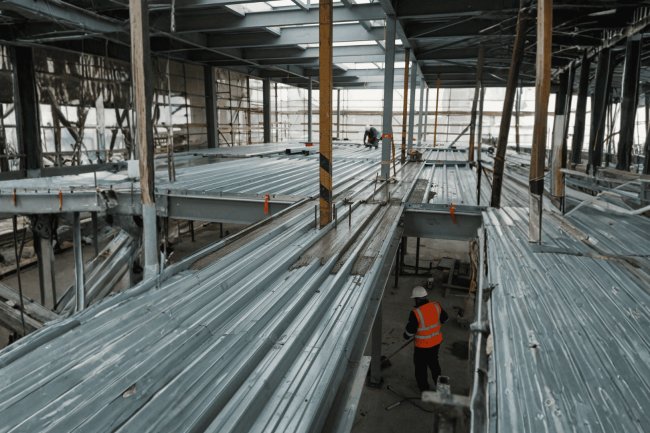
Metal decking refers to corrugated steel panels installed to form the structural base for floors and roofs in commercial buildings. These panels serve multiple purposes: they provide a working platform during construction, act as a structural diaphragm to resist lateral forces, and support concrete in composite floor systems. The choice of metal deck type directly impacts load capacity, fire ratings, acoustic performance, and overall construction speed. Understanding the differences helps project managers specify the right system and avoid costly redesigns or delays. |
|

The Three Main Categories of Metal Deck
Roof Deck
Designed to support roofing materials, insulation, and environmental loads like snow and wind. Typically non-composite and spans between structural supports.
Floor Deck
Engineered to work compositely with poured concrete, creating a structural slab system. Handles live loads, dead loads, and serves as the primary floor structure.
Form Deck
Acts as permanent formwork for concrete pours but doesn't contribute to structural strength. Used where concrete alone provides capacity.
Why It Matters
Each category serves distinct structural roles. Selecting the wrong type can compromise safety, increase costs, or require expensive modifications during construction.
Roof Deck: Supporting Your Building's Top Layer
Roof deck is one of the most common and straightforward types of metal decking. These panels typically range from 22 to 16 gauge in thickness and feature profiles 1.5 to 3 inches deep. The corrugations are installed perpendicular to the supporting beams or joists, creating a rigid diaphragm that helps transfer lateral loads across the structure.
Common roof deck profiles include:
-
Type B – Narrow rib; the most widely used for general roofing.
-
Type A – Intermediate rib; used when additional support is needed.
-
Type N – Wide rib; ideal for longer spans and higher load conditions.
The right profile depends on factors like span length, load requirements, and purlin spacing. For instance, a warehouse with wide purlin spacing may require a deeper and heavier gauge deck compared to an office building with closely spaced supports.
Floor Deck: The Composite Advantage
How Composite Action Works
Floor deck features embossments or indentations that mechanically bond with poured concrete. This composite action allows the steel and concrete to work together, significantly increasing load capacity without adding thickness.
Standard depths range from 1.5 to 3 inches, with 20 to 16 gauge being most common. The deck serves triple duty: it's a work platform during construction, formwork for the concrete pour, and part of the finished structural system.
Common Applications
Multi-story office buildings
Healthcare facilities
Educational institutions
Parking structures
Industrial facilities with heavy equipment
When Consac engineers detail composite floor systems, precise specifications for deck profile, gauge, and concrete thickness are critical to achieving design capacity.
Form Deck: Simple Formwork Solution
Installation Phase
Form deck installs quickly over structural supports, creating an immediate working surface and eliminating the need for temporary formwork.
Concrete Pour
The deck acts as permanent formwork, containing the concrete pour while providing a safe work platform above.
Final System
Once concrete cures, it provides all structural capacity. The deck remains in place but contributes no strength — purely a forming element.
Form deck typically uses lighter gauges (22 to 20 gauge) since it doesn’t resist long-term structural loads. It is ideal for residential construction, shallow-span commercial projects, or areas where composite action isn’t required. The shallower profile — often 9/16" to 1.5" — keeps the overall floor thickness minimal.
Key Selection Factors for Your Project
Span and Load Requirements
Longer spans between supports demand deeper profiles and heavier gauges. Calculate dead loads, live loads, and construction loads early in design.
Fire Rating Needs
Many floor assemblies require specific fire resistance ratings. Deck thickness, concrete cover, and fireproofing methods all factor into meeting code compliance.
Acoustic Performance
In occupied spaces, sound transmission through floor–ceiling assemblies matters. Some deck profiles naturally perform better acoustically than others.
Budget and Schedule
Deeper decks cost more but may eliminate intermediate supports. Composite systems may have higher material costs but enable faster construction schedules.
What's Your Reaction?