Long-Span Steel Joists (LH Series) Design and Detailing Solutions
Long-span steel joists are engineered structural elements that provide efficient, economical solutions for spanning large distances in commercial, industrial, and institutional buildings. The LH-Series joists stand out as a critical component in modern construction, offering strength, versatility, and cost-effectiveness for projects requiring clear spans without intermediate supports.
Understanding LH-Series Steel Joists
What Makes LH-Series Special
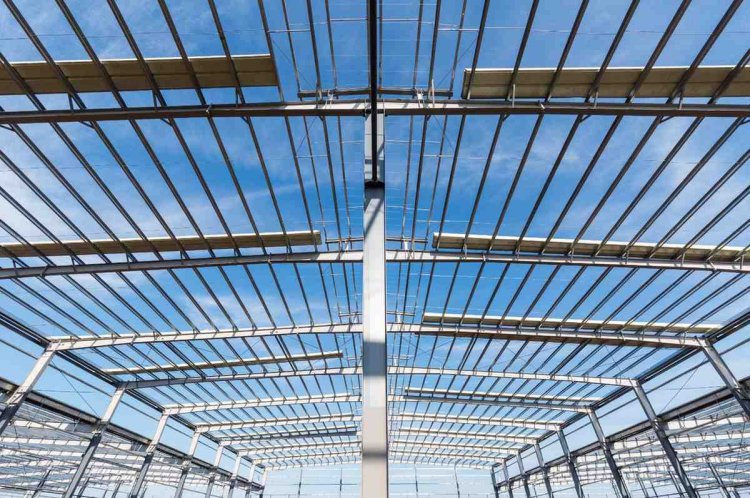
LH-Series steel joists are purpose-built for long-span applications, accommodating spans from 96 inches up to 240 feet. This makes them a preferred structural solution for large-scale facilities where uninterrupted floor space is critical.
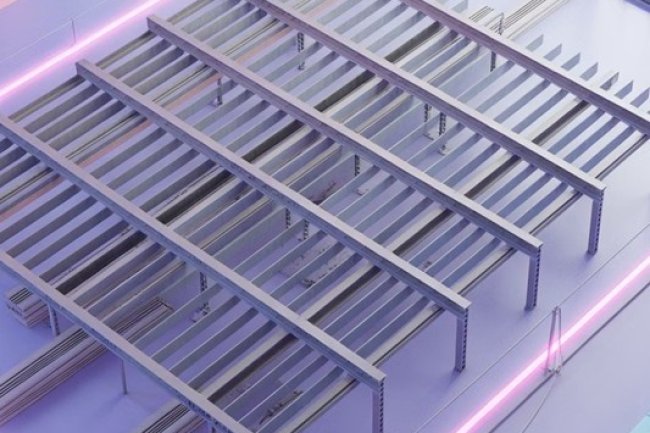
These joists feature parallel top and bottom chords connected by an efficient open-web system. This configuration delivers excellent strength-to-weight performance while allowing mechanical, electrical, and plumbing systems to pass through the joist depth— reducing overall building height and improving coordination efficiency.
Key Applications
Design Considerations for Long-Span Joists
Span and Depth Ratios
Proper depth-to-span ratios ensure optimal performance. LH-Series joists typically require depths of approximately 1/20 to 1/24 of the span length. Deeper joists increase capacity but also raise material costs and overall building height.
Load Requirements
Accurate load analysis is critical. Designers must consider dead loads from roofing, mechanical systems, and ceilings, along with live loads such as snow, maintenance access, and occupancy. Special loads like suspended equipment must be identified early.
Deflection and Vibration
Long-span joists are sensitive to deflection and vibration. Serviceability limits often govern design, typically L/240 for floors and L/360 for roofs. Special occupancies may require vibration analysis to ensure comfort and performance.
Critical Detailing Requirements
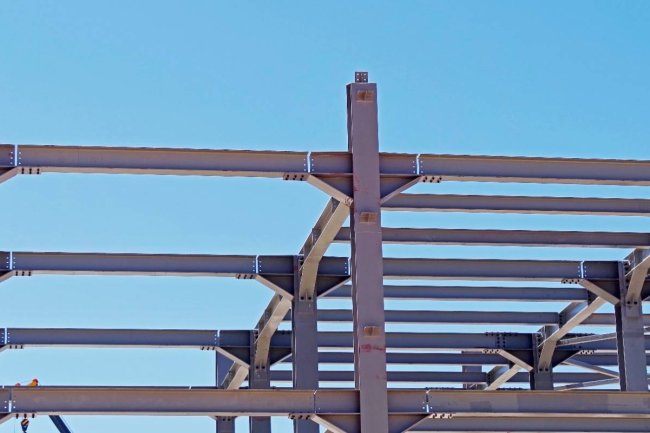
Proper detailing is essential for successful LH-Series joist installation and long-term performance. Connection design must accommodate thermal expansion, construction tolerances, and load transfer mechanisms while maintaining overall structural integrity.
Minimum bearing lengths must comply with SJI standards—typically 4 to 6 inches depending on joist size and applied loads. Proper bearing ensures effective load transfer and reduces localized stresses at supports.
Welded or bolted anchorage must resist uplift and lateral forces. This is especially critical in high-wind or seismic regions, where inadequate anchorage can compromise system stability.
Horizontal and diagonal bridging provide lateral stability and distribute loads across joists. Bridging is required at specific intervals based on joist depth and span to prevent buckling.
Additional reinforcement may be required at concentrated load locations or where web penetrations occur. Early coordination prevents field modifications and preserves structural capacity.
BIM Integration and Digital Workflow
Modern long-span steel joist projects benefit significantly from Building Information Modeling and digital coordination. Advanced 3D modeling enables clash detection, accurate quantity takeoffs, and seamless coordination between structural, architectural, and MEP disciplines.
3D Modeling and Coordination
Create intelligent BIM models that capture joist geometry, connections, and load-bearing capacity. Coordinate with architectural and MEP models to identify conflicts early.
Automated Documentation
Generate fabrication drawings, erection plans, and material lists directly from the BIM model, reducing errors and improving efficiency.
Fabrication-Ready Output
Export CNC-ready data for automated cutting, punching, and welding operations, streamlining the fabrication process and ensuring precision.
Companies like Consac leverage these digital workflows to deliver accurate, coordinated steel detailing services that reduce construction time and minimize costly field modifications.
Common Challenges and Best Practices
Addressing typical LH-Series joist issues with proven, field-tested solutions
Coordination with MEP Systems
Challenge: Routing ductwork, piping, and conduit through long-span joists can lead to conflicts if clearances are not defined early.
Best Practice: Use the open-web design to establish clear MEP pathways during design. Verify all penetrations and clearances through 3D coordination to eliminate costly field changes.
Fire Protection Requirements
Challenge: Fire-resistance requirements can be overlooked during detailing, leading to clearance and connection conflicts.
Best Practice: Coordinate fireproofing type and thickness with the joist supplier early. Ensure connection details account for added fireproofing material to maintain structural performance.
Handling Construction Loads
Challenge: Joists often experience loads during construction that differ significantly from their final design conditions.
Best Practice: Clearly define erection bracing and temporary support requirements. Prohibit material staging or equipment loading on joists not explicitly designed for construction loads.
Delivery and Erection Sequencing
Challenge: Transporting and erecting long-span joists requires careful planning due to size, weight, and site constraints.
Best Practice: Develop a detailed erection sequence, coordinate crane access and capacity, and plan adequate laydown areas. Account for shipping limits that may require field splicing.
Delivering Successful Long-Span Projects
Successful LH-Series steel joist projects require a collaborative approach that brings together design engineers, detailers, fabricators, and erectors. By combining sound engineering principles with advanced digital tools and careful attention to detailing, teams can deliver efficient, economical structures that meet performance requirements and stand the test of time.
Early Engagement Pays Dividends
Involve the steel joist supplier and detailing team early in the design process to optimize span lengths, depths, and connection details.
Leverage Digital Coordination
Use BIM and 3D coordination to identify and resolve conflicts before fabrication, reducing field problems and costly change orders.
Focus on the Details
Comprehensive shop drawings and precise connection details are critical—invest time in detailing to avoid costly field modifications and ensure structural performance.
What's Your Reaction?