How Architects Use BIM for Advanced Visualization and Energy Analysis
Building Information Modeling has transformed how architects design, visualize, and optimize buildings. What started as a digital drafting tool has evolved into a comprehensive platform that allows design teams to see, analyze, and perfect every aspect of a building before breaking ground. Today's BIM technology doesn't just create beautiful renderings—it predicts energy performance, identifies design conflicts, and enables stakeholders to experience spaces in immersive detail. For architects balancing creativity with sustainability and client expectations with budget constraints, BIM has become an indispensable ally in delivering projects that are both visually stunning and operationally efficient.
The Evolution of Architectural Visualization
Traditional Methods
Hand-drawn sketches and 2D CAD plans required clients to imagine the final result. Physical models were expensive and time-consuming to produce.
BIM Revolution
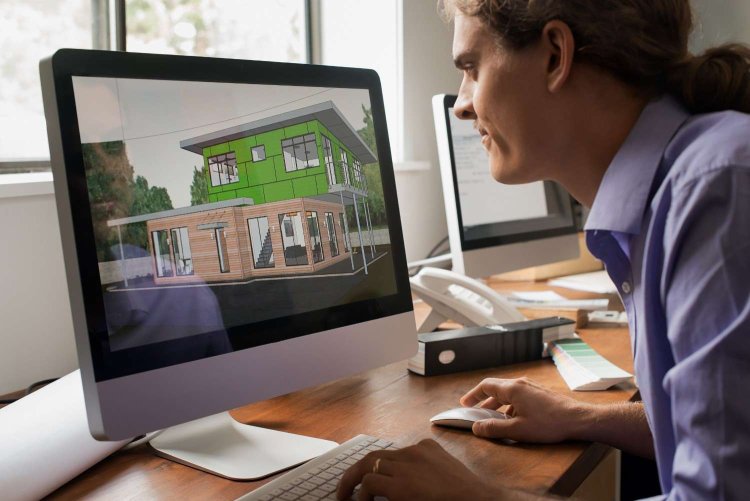
Architects now create intelligent 3D models with real-world data embedded in every element. Clients can walk through spaces virtually, understanding scale, light, and materiality before construction begins.
This shift has fundamentally changed the design conversation. Instead of explaining ideas through abstract drawings, architects can now show clients exactly what they're getting. Real-time rendering capabilities mean design iterations happen in minutes rather than days. Materials, lighting conditions, and spatial relationships become tangible and testable. The result? Fewer surprises during construction and more confident decision-making throughout the design process.
Photorealistic Rendering: Where Design Meets Reality
Material Authenticity
BIM software libraries contain thousands of manufacturer-specific materials with accurate properties, allowing architects to show exactly how surfaces will look under different lighting conditions.
Lighting Simulation
Advanced ray-tracing engines calculate how natural and artificial light will interact with surfaces throughout the day and across seasons.
Immersive Experiences
Virtual reality integration lets clients experience spaces at full scale, understanding sight lines, spatial flow, and the emotional impact of design decisions.
Energy Analysis: Designing for Performance
Beyond creating beautiful images, BIM platforms have become sophisticated energy analysis tools. Architects can now predict a building's energy consumption, identify thermal bridges, and optimize envelope performance—all within the same environment where they're designing the structure.
Model Creation
Design the building with accurate geometry, materials, and systems integrated into the BIM model.
Climate Input
Define location-specific weather data, solar exposure, and environmental conditions.
Simulation
Run energy analysis to calculate heating, cooling, and lighting loads throughout the year.
Optimization
Adjust design parameters to improve performance and reduce operational costs.
This integrated approach means sustainability isn't an afterthought—it's baked into the design process from day one. Companies like Consac leverage these capabilities to help clients meet increasingly stringent energy codes while maintaining design excellence and staying within budget.
Energy Analysis: Designing for Performance
Beyond creating beautiful images, BIM platforms have become sophisticated energy analysis tools. Architects can now predict a building's energy consumption, identify thermal bridges, and optimize envelope performance—all within the same environment where they're designing the structure.
Model Creation
Design the building with accurate geometry, materials, and systems integrated into the BIM model.
Climate Input
Define location-specific weather data, solar exposure, and environmental conditions.
Simulation
Run energy analysis to calculate heating, cooling, and lighting loads throughout the year.
Optimization
Adjust design parameters to improve performance and reduce operational costs.
This integrated approach means sustainability isn't an afterthought—it's baked into the design process from day one. Companies like Consac leverage these capabilities to help clients meet increasingly stringent energy codes while maintaining design excellence and staying within budget.
Practical Applications Across Project Types
Commercial Buildings
Office towers use BIM to optimize curtain wall systems, reducing solar heat gain while maximizing daylight. Energy models help developers achieve LEED certification by testing multiple facade options before finalizing design.
Healthcare Facilities
Hospitals require precise environmental control. BIM analysis ensures proper air handling, temperature zones, and infection control strategies while visualizations help medical staff understand complex spatial layouts.
Educational Campuses
Schools benefit from daylighting studies that reduce eye strain and improve learning environments. Energy analysis helps tight budgets stretch further by identifying the most cost-effective sustainability measures.
Residential Projects
High-end homes use photorealistic renderings to sell design concepts, while energy models prove that luxury and efficiency can coexist through smart envelope and system design.
What's Your Reaction?