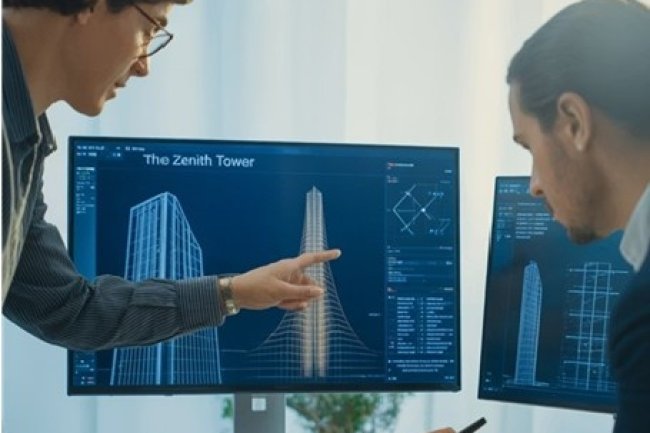
SMART BUILDING DESIGN
Why Smart Buildings Need Smarter Design Processes

BIM
SMART
01
COMPLEX SYSTEMS NEED COORDINATED DESIGN
Traditional Design Methods Fall Short
Traditional design methods can't keep pace with the complexity of modern smart buildings. These structures integrate sophisticated systems — HVAC, lighting, security, and energy management — that must work together seamlessly from day one.
02
3D
BIM AS THE DIGITAL FRAMEWORK
Connected Before Construction Begins
BIM provides the digital framework that connects all these elements before construction even begins, allowing teams to visualize, coordinate, and optimize every system interaction.
SMART BIM DESIGN CAPABILITIES
The Core Capabilities Transforming Design
DIGITAL TWIN CONNECTIVITY
Real-Time Data Integration
BIM models now connect directly to IoT sensors and building systems, creating a living digital twin that reflects actual building performance. This enables predictive maintenance and immediate optimization.
02
BIM
✦
SINGLE SOURCE OF TRUTH
Enhanced Collaboration
Cloud-based BIM platforms allow architects, engineers, contractors, and facility managers to work from a single source of truth, eliminating version control issues and reducing costly coordination errors.
PREDICTIVE DESIGN INTELLIGENCE
AI-Powered Analysis
Machine learning algorithms analyze BIM data to identify design inefficiencies, suggest energy-saving alternatives, and predict how building systems will perform under different conditions.
BIM LIFECYCLE MANAGEMENT
From Design to Operations: The Complete Lifecycle

BIM
01
LOOP
↻
CONTINUOUS BIM VALUE
BIM Beyond Construction Handover
The true power of BIM in smart buildings emerges when the model doesn't end at construction handover. Forward-thinking firms like Consac are helping clients maintain and evolve their BIM models throughout a building's entire lifecycle, creating a continuous feedback loop between physical performance and digital representation.
02
DATA
PROACTIVE FACILITY OPTIMIZATION
From Reactive Maintenance to Data-Driven Decisions
This approach transforms facility management from reactive maintenance to proactive optimization. When your digital model reflects real-world conditions, you can simulate changes, predict outcomes, and make data-driven decisions about everything from space utilization to equipment upgrades.
SMART BIM PERFORMANCE METRICS
Measurable Impact on Project Outcomes
COORDINATION EFFICIENCY
Faster Coordination
Average reduction in coordination time during design phase through automated clash detection and resolution.
PERFORMANCE OPTIMIZATION
Energy Savings
Typical energy consumption reduction achieved through BIM-enabled performance analysis and optimization.
BIM
CONSTRUCTION RISK REDUCTION
Fewer Change Orders
Decrease in costly field changes when using comprehensive BIM coordination before construction.
ROI
DATA
BOTTOM-LINE SMART BUILDING VALUE
Better Timelines, Lower Costs, Stronger Performance
These improvements translate directly to bottom-line benefits: reduced construction timelines, lower operating costs, and buildings that perform closer to their designed specifications from day one.
SMART BUILDING IMPLEMENTATION
Practical Implementation Strategies
Start with Clear Objectives
Define specific outcomes you want from smart building integration — whether it's energy efficiency, occupant comfort, or operational cost reduction. Your BIM strategy should directly support these goals.
Invest in Interoperability
Choose BIM platforms and building systems that speak the same language. Open standards like COBie and IFC ensure your model data can flow seamlessly between different software and systems.
Build Cross-Functional Teams
Bring together designers, engineers, contractors, and facility managers early in the process. The most successful smart building projects involve operations staff during design, not just at handover.
DATA
Plan for Long-Term Data Management
Establish protocols for updating and maintaining your BIM model post-construction. Assign responsibility for data accuracy and create workflows that keep the digital twin synchronized with physical changes.
FUTURE BIM INNOVATION
Emerging Trends Reshaping the Industry

DESIGN OPTIMIZATION
Generative Design
AI algorithms explore thousands of design variations based on your parameters, discovering optimal solutions that human designers might never consider. This approach is particularly powerful for complex MEP systems in smart buildings.
SMART APPROVAL WORKFLOWS
Digital Permitting
Building departments are beginning to accept BIM models directly for permit review, streamlining approval processes and enabling automated code compliance checking that catches issues earlier in design.
BIM
IMMERSIVE PROJECT DELIVERY
Extended Reality
VR and AR technologies let stakeholders experience designs before construction, while field teams use mixed reality to visualize BIM data overlaid on physical job sites, improving accuracy and reducing errors.
SMART BIM ADOPTION ROADMAP
Taking the Next Step Forward
01
01
READINESS ASSESSMENT
Assess Your Current Capabilities
Evaluate where your team stands with BIM implementation. Identify gaps in software, skills, or workflows that might limit your ability to deliver truly smart buildings.
02
02
PILOT PROJECT STRATEGY
Start with a Pilot Project
Choose a mid-sized project to test enhanced BIM workflows and smart building integration. Use lessons learned to refine your approach before scaling across your portfolio.
03
BIM
03
EXPERT IMPLEMENTATION SUPPORT
Partner with Experienced Teams
The learning curve for advanced BIM and smart building integration can be steep. Collaborate with specialists who've already navigated these challenges and can help you avoid common pitfalls.
NEXT
SMART
BIM + SMART BUILDING INTEGRATION
Define the Standard for Future Building Design
The convergence of BIM and smart building technology isn't coming — it's already here. The question isn't whether to adopt these approaches, but how quickly you can integrate them into your practice. The firms that master this integration now will define the standard for building design in the years ahead.