Seismic Performance of Light Gauge Steel Buildings
Understanding how buildings respond to seismic forces is essential for ensuring safety, regulatory compliance, and long-term structural performance in earthquake-prone regions. Light gauge steel systems are engineered to manage lateral forces effectively, supporting resilient building design and dependable performance under seismic stress.
Why Light Gauge Steel Matters in Seismic Design
|
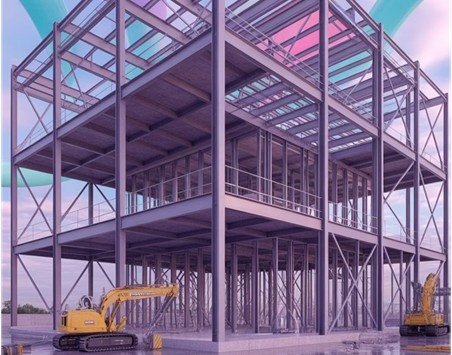
Light gauge steel (LGS) framing has emerged as a compelling alternative to traditional construction materials in seismic zones. Its inherent properties—high strength-to-weight ratio, ductility, and flexibility—make it particularly well-suited for earthquake-resistant design. Unlike heavier construction systems, LGS structures generate lower inertial forces during ground motion, reducing the demand on foundations and structural connections. This fundamental advantage translates to improved performance when the earth moves. |
|
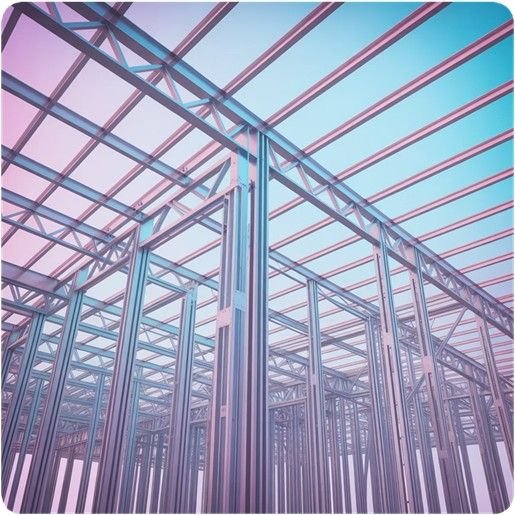
Lower building weight means less seismic force generation during earthquakes, resulting in smaller foundation loads and reduced structural demands throughout the system.
Steel's ability to deform without fracturing allows energy dissipation during seismic events, preventing catastrophic failure and enabling structures to absorb ground motion effectively.
Properly designed connections in LGS systems can accommodate movement and rotation, distributing forces throughout the structure rather than concentrating stress at single points.
Key Seismic Performance Advantages
Reduced Mass
Ductility
Connection Flexibility
Design Considerations for Seismic Zones
Engineering light gauge steel buildings for seismic performance requires attention to several critical factors that influence how the structure will respond during an earthquake.
-
Lateral Force-Resisting SystemsSelect appropriate bracing configurations — shear walls, diagonal bracing, or moment frames — based on building height, occupancy, and seismic design category.01
-
Connection DetailingDesign connections to transfer forces reliably while allowing controlled yielding. Specify fastener types, spacing, and edge distances that meet code requirements for ductile behavior.02
-
Member SelectionChoose steel sections with adequate thickness and geometry to resist buckling under cyclic loading. Consider cold-formed steel design standards and local buckling provisions.
Testing and Validation Methods
Rigorous testing protocols validate seismic performance before construction begins. Shake table tests subject full-scale or scaled assemblies to recorded earthquake motions, revealing how connections perform under realistic loading conditions.
Cyclic testing of connections and assemblies demonstrates ductility capacity and identifies potential failure modes. These tests apply repeated loading cycles of increasing amplitude, simulating the demands of actual seismic events. Engineers use the resulting data to refine connection details and verify analytical models.
Finite element analysis complements physical testing, enabling parametric studies of design variables and exploration of scenarios difficult to test physically. Together, these methods build confidence in seismic performance predictions.
Common Challenges and Solutions
Local Buckling
Challenge: Thin steel sections can buckle locally under high compressive forces, reducing member capacity and potentially triggering progressive collapse.
Solution: Use stiffeners at critical locations, increase section thickness, or specify sections with favorable width-to-thickness ratios that exceed code minimums for ductile response.
Connection Integrity
Challenge: Fastener pull-through, bearing failure, or inadequate shear transfer can compromise load paths during seismic events.
Solution: Employ washer plates, specify appropriate fastener grades, provide adequate edge distances, and consider welded connections at critical locations requiring higher reliability.
Torsional Effects
Challenge: Asymmetric building layouts or irregular lateral system distribution creates torsional demands that amplify forces in perimeter elements.
Solution: Balance lateral system placement, incorporate redundancy in load paths, and account for accidental torsion in analysis per building code requirements.
Integrate seismic considerations from concept design through construction documentation. Early collaboration prevents costly redesigns and ensures lateral systems align with architectural intent.
Apply AISI S400 (Seismic Design of Cold-Formed Steel Structural Systems) alongside IBC requirements. Stay current with code updates that reflect evolving research and field performance data.
Implement rigorous inspection protocols during fabrication and installation. Verify fastener specifications, member sizes, and connection details match approved drawings before walls are enclosed.
Use BIM coordination to identify conflicts between structural systems and MEP components. Perform clash detection early to maintain lateral load path integrity throughout the building.
Light gauge steel buildings can deliver exceptional seismic performance when designed with attention to material properties, connection behavior, and system-level response. By applying these principles systematically, your team can create structures that protect occupants and maintain functionality when earthquakes strike.
Best Practices for Your Next Project
Engage Structural Engineers Early
Follow Current Code Provisions
Prioritize Quality Control
Leverage Digital Tools
What's Your Reaction?