Designing Light Gauge Steel Structures for High Wind Zones
When wind becomes a structural adversary, the materials and methods you choose can make all the difference. This guide explores how light gauge steel systems are engineered to withstand nature’s most powerful forces—and what every design professional should know before breaking ground.
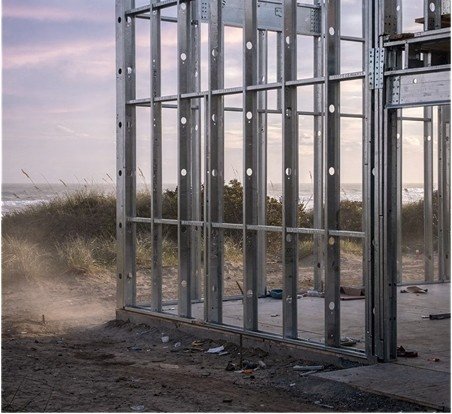
Introduction: Why Wind Load Design Demands a Smarter Approach
Designing structures for high wind zones is one of the most technically demanding challenges in modern construction. Whether you're working in hurricane-prone coastal regions, tornado corridors, or exposed elevated sites, the forces acting on a building envelope are dynamic, unpredictable, and unforgiving. Light gauge steel (LGS) framing has emerged as one of the most reliable structural systems for these environments—offering strength-to-weight efficiency, dimensional precision, and design flexibility that traditional materials often can’t match.
Yet success in high wind design isn’t just about choosing the right material. It requires a thorough understanding of load paths, connection detailing, code compliance, and the interplay between structural and architectural decisions. This blog walks through the key principles and best practices that professionals should consider when designing light gauge steel structures for wind-critical applications.
Understanding Wind Loads: The Foundation of Safe Design
What Is Wind Load?
Wind load refers to the lateral and uplift forces exerted on a building by moving air. These forces vary based on building height, shape, exposure category, terrain, and geographic location.
Designers must account for both positive pressure (pushing inward) and negative pressure (suction pulling outward), which act simultaneously on different building surfaces.
Before any framing layout begins, designers must establish the basic wind speed, exposure category (B, C, or D), and risk category. These inputs directly influence member sizing, connection detailing, and anchorage requirements.
Key Code References
ASCE 7
Minimum Design Loads and Associated Criteria for Buildings and Other Structures — primary standard for wind load calculations.
IBC (International Building Code)
Incorporates ASCE 7 provisions and governs local building code adoption.
Local Amendments
Regions like Florida, Texas Gulf Coast, and the Carolinas enforce stricter wind speed requirements.
Wind Speed Maps
Define design wind speeds (V) in mph based on geographic location.
Why Light Gauge Steel Performs Well in High Wind Environments
High Strength-to-Weight Ratio
Cold-formed steel sections deliver exceptional strength without adding dead load. Lower self-weight means reduced inertial forces while maintaining structural rigidity under lateral loads — a critical advantage in wind-driven design scenarios.
Dimensional Consistency
LGS members are manufactured to tight tolerances, ensuring predictable performance in the field. Consistent dimensions reduce installation errors that could compromise connection integrity — particularly important where every bolt and screw pattern matters under wind pressure.
Non-Combustibility & Corrosion Resistance
Galvanized coatings protect LGS members from moisture and corrosion in coastal environments. Unlike wood, steel won't rot, warp, or lose structural capacity when exposed to humidity and salt air — two constant threats in high wind coastal zones.
Prefabrication-Ready
LGS panels and assemblies can be prefabricated off-site with precision, enabling faster on-site erection with tighter quality control — reducing field errors that often occur during weather-vulnerable construction windows in storm-prone regions.
Structural Load Path: Getting the Forces to the Ground
One of the most critical concepts in high wind design is the continuous load path — the uninterrupted transfer of forces from the roof, through the walls, to the foundation. Any break in this chain can lead to catastrophic failure.
Wind Load on Roof
Roof Framing & Diaphragm
Wall Framing & Shear Panels
Foundation Anchorage
Each transition point in this load path — roof-to-wall, wall-to-floor, and floor-to-foundation — requires carefully engineered connections. For LGS systems, this typically involves hold-downs, strap ties, blocking members, and anchor bolts designed to resist both uplift and lateral shear.
Skipping or undersizing any element in this chain introduces risk that no amount of member strength can compensate for, making continuous load path design essential for structural resilience.
Key Design Considerations for LGS in Wind-Critical Zones
Member Selection & Span Tables
Stud and joist sizing must account for wind-induced bending, combined axial and flexural loads, and deflection limits. Standards like AISI S100 govern design, often requiring deeper sections in high wind zones.
Roof-to-Wall Connections
Roof uplift is a primary failure mode. Connections must use engineered clips, straps, or brackets with verified uplift capacity based on actual wind loads—not generic assumptions.
Shear Wall Design & Bracing
Lateral loads must be resisted using properly designed shear walls with steel straps, sheathing, or hybrid systems. Layout and connections must ensure stiffness and ductility.
Connection & Fastener Design
Fastener patterns, screw sizes, and connection detailing directly impact load transfer. Engineered connection schedules are essential in high wind zones.
Diaphragm Action & Chord Design
Roof and floor diaphragms distribute wind loads to shear walls. Proper chord and collector design is critical to transfer forces effectively—overlooking this is a common and costly mistake.
Code Compliance and Regulatory Standards
Compliance with recognized standards is non-negotiable in wind-critical design. Professionals working with light gauge steel (LGS) structures must align with established codes to ensure safety, performance, and approval readiness.
Governing Standards for LGS Wind Design
- AISI S100 — Cold-Formed Steel Structural Member Design
- AISI S240 — Structural Framing Standard
- AISI S400 — Lateral Design for Cold-Formed Steel Framing
- ASCE 7-22 — Latest wind load criteria and exposure maps
- IBC 2021 — International Building Code with regional adoption
State and Local Amendments
Several U.S. states enforce wind design requirements that exceed base national standards. For example, Florida’s Building Code mandates product approval for all cladding and structural elements in wind zones above 130 mph.
Designers working in coastal regions such as the Gulf Coast, Atlantic Coast, or High Plains must always verify local amendments before finalizing structural specifications.
Pro Tip
Always confirm the adopted code edition and local amendments with the Authority Having Jurisdiction (AHJ) at the beginning of the project — not during permit review.
Detailing Best Practices That Make the Difference
Good structural design on paper can fail in the field if detailing is vague or inconsistent. For LGS structures in high wind zones, detailing precision is the difference between a building that performs and one that doesn't. These best practices consistently separate successful projects from those that encounter structural issues.
Blocking and Bridging
Install continuous blocking at stud mid-heights and bridging channels to prevent lateral buckling under combined axial and wind loads. Neglecting this step in tall wall assemblies is a frequent source of failure in high wind events.
Gable End and Parapet Design
Gable ends and parapets are among the most wind-exposed elements on any structure. These features require specific outrigger framing, bracing, and connection details. Treat these as engineered subassemblies — not afterthoughts — especially in Exposure Category C or D sites.
Corner and Opening Framing
Corners and window/door openings are high-stress zones. Provide proper jack and king stud assemblies, header sizing for wind-induced pressures on cladding, and strap connections at jamb corners to maintain load path continuity through interrupted framing.
Cladding Attachment Coordination
The structural framing must be coordinated with the cladding system's attachment requirements. Wind pressures on the cladding are transferred to the framing through fasteners, so stud spacing, sheathing type, and fastener capacity must be evaluated as an integrated system — not independently.
The Role of BIM and Digital Tools in Wind-Resistant LGS Design
The complexity of wind load design — from load combinations to connection detailing — demands intelligent, coordinated workflows. Building Information Modeling (BIM) enables teams to visualize load paths, detect conflicts early, and produce highly accurate, fabrication-ready shop drawings.
From 2D Drawings to Intelligent Models
BIM platforms allow engineers and detailers to model load paths visually, coordinate structural and architectural systems, and generate shop drawings with embedded connection data — dramatically reducing errors and improving constructability.
Organizations like Consac add measurable value by combining structural engineering expertise with advanced BIM and CAD detailing workflows. This integration ensures designs are not only code-compliant but also construction-ready — reducing RFIs, minimizing field modifications, and improving overall delivery efficiency.
Software Commonly Used in LGS BIM
- Revit — Full BIM modeling and coordination
- Tekla Structures — Detailed structural modeling & fabrication
- AutoCAD — 2D detailing and connection drawings
- FrameCAD — Dedicated LGS design & detailing
- RISA / RAM — Structural analysis & load verification
- Navisworks — Clash detection and coordination
Digital Workflow Benefits
- Automated member scheduling and quantity takeoffs
- 3D visualization of shear walls and load paths
- Seamless coordination of structural, architectural, and MEP systems
- Clash detection before fabrication to reduce waste
- Improved communication between design and construction teams
Common Mistakes to Avoid in High Wind LGS Projects
Relying on Prescriptive Tables Beyond Limits
Prescriptive tables apply only within defined limits. Exceeding wind speeds, heights, or exposure categories requires engineered design. Using out-of-range values is a dangerous shortcut.
Disconnected Design & Detailing Teams
When engineers and detailers work in silos, critical data is lost. Integrated BIM workflows and clear coordination processes are essential to avoid errors.
Ignoring Uplift at Eaves & Ridges
Wind suction is highest at roof edges. These zones require specific uplift calculations and verified connections—generic tables often underestimate the demand.
Underspecifying Corrosion Protection
Coastal environments demand higher protection (G90/G60 coatings or stainless fasteners). Standard specifications can lead to long-term durability issues.
Practical Takeaways for Your Next High Wind LGS Project
Start with Site-Specific Wind Data
Use the ASCE 7 hazard tool or approved wind speed maps to establish the design wind speed, exposure category, and risk classification for your specific site location before any framing layout begins.
Engage a Qualified Structural Engineer Early
LGS design in high wind zones is not a prescriptive exercise. Bring a licensed structural engineer into the project during schematic design — not just at permit review — to ensure load paths, shear walls, and connections are properly established from the outset.
Develop a Comprehensive Connection Schedule
Don't leave connections to interpretation. Produce a detailed connection schedule that covers every structural interface — roof-to-wall, wall-to-floor, shear wall boundaries, and foundation anchors — with verified capacities matched to the design demand.
Integrate BIM for Coordination and Documentation
Use BIM to model the full structural system, coordinate with architectural and MEP disciplines, and generate construction-ready documentation. A well-coordinated BIM model reduces field RFIs, speeds fabrication, and improves quality control on site.
Validate with Third-Party Review Where Required
In wind-critical jurisdictions, consider third-party peer review of the structural design and connection details. This step adds a layer of quality assurance that can prevent costly corrections during construction or post-occupancy inspections.
Conclusion: Engineering for the Wind, Built to Last
Designing light gauge steel structures for high wind zones demands more than selecting a strong material — it requires a systems-level approach that integrates structural analysis, meticulous detailing, code compliance, and digital coordination from the earliest stages of a project.
When these elements align, LGS systems deliver exceptional performance even in the most demanding environments, ensuring durability, safety, and long-term structural reliability.
The principles outlined in this guide — continuous load paths, engineered connections, shear wall coordination, and BIM-enabled workflows — are not theoretical. They define the difference between structures that withstand extreme wind events and those that fail under pressure.
As wind design requirements evolve and extreme weather becomes more frequent, the ability to confidently design and detail LGS systems for wind-critical conditions is becoming essential for every professional in the built environment.
Whether you're a structural engineer, contractor, BIM specialist, or project manager, mastering these principles enables better decisions, stronger designs, and more reliable project outcomes — from concept to completion.
Key Principles Recap
- Establish site-specific wind data first
- Design a continuous, verified load path
- Engineer connections — don’t assume them
- Coordinate shear walls with architectural layout
- Use BIM for integrated documentation
- Comply with ASCE 7, AISI S100/S240/S400, and local codes
- Detail gables, parapets, and corners as engineered systems
- Specify corrosion protection for coastal exposure
What's Your Reaction?