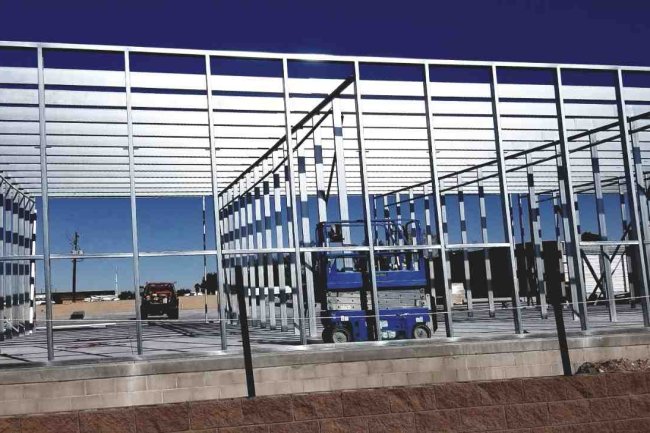
Light Gauge Steel Construction and BIM Integration
Discover how light gauge steel framing combined with Building Information Modeling (BIM) is transforming the construction industry through precision, efficiency, and seamless collaboration across project teams.

What Is Light Gauge Steel Construction?
|
Light gauge steel (LGS) construction utilizes cold-formed steel members—typically less than 3/16 inch thick—to create primary or secondary framing systems for buildings. Compared to traditional heavy steel or wood framing, LGS provides an exceptional strength-to-weight ratio, enabling durable structures without adding unnecessary mass. Because components are manufactured with high precision, installation is faster, waste is minimized, and quality is more consistent across the project. As a result, LGS has become a preferred system for residential, commercial, and industrial buildings, especially where speed, sustainability, and design flexibility are top priorities. |
|

Core Advantages of Light Gauge Steel Framing
Superior Strength
High strength-to-weight ratio provides exceptional structural integrity while reducing foundation loads and overall building weight significantly.
Dimensional Accuracy
Factory-controlled manufacturing ensures consistent quality and precise tolerances, minimizing on-site adjustments and installation errors.
Sustainable Choice
Steel is 100% recyclable with minimal waste generation. LGS framing reduces environmental impact throughout the building lifecycle.
Fire & Pest Resistant
Non-combustible material provides enhanced fire safety. Immune to termites, rot, and moisture damage that plague traditional framing materials.
Understanding Building Information Modeling (BIM)
Building Information Modeling (BIM) marks a major evolution from traditional 2D drafting to intelligent, data-driven 3D modeling. It creates a digital twin of a project—capturing both the physical form and functional behavior of a building—within a unified collaboration environment.
In light gauge steel (LGS) construction, BIM serves as far more than a visual tool. The model includes:
-
Accurate geometry and spatial relationships
-
Material and performance data
-
Coordinated MEP integration
-
Construction sequencing and installation planning
The Powerful Synergy: LGS Meets BIM
Superior Strength
High strength-to-weight ratio provides exceptional structural integrity while reducing foundation loads and overall building weight significantly.
Dimensional Accuracy
Factory-controlled manufacturing ensures consistent quality and precise tolerances, minimizing on-site adjustments and installation errors.
Sustainable Choice
Steel is 100% recyclable with minimal waste generation. LGS framing reduces environmental impact throughout the building lifecycle.
Fire & Pest Resistant
Non-combustible material provides enhanced fire safety. Immune to termites, rot, and moisture damage that plague traditional framing materials.
Key Benefits Across Project Phases
Design Phase
Rapid design iterations and what-if scenarios. Parametric modeling allows instant updates across all documentation when changes occur.
Detailing & Engineering
Generate comprehensive shop drawings, connection details, and material lists automatically. Ensure code compliance and structural integrity through integrated analysis.
Fabrication
Reduce material waste via optimized nesting and cutting schedules. Export machine-readable data to eliminate manual programming and transcription errors.
Construction
Access real-time models onsite via mobile devices. Track installation progress against the model to maintain schedule adherence and quality control.
Facility Management
Maintain as-built models containing specifications, warranties, and maintenance schedules for long-term building operation and future renovations.
Implementation Best Practices for BIM-Driven Light Gauge Steel Projects
A successful BIM workflow requires more than just powerful software—clear processes and collaboration structures must be in place from day one. The following best practices ensure seamless coordination and maximum project efficiency.
Technical Considerations
|
Collaboration Strategies
|
The Future of Intelligent Construction
Enhanced Efficiency
LGS and BIM integration reduces project timelines by 20-30% while improving accuracy and reducing material waste significantly.
Cost Optimization
Early clash detection and fabrication planning eliminate expensive change orders and field conflicts that plague traditional construction methods.
Industry Evolution
This digital transformation positions project teams for success in an increasingly complex built environment demanding precision and collaboration.
Light gauge steel + BIM is the foundation of modern construction excellence.
What's Your Reaction?